

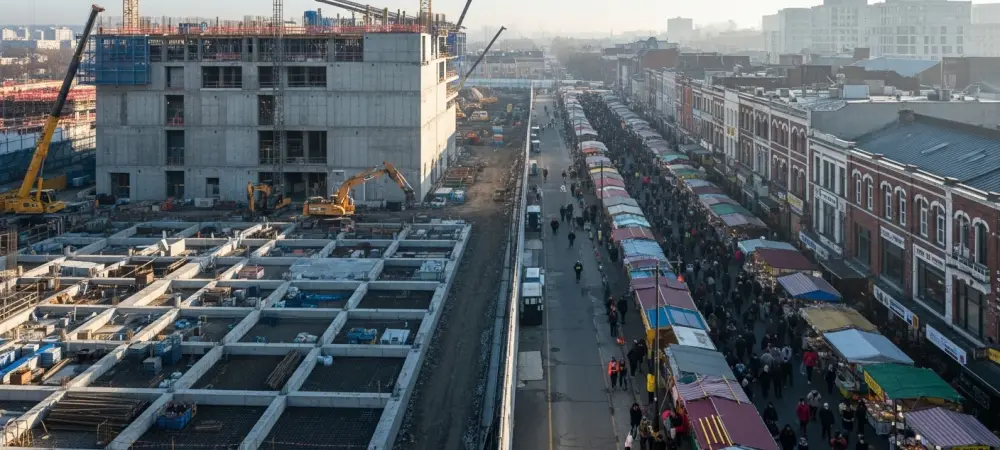
The very soul of London’s iconic Brick Lane is now at the center of a high-stakes conflict, pitting the relentless march of digital infrastructure against the preservation of a deeply rooted cultural identity. A contentious redevelopment plan for the historic Truman Brewery site, submitted by its owner, Truman Estates, has sparked a firestorm of opposition from a community that fears its unique character is on the brink of erasure. At the heart of this dispute is a proposal to construct a massive data center, a project that has become a flashpoint in a larger debate about urban development, corporate interests, and the future of one of London’s most cherished neighborhoods. The plan has ignited a passionate defense from residents and local businesses who see it not as progress but as an existential threat to the “living cultural, social, and economic ecosystem” they have cultivated for generations, forcing a showdown that will ultimately be decided at the highest levels of government.
A Vision of Concrete and Code
The cornerstone of the developer’s ambitious plan is a formidable data center proposed for 47 Gray Eagle Street. The project calls for the demolition of existing structures to erect a new building that would stand 29 meters (approximately 95 feet) tall and span 5,266 square meters (about 56,682 square feet). The application, filed on behalf of Truman Estates in August 2024, aims to deliver a facility with “broad market appeal and adaptability to demand,” yet it conspicuously omits details regarding its projected capacity or power source—critical information for a power-hungry infrastructure project in a dense urban area. However, the design does include a provision for a heat exchanger, a technology that could capture and repurpose waste heat to serve a local district heating network, should one ever be established. The strategic value of this location cannot be overstated; its proximity to London’s Docklands, a global financial hub and one of the UK’s most concentrated data center markets, makes it an exceptionally valuable piece of real estate for the digital economy.
The data center is just one component of a sweeping £500 million ($673 million) redevelopment plan intended to transform the historic site. The broader vision includes the construction of 44 new homes, though a closer look reveals that only 11 are designated as affordable housing, a figure that has drawn sharp criticism in a city grappling with a severe housing crisis. Additionally, the plan incorporates new office spaces, commercial units, and a microbrewery—an architectural nod to the site’s rich heritage. The Truman Brewery was founded in the 1600s and, by the late 19th century, had grown into one of the world’s largest breweries before its eventual closure in 1989. Since its acquisition in 1995, the sprawling complex has been creatively repurposed into a vibrant nexus of independent culture, now housing a popular vintage market, an eclectic mix of pop-up shops, lively bars, and diverse restaurants that are central to Brick Lane’s modern identity. It is also, notably, already home to three colocation data centers (LON1, LON2, and LON3) operated by Digital Realty.
A Neighborhood on the Defensive
The redevelopment proposal has been met with substantial and fiercely organized opposition from the local community, which views the project as a direct assault on the neighborhood’s character. Residents and advocates argue that the development threatens the unique and fragile “living cultural, social, and economic ecosystem” that defines Brick Lane. These concerns were powerfully articulated in an open letter accompanying a petition, which quickly garnered over 1,200 signatures from those who believe the plan would “intensify environmental harms through increased energy consumption, heat output, and carbon emissions.” Critics also raised alarms about the immense strain the new development would place on already burdened local infrastructure, from public transportation to utilities. The prevailing sentiment is that the project would “displace community uses in favor of developments that deliver minimal local benefit,” effectively prioritizing global corporate needs over the well-being of the people who live and work in the area.
In a reflection of these widespread community concerns, the local authority, Tower Hamlets Council, initially rejected the planning application last year, siding with the residents. However, this local victory was short-lived, as the decision-making process has since escalated to the national level. Truman Estates appealed the council’s rejection, and in a significant move, the case was “called in” by the UK’s Secretary of State for Housing, Steve Reed. This procedural step grants the minister the ultimate power to overrule the local authority’s decision and unilaterally approve the project. This political dimension is critical, as the UK government, which assumed office in 2024, has shown a strong commitment to expanding the nation’s digital infrastructure as a core pillar of its economic growth strategy. This has led to an emerging trend where the central government has overruled local councils to fast-track such projects, setting a troubling precedent for local democracy and community planning.
Two Competing Futures for a Historic Landmark
The government’s pro-development stance has cast a long shadow over the proceedings. The administration’s economic agenda appears to favor large-scale infrastructure projects, a priority demonstrated in similar cases. For instance, Steve Reed’s predecessor, Angela Rayner, approved data center plans in both Buckinghamshire and Hertfordshire despite their initial rejection by local planners who cited environmental and community impacts. This history suggests that the data center component of the Truman Brewery plan may be the decisive factor in swaying the Secretary of State’s final verdict. The government may be inclined to view the project not through the lens of local heritage or housing needs but as a crucial contribution to the national digital economy, potentially prioritizing these macroeconomic goals over the passionate and unified opposition of a historic London community. The fate of Brick Lane could therefore become a bellwether for how the UK balances national economic ambitions with local autonomy.
In a direct response to the developer’s proposal, Tower Hamlets Council commissioned an alternative vision for the site that champions local needs over commercial interests. This counter-plan suggested that the land could be used far more effectively to address some of the borough’s most pressing issues. It proposed a development that could accommodate 350 homes, including 44 units designated specifically for social housing. This alternative stood in stark contrast to the developer’s plan, highlighting the critical need for affordable housing in an area where, according to reports, over 28,000 families languished on the council housing waitlist. The final verdict on the Truman Brewery’s future ultimately rested with Secretary of State Steve Reed. The decision weighed the government’s national economic agenda against the passionate and unified opposition of a community fighting to protect its heritage, and the outcome was poised to set a precedent for future conflicts between urban development and cultural preservation across the country.