

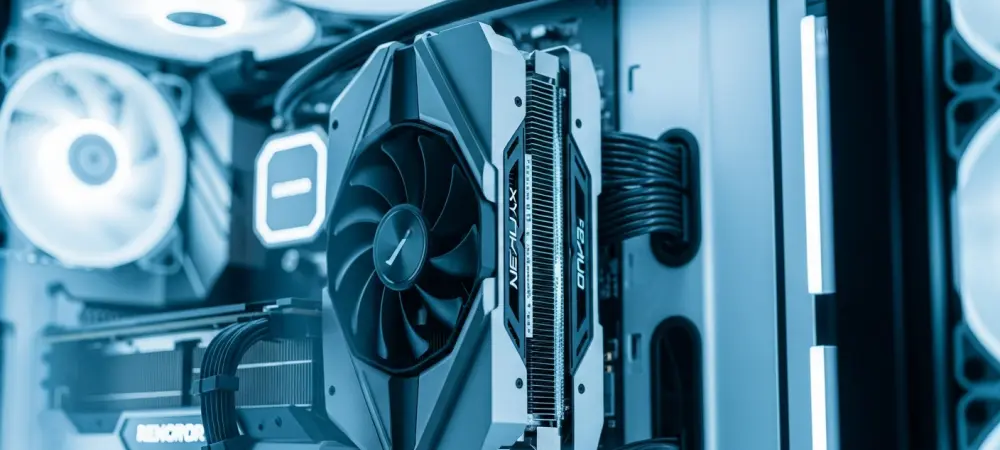
The era of building massive, heat-generating desktop towers filled with multiple graphics cards has largely faded into the history books, replaced by a sophisticated era of architectural efficiency and artificial intelligence. This transformation represents a fundamental shift in how the industry approaches the problem of rendering high-fidelity visuals at extreme resolutions without the prohibitive costs of redundant hardware. For years, the Scalable Link Interface, or SLI, stood as the ultimate goal for PC enthusiasts who wanted to push their systems beyond the limits of a single card, creating a culture of excess that defined the enthusiast landscape. However, as the complexities of modern rendering grew, the limitations of physical hardware bridges and parallel processing became increasingly apparent to both manufacturers and consumers alike. The transition away from this hardware-heavy philosophy has ultimately paved the way for a more sustainable and accessible gaming ecosystem where software optimization takes precedence over brute-force power. By examining the trajectory of this decline, one can see how the removal of multi-GPU complexity allowed for the birth of revolutionary technologies like neural upscaling and frame generation, which provide better results with far less friction. This evolution reflects a broader trend in computing where the intelligence of the silicon matters significantly more than the sheer volume of components installed in a motherboard.
The Legacy of Multi-GPU Architecture: A Status Symbol for Enthusiasts
The period between the mid-2000s and the early 2010s represented a unique chapter in personal computing history where the physical size and quantity of components were often equated directly with the quality of the experience. High-end gaming rigs of that era frequently showcased a glowing physical bridge connecting two or even four identical Nvidia graphics cards, a configuration that served as much as a visual centerpiece as it did a functional upgrade. For many enthusiasts, the decision to invest in multiple GPUs was driven by the desire to stay ahead of the rapidly advancing display technology of the time. As 1440p and 4K resolutions moved from the fringes of the market into the mainstream, the pixel counts increased faster than any single piece of silicon could comfortably handle. This created a scenario where linking cards together was the only viable method for maintaining smooth frame rates at maximum graphical settings. The aesthetic of these dual-card builds became a hallmark of the community, signaling a dedication to the hobby that ignored traditional concepts of price-to-performance ratios in favor of achieving the absolute highest possible benchmarks.
Beyond the performance metrics, the multi-GPU setup functioned as a powerful status symbol within the PC building community, representing a “no-expense-spared” approach to digital entertainment. Building an SLI-capable system required not only the purchase of two flagship graphics cards but also a significantly more expensive motherboard, a high-wattage power supply, and an elaborate cooling solution to manage the massive thermal output. This financial and technical barrier to entry created an exclusive tier of gaming that many aspired to reach, even if the actual gains in gameplay were not always consistent. The pursuit of absolute performance during this time was characterized by a “brute force” mentality where problems were solved by simply adding more hardware rather than refining the existing architecture. While this approach pushed the boundaries of what consumer-grade machines could do, it also highlighted a growing gap between the hardware that was available and the software’s ability to utilize it effectively. As the years progressed, the industry realized that the future of high-end gaming would need to rely on smarter engineering rather than just increasing the physical footprint of the components inside the chassis.
Diminishing Returns: The Practical Failures of Hardware Scaling
While the theoretical performance of multi-GPU systems looked impressive on paper, the actual experience of playing games often revealed deep flaws in the underlying technology that frustrated even the most patient users. The most notorious of these issues was microstutter, a phenomenon caused by the inherent difficulty of synchronizing two separate processors to deliver frames at perfectly even intervals. Even if a system reported a high average frame rate, the variance in time between individual frames could lead to a perceived jitter that made the game feel less responsive than it would on a single, more stable card. This inconsistency meant that a gamer might see 100 frames per second on their counter, but the visual experience felt as though it were running at half that speed due to the uneven pacing of the frame delivery. Developers struggled to manage the workload distribution between cards, as the “alternate frame rendering” technique often introduced significant input lag that was unacceptable for fast-paced titles. These technical hurdles proved that adding more hardware did not automatically result in a better user experience, eventually turning many enthusiasts back toward high-end single-card solutions.
Another significant drawback that plagued the SLI era was the way the system handled Video Random Access Memory, leading to widespread confusion among consumers regarding the actual capabilities of their machines. Many users mistakenly believed that VRAM was additive, assuming that pairing two 8GB cards would provide 16GB of usable memory for high-resolution textures. In reality, the architecture of SLI required each card to store an identical copy of the game’s assets in its own memory buffer, meaning the total usable capacity was restricted to that of a single card. This limitation became increasingly problematic as games transitioned into an era of massive open worlds and ultra-high-definition textures that demanded more memory than a single-generation card could offer. For many, the realization that they had spent twice as much money for zero additional memory headroom was a turning point that diminished the value proposition of the multi-GPU dream. This inefficiency made dual-card setups a poor long-term investment, as the lack of additive memory meant these systems would hit performance walls at the same time as single-card builds, regardless of the extra processing power available to them.
Systematic Obsolescence: The Transition to Single-Die Dominance
The eventual abandonment of multi-GPU configurations was not just a hardware decision but a necessary pivot driven by the unsustainable demands placed on software developers and the underlying game engines. In the earlier days of the technology, Nvidia provided dedicated driver-level profiles to help games utilize multiple cards, but as rendering pipelines became more complex, this task shifted significantly toward the game studios themselves. For a developer, spending hundreds of engineering hours optimizing a game for a multi-GPU configuration that only a fraction of a percent of the player base utilized made very little financial or logical sense. This lack of broad industry support led to a downward spiral where new flagship titles would launch without any official compatibility for linked cards, effectively turning a second graphics card into an expensive, idle decoration. This frustration signaled a clear message to the industry that the path forward could not rely on the coordination of separate hardware units through a physical bridge. As engines began to integrate more temporal effects and post-processing techniques that relied on data from previous frames, the latency involved in sharing that information across a bus became a technical barrier that was nearly impossible to overcome.
Nvidia’s departure from the multi-GPU market was a calculated and gradual process that spanned several hardware generations, eventually leading to the complete removal of the necessary physical connectors. Starting with the Pascal architecture, the company began to limit support for configurations involving more than two cards, signaling that the era of four-way SLI was over. By the time the newer 30-series and 40-series cards arrived, the NVLink and SLI headers were almost entirely absent from the consumer lineup, found only on the most expensive professional-grade hardware intended for data science and AI research. This strategic shift allowed the company to focus all of its research and development on increasing the performance of a single die, leading to the creation of massive, highly integrated chips that could outperform previous dual-card setups with ease. This move toward single-die dominance simplified the entire PC building process and reduced the burden on power supplies and thermal management systems. The elimination of the complexity associated with multi-GPU synchronization meant that enthusiasts could finally achieve the performance they desired without the instability and driver headaches that had defined the previous decade of high-end computing.
Strategic Integration: Moving Toward Intelligent Software Solutions
As hardware-based scaling faded into the past, the industry successfully filled the performance gap with intelligent software-driven solutions that relied on artificial intelligence rather than redundant silicon. Technologies like Deep Learning Super Sampling revolutionized the way frames were generated, using specialized neural networks to upscale images from lower resolutions with remarkable clarity. This approach provided the massive performance boosts that were once the primary selling point of SLI, but it did so while maintaining the stability and simplicity of a single graphics card setup. Instead of requiring two power-hungry cards to run a game at 4K resolution, a single card could now achieve the same or better results by working smarter through the use of dedicated AI cores. This shift made high-end gaming performance significantly more accessible to a broader audience, as the performance gains were no longer locked behind a multi-thousand-dollar hardware requirement. The transition to AI-driven frame generation and upscaling also allowed for much greater efficiency, as the system no longer needed to draw the massive amounts of power required to run two discrete GPUs simultaneously, resulting in cooler and quieter gaming environments.
The strategic move away from multi-GPU configurations proved to be a pivotal moment that reshaped the entire landscape of hardware development and consumer expectations. By standardizing the industry around a single, highly efficient graphics processor, manufacturers were able to provide a more consistent and reliable experience that benefited the majority of the market rather than just an elite niche. The lessons learned from the limitations of the physical bridge era paved the way for the current focus on software optimization, which proved to be a much more sustainable path for future growth. Consumers were encouraged to prioritize high-quality single-card solutions that offered better longevity and compatibility with a wide range of titles. The community successfully navigated this transition by embracing the benefits of reduced complexity and the advancements in neural rendering that replaced the need for brute-force power. Ultimately, the industry moved toward a model where value was determined by the intelligence of the architecture and the robustness of the driver support. This collective shift ensured that the pursuit of high-fidelity gaming remained an achievable goal for enthusiasts while fostering a more unified and efficient ecosystem for developers and hardware manufacturers alike.