

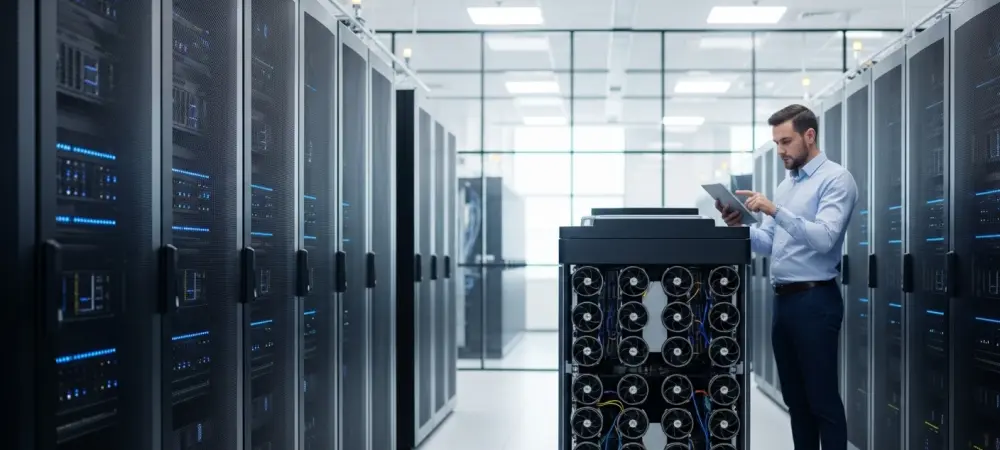
The initial rush toward cloud-native artificial intelligence solutions has hit a significant wall as modern enterprises grapple with the skyrocketing costs of GPU instances and the persistent latency issues that hinder real-time decision-making in high-stakes environments. While the cloud once offered an easy entry point for experimental machine learning models, the transition to full-scale production has revealed deep-seated vulnerabilities regarding data sovereignty and predictable performance. Organizations are finding that the massive volumes of proprietary data required for fine-tuning models are better served by localized infrastructure that eliminates the egress fees and security risks associated with public hosting. This shift marks a return to fundamental engineering principles where the proximity of compute to data determines the efficiency of the system. By bringing AI workloads back to the private data center, enterprises can ensure that their most valuable digital assets remain under strict internal control.
Strategic Control Over Data Assets
Regulatory Compliance: Security and Governance Management
Navigating the complex landscape of global data protection regulations has become a primary driver for the move toward on-premises hardware, as keeping sensitive information within a private perimeter simplifies the verification of compliance standards like GDPR. In a multi-tenant cloud environment, the risk of “noisy neighbors” or underlying hypervisor vulnerabilities presents a threat that many legal departments are no longer willing to tolerate for mission-critical applications.
Local deployments allow for the implementation of customized security layers, including hardware-level encryption and network monitoring, that are often abstracted away in standardized cloud offerings. Furthermore, the ability to physically audit storage media provides an assurance that is impossible when data is distributed across third-party server farms. This granular control is essential for industries where the integrity of training datasets is strictly monitored by external regulatory bodies.
Intellectual Property: Protection of Proprietary Model Weights
Beyond basic security, the protection of intellectual property has necessitated a move away from shared infrastructure where the provider might have underlying access to the hosted environment. Modern enterprises are treating their custom-trained model weights as a major competitive advantage, leading to the development of air-gapped systems where training happens offline to prevent external intercept. This prevents the “one-size-fits-all” performance issues often seen in virtualized environments.
By utilizing dedicated on-premises clusters, engineers can optimize hardware to match the specific requirements of neural networks, whether that involves high-bandwidth memory or liquid-cooling systems. This architectural freedom allows for a more cohesive integration with internal databases, facilitating a seamless flow of information that does not rely on the performance of internet service providers. The result is a self-contained ecosystem that operates at peak efficiency for the enterprise.
Performance Optimization and Economic Efficiency
Latency Reduction: Efficiency in Real-Time Inference
Achieving the millisecond-level response times required for automated manufacturing lines or financial trading is only possible when the physical distance between the data source and the processing unit is minimized. Cloud-based inference often introduces unacceptable jitter caused by network hops and regional congestion, which can degrade the performance of real-time vision systems or predictive maintenance sensors. These delays can lead to operational failures in high-speed corporate workflows.
By deploying high-performance computing clusters directly at the edge, businesses leverage direct interconnects and specialized protocols that provide consistent and predictable throughput. This localized approach also solves the “data gravity” problem, where the cost to move petabytes of streaming data for analysis becomes prohibitive compared to processing that data at its origin. As model sizes continue to grow, the efficiency gains of local processing become even more pronounced for responsive AI.
Financial Sustainability: Total Cost of Ownership Analysis
The transition to on-premises AI infrastructure reflected a strategic realization that long-term operational costs were better served through ownership rather than rental. Decision-makers evaluated the total cost of ownership over a cycle and determined that the capital expenditure for private hardware was significantly lower than the cumulative monthly fees of cloud GPU instances. Technical teams successfully implemented specialized management software to ensure that the flexibility of the cloud was replicated locally.
Organizations that prioritized these local deployments avoided the volatility of public pricing and maintained a faster pace of innovation by removing external dependency. They planned their infrastructure roadmap from 2026 to 2029 to ensure they maintained a competitive position where innovation speed was dictated by internal engineering. This proactive shift toward localized compute provided a foundation for sustainable AI integration that scaled efficiently while maintaining the highest data integrity.