

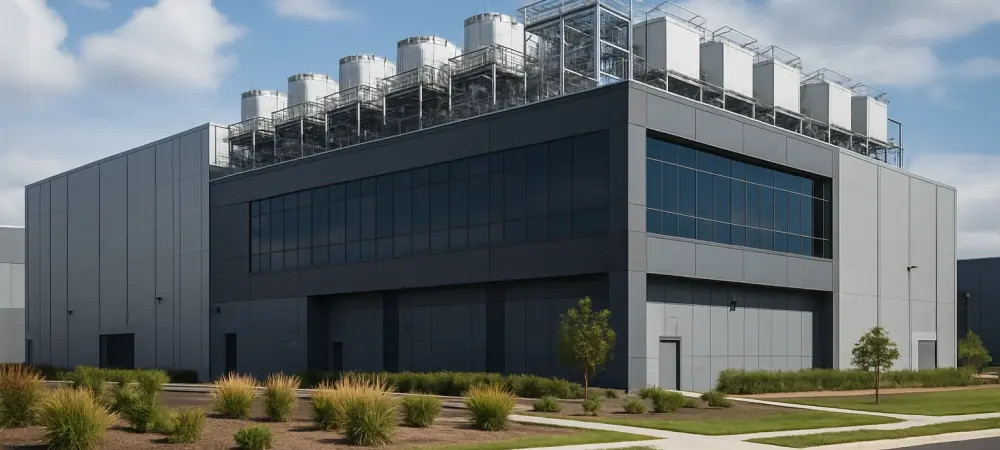
Imagine a quiet town in Arkansas, far from the tech epicenters of Silicon Valley or Chicago, suddenly becoming the site of an $8 billion data center campus. This isn’t a futuristic dream—it’s happening right now in Clarksville, Johnson County, where Serverfarm, a major player in the data center industry, is laying the groundwork for a transformative project. Why Arkansas, and why now? This roundup dives into the buzz surrounding this ambitious move, gathering opinions and insights from various industry voices, local stakeholders, and market analysts to uncover the motivations, challenges, and potential impacts of this unexpected venture. The goal is to piece together a fuller picture of what’s driving this shift and what it means for the future of data infrastructure.
Unpacking the Strategic Choice of Clarksville
What makes Clarksville, a small town near Interstate 40, the chosen spot for such a massive investment? Industry observers point to the 135-acre plot’s accessibility as a key factor, offering ample space for a six-building campus with each structure spanning 360,000 square feet. Reports from local media highlight the phased approach of the project, with initial approvals already secured, signaling strong community backing. Analysts suggest that proximity to major transport routes could ease logistics for construction and operations, even in a region not typically associated with high-tech hubs.
However, not all perspectives are unanimously positive. Some tech infrastructure experts express skepticism about Arkansas’s readiness to support such a large-scale facility, citing the state’s limited history in this sector. Concerns linger about whether local power grids and connectivity can meet the demands of a project of this magnitude. Despite these doubts, others argue that being an early entrant in an untapped market could give Serverfarm a significant edge over competitors still focused on oversaturated urban centers.
Economic Incentives: Arkansas as an Emerging Player
A major point of discussion among economic analysts is the role of Arkansas’s recent tax breaks for data centers, which appear to be a powerful magnet for companies like Serverfarm. Low-cost land and an eager state government hungry for high-tech investment add to the appeal. Many in the business community note that similar incentives have spurred other projects in the region, such as Google’s upcoming facility near West Memphis and a $1 billion development in Little Rock, painting a picture of a state on the cusp of transformation.
On the flip side, some regional planners caution against over-optimism, warning that an unproven market carries risks. They question whether the influx of tech investment might strain local resources or fail to deliver the promised economic boom if demand doesn’t materialize. Still, proponents counter that establishing a foothold in a less competitive area could yield long-term cost savings and scalability, a perspective that seems to align with Serverfarm’s calculated gamble on this emerging frontier.
Sustainability in Focus: Green Tech at the Core
Sustainability is another hot topic in discussions about the Clarksville campus. Local officials have emphasized Serverfarm’s plan to implement a closed-loop water cooling system, a move seen as a nod to the industry’s growing push for eco-friendly designs. Environmental advocates in the region commend this approach, pointing out that Arkansas’s climate and water resources could support such innovations without the strain seen in drier tech hubs. This has sparked hope that the project could set a precedent for greener data center operations.
Nevertheless, doubts persist among some energy analysts about whether sustainable tech can fully offset the enormous power demands of an $8 billion facility. They argue that even with advanced cooling, the sheer scale of energy consumption might challenge local grids, especially in a state not yet equipped for such loads. Balancing growth with environmental responsibility remains a key debate, with many watching closely to see if Serverfarm’s design can deliver on its green promises.
Serverfarm’s Vision: A Shift to Secondary Markets
Looking at the broader context, industry leaders are abuzz about how this project fits into Serverfarm’s global strategy, which already includes 10 data centers across North America, Europe, and Israel, boasting over 1.5 million square feet of space. Analysts see the Arkansas move as part of a larger trend of decentralization, with companies stepping away from pricey, crowded markets like Chicago or London toward more cost-effective secondary regions. Some speculate that the undisclosed end customer for the Clarksville campus could be a major tech giant seeking untapped growth areas.
In contrast, a few market watchers question whether spreading into less established locales might dilute operational focus or strain resources compared to sticking with proven hubs. Yet, many agree that the potential to secure lower costs and build scalable infrastructure in places like Arkansas could redefine how data center expansion plays out in the coming years, especially from 2025 onward. This bold pivot has sparked curiosity about which other non-traditional regions might next catch the eye of industry giants.
Key Takeaways from the Clarksville Venture
Synthesizing the varied opinions, it’s clear that Serverfarm’s investment hinges on a mix of strategic location, enticing economic policies, a commitment to sustainability, and a forward-thinking push into new markets. Local stakeholders view the project as a potential economic catalyst for Arkansas, while industry analysts highlight the advantages of first-mover status in an emerging region. Meanwhile, sustainability advocates and skeptics alike underscore the importance of balancing innovation with practical energy solutions.
For other data center operators, the insights are actionable: exploring secondary markets with supportive policies could unlock hidden opportunities, provided risks are carefully managed. Prioritizing green technologies also emerges as a critical strategy, not just for environmental impact but for long-term operational efficiency. Keeping an eye on evolving state incentives in non-traditional areas might reveal the next big investment frontier.
Reflecting on the Impact and Next Steps
Looking back, the dialogue around Serverfarm’s $8 billion project in Clarksville captured a moment of transformation, blending optimism with caution as Arkansas stepped into the high-tech spotlight. Voices from industry, local government, and environmental circles painted a complex picture of opportunity tempered by challenges, from infrastructure readiness to energy demands. The discussions illuminated how a single project could ripple through a region’s economy and reshape industry trends. Moving forward, stakeholders should consider deeper investments in local infrastructure to support such large-scale developments, ensuring that growth doesn’t outpace capacity. Exploring partnerships with renewable energy providers could further bolster sustainability efforts, addressing some of the lingering concerns. For those intrigued by this evolving landscape, diving into regional economic reports or tracking other secondary market projects offers a chance to stay ahead of the curve in this dynamic sector.