

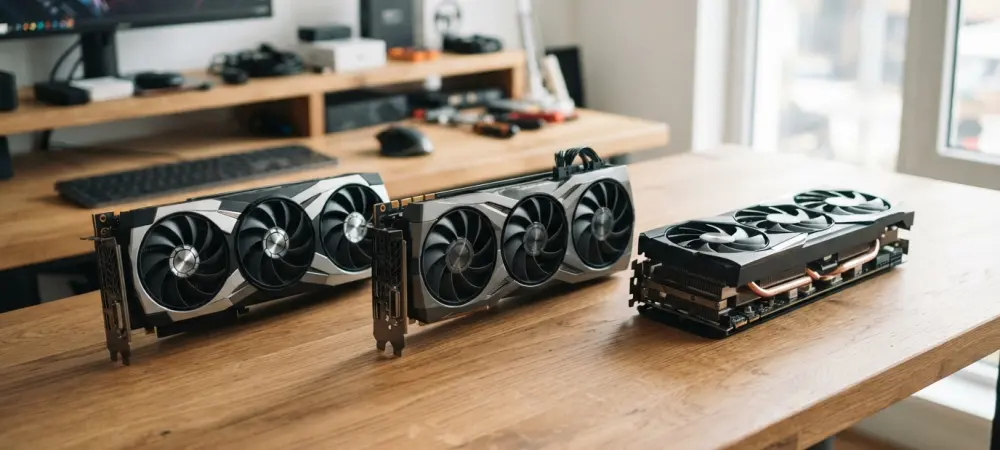
Current inventory levels for the 16GB RTX 5080 suggest a rapid transition is imminent as NVIDIA prepares to clear the way for higher-capacity hardware. This strategic maneuver highlights a significant pivot in the high-end graphics processor market, where the demand for local video memory has outpaced previous architectural roadmaps. Observers in the manufacturing sector report that the existing stock of the 16GB variant is being depleted at an accelerated rate, with remaining chips estimated to last no more than two months. This vacuum is not accidental; rather, it is a calculated effort to reposition the 24GB variant as the primary flagship for enthusiasts who require more than just raw compute power. As modern applications, particularly those involving local artificial intelligence and complex texture streaming, continue to push the boundaries of current hardware, the need for a robust memory buffer has become the defining factor for performance in the high-tier segment. Consequently, what was once a steady lifecycle has turned into a sprint toward higher specifications.
Strategic Shifts in the High-End GPU Landscape
Consolidation of the Regional Product Stack
The move to accelerate the 24GB RTX 5080 launch is most visible in specific international markets where NVIDIA is aggressively streamlining its product offerings. In regions like China, the company is reportedly preparing to discontinue several high-profile models, including the RTX 5090 D v2 and the standard 16GB 5080. By removing these overlapping tiers, the manufacturer creates a clear path for the 24GB version to take the mantle as the undisputed leader in performance. This consolidation serves a dual purpose: it simplifies a cluttered supply chain while simultaneously pushing consumers toward a more future-proof hardware standard. Instead of maintaining multiple production lines for cards that offer incremental differences, the focus is now on a singular, high-capacity flagship that can handle the growing workloads of 2026. This streamlined approach reflects a broader intent to dominate the enthusiast space by offering a product that leaves no room for competition in terms of raw memory availability.
Addressing the Memory Bottleneck in Modern Computing
The decision to advance the release of the 24GB variant from its original 2027 window to late 2026 or early 2027 is a direct response to the shifting requirements of professional and gaming environments. While 16GB was recently considered the gold standard for high-resolution rendering, the rapid integration of generative AI tools and ultra-high-definition asset packs has moved the goalposts. Developers are increasingly optimizing software for larger video memory pools, leaving lower-capacity cards struggling with stuttering or reduced fidelity in demanding scenarios. By accelerating the 24GB launch, NVIDIA ensures that its hardware remains relevant in an era where memory capacity is often as critical as the number of processing cores. This shift indicates that the company is prioritizing long-term usability over traditional annual update cycles. The result is a hardware ecosystem where the barrier to entry for performance is rising, but the rewards in terms of stability and compatibility are significantly more pronounced.
Market Volatility and the Reality of Global Supply
Navigating Fluctuating Stock Levels and Pricing
As the industry prepares for these new arrivals, the current marketplace is characterized by significant instability and inflated costs. Global inventories of the flagship RTX 5090 have remained sparse, leading to a situation where the cards that do appear on store shelves are often listed at substantial premiums. This scarcity has trickled down to the RTX 5080 series, which has begun to vanish from major online marketplaces in regions like the United Kingdom. In some instances, prices have surged by as much as 50% above the suggested retail price, driven by a combination of limited supply and high demand from both gamers and industrial users. This environment of scarcity reinforces the necessity for a more stable and predictable product launch like the 24GB refresh. While consumers find the current pricing landscape difficult, the acceleration of a higher-capacity model suggests that NVIDIA is attempting to reset the market by replacing short-lived inventory with a high-value hardware proposition for the coming years.
Strategic Recommendations for Future Hardware Integration
The acceleration of the 24GB hardware launch demonstrated that market agility and memory overhead were the primary drivers of success in the 2026 hardware cycle. To navigate this transition, users identified the need to monitor regional stock alerts and prioritize memory capacity over immediate availability. Procurement strategies shifted toward securing hardware that offered long-term viability for both creative and computational tasks, rather than settling for bridge technologies that faced rapid obsolescence. Industry professionals evaluated their existing infrastructure and determined that the jump to a 24GB standard was a necessary investment to sustain current workflows. This proactive stance allowed early adopters to stabilize their operational environments before the next wave of software demands emerged. Moving forward, the emphasis rested on analyzing the true memory requirements of upcoming projects to avoid the bottlenecks seen in previous generations. By aligning hardware acquisitions with these high-capacity trends, consumers and businesses ensured they remained at the forefront.