

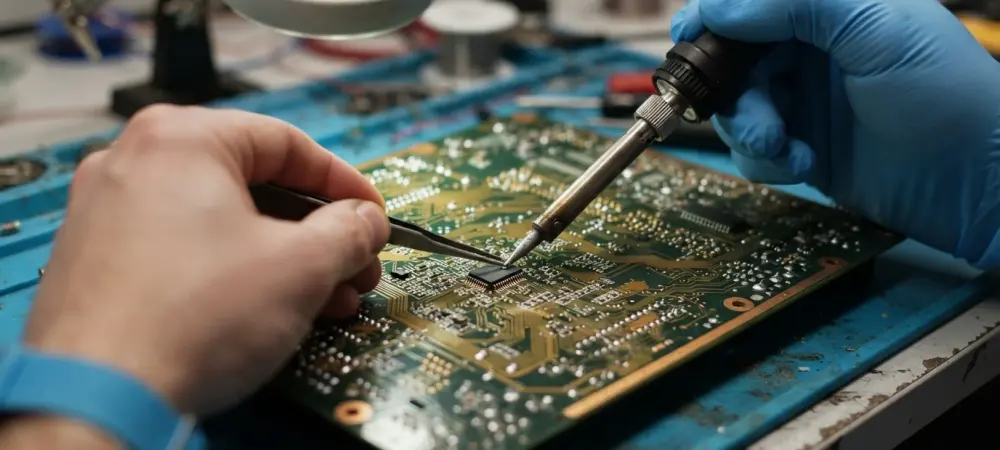
The pursuit of squeezing every last drop of performance from aging silicon has recently transcended simple overclocking, evolving into complex hardware surgery that rewrites the specifications of classic graphics cards. This modification trend arose as a response to the steep VRAM requirements of 2026 software and stagnant market pricing.
By altering the hardware, enthusiasts bypass planned obsolescence and extend the life of legacy cards. This transition from software tuning to physical component replacement marks a new era in the DIY hardware community.
Introduction to Hardware-Level VRAM Modification
Hardware modification involves replacing integrated circuits to exceed original factory limits. It addresses the growing gap between processing power and memory capacity in older GPU generations.
As high-resolution textures become standard, these mods offer a cost-effective alternative to purchasing new flagship units. The practice has moved from niche forums to specialized professional services.
Technical Architecture and Implementation
The modification process requires a deep understanding of PCB layouts and memory controller capabilities. It is a fundamental reconfiguration of the card’s memory management system.
Memory Chip Swapping and Capacity Doubling
Technicians desolder 1GB GDDR6 modules and replace them with 2GB alternatives to double capacity. This requires precision BGA soldering to ensure that each contact point maintains electrical integrity.
Success hinges on perfect chip placement and thermal management. A single poorly soldered pin can render the entire graphics card non-functional.
BIOS and Firmware Integration
The GPU controller must be tricked into addressing the new memory pool. This involves modifying the BIOS and shifting physical strapping resistors on the PCB to signal the new density.
Without these firmware adjustments, the operating system remains blind to the upgrade. Integration is the vital bridge between the physical mod and usable performance.
Trends in the Enthusiast Modification Market
Modding has shifted from simple cooling improvements toward high-stakes component surgery. This reflects a community that values hardware longevity over the traditional two-year upgrade cycle.
Specialized shops now provide guaranteed VRAM expansions with professional warranties. This maturation signifies a rejection of restrictive manufacturer specifications in favor of extensibility.
Real-World Applications: Gaming and Artificial Intelligence
Expanded VRAM buffers transform the utility of older chips in modern, data-heavy workloads. This allows legacy hardware to handle tasks previously reserved for expensive professional workstations.
High-Fidelity 4K Gaming Performance
In titles like Microsoft Flight Simulator 2024, the 22GB buffer prevents the stutters common at 11GB. Stability is greatly improved in modern environments that demand massive texture overhead. The modification eliminates the “Out of Memory” crashes that plague original hardware in 4K. It allows the RTX 2080 Ti to maintain smooth frame times in the latest releases.
Local AI Workloads and Large Language Models
AI tasks see a massive boost in ComfyUI as larger models load entirely into the expanded VRAM. This turns a consumer card into a viable developer tool for local machine learning.
The capacity doubling significantly reduces reliance on slow system memory during image generation. It bridges the gap between mid-range consumer gear and high-end enterprise silicon.
Critical Limitations and Technical Hurdles
Despite the capacity gains, underlying architectural flaws cannot be ignored. Memory size alone does not dictate total speed, and older chips eventually hit an unavoidable ceiling.
Architectural Bottlenecks and Bandwidth Constraints
The Turing architecture remains a bottleneck because the memory bus cannot match modern bandwidth. Modded cards handle large data but process it slower than newer Blackwell-based GPUs.
The lack of modern tensor cores limits the efficiency of AI processing. Increased capacity provides headroom, but it cannot fix the inherent latency of an older generation.
Market Viability and Value Proposition
At a cost of $650, a modded card competes with modern options like the RX 9070 GRE. The choice is often a trade-off between higher VRAM and superior architectural efficiency.
For some users, the specific need for 22GB of memory outweighs the benefits of a newer, faster chip. However, for general gaming, the value proposition remains highly subjective.
The Future of Hardware Extensibility
The success of these projects suggests that modularity could become a selling point for future designs. Consumers are increasingly interested in hardware that can grow with their software needs.
Industry leaders may be pressured to offer more flexible configurations as the secondary market matures. This could shift the industry toward sustainable, user-serviceable hardware standards.
Final Assessment of VRAM Expansion Mods
The review of VRAM expansion mods showed a unique intersection of engineering and necessity. While performance gains in specific AI and 4K tasks were undeniable, the architectural age remained a hurdle. It was concluded that these modifications served as a niche but effective solution for extending hardware life. The best results occurred when users prioritized memory capacity over raw processing speed.