

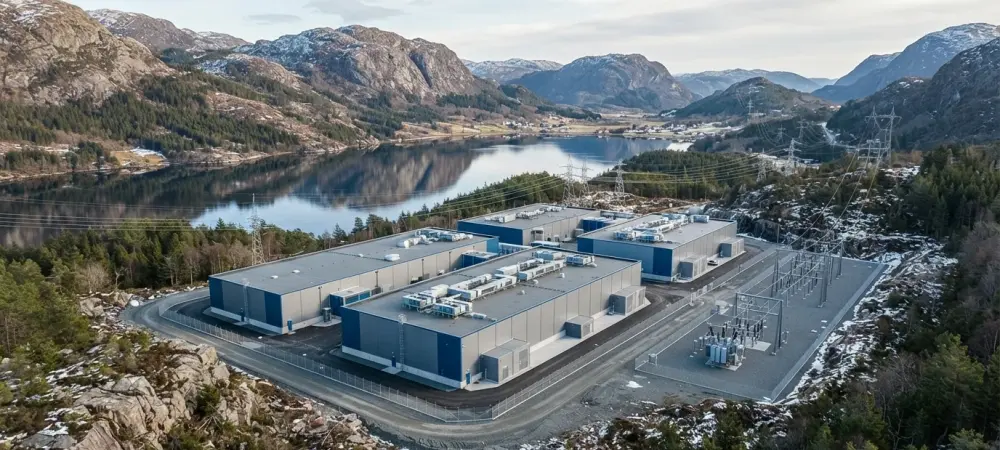
The pristine fjords and icy landscapes of Norway, long considered the ultimate sanctuary for the world’s power-hungry servers, are witnessing a fundamental shift as the government moves to reclaim its renewable energy for the national good. For over a decade, the promise of cheap, carbon-neutral hydroelectricity acted as a magnet for Silicon Valley, transforming rural Norwegian towns into hubs for the global cloud. However, this era of the open-door policy has reached a definitive conclusion. As the digital appetites of artificial intelligence and global streaming services collide with the physical reality of a strained power grid, the Norwegian state has stepped in to prioritize its citizens over foreign tech giants.
This pivot is not merely a localized regulatory hurdle but a significant recalibration of how a modern nation values its natural resources in a digital-first economy. The importance of this shift lies in its message to the global technology sector: energy is no longer a commodity sold to the highest bidder without question. Instead, it has been reclassified as a strategic national asset. This change comes at a time when the entire Nordic region is reassessing its role as the world’s back-end processor, signaling that the “gold rush” for Nordic energy has finally met the hard limits of infrastructure and social utility.
The End of the Open-Door Policy for Big Tech
The sudden and dramatic pivot by the Norwegian government has effectively hit the pause button on what many once viewed as an endless expansion of digital infrastructure. On November 9, 2026, the national grid operator, Statnett, implemented a freeze on new grid connections that will last until at least late 2027. This moratorium was not a decision made in a vacuum; it followed years of mounting pressure from local municipalities and domestic industries that found themselves competing with massive server farms for the same pool of electricity. The shift represents a fundamental change in philosophy, moving away from a market-driven approach toward one of strict state oversight. For years, the abundance of hydroelectric power meant that any data center project with sufficient capital could secure a spot on the grid. Now, the state has signaled that energy sovereignty takes precedence over being a primary destination for the world’s digital exhaust. By treating electricity as a finite strategic resource, Norway is asserting its right to dictate the terms of industrial growth, ensuring that national interests are never sidelined by the demands of the global tech ecosystem.
A Perfect Storm: Demand and Infrastructure Limits
The necessity for stricter regulation stems from a staggering mathematical reality that became impossible for policymakers to ignore. While Norway currently supports about 800MW of data center capacity, the queue for future connections has ballooned to over 32,000MW. This figure is nearly double the annual electricity consumption of many mid-sized nations and dwarfs the current national peak of 25,000MW. When energy consumption from a single sector quadruples in just three years, the risk to national energy security becomes a primary concern for the highest levels of government.
This tightening of control is not just about the total volume of power generation; it is about protecting the integrity of the power grid from the volatility inherent in massive industrial loads. Straining the transmission lines to their breaking point threatens to destabilize household electricity prices during a period of global energy uncertainty. Consequently, the government has realized that allowing the queue to grow unchecked would eventually lead to a power deficit, forcing the country to choose between keeping the lights on in homes or keeping servers running for international corporations.
From First-Come, First-Served to Strategic Prioritization
The Norwegian government is replacing its previous open-market approach with a rigorous merit-based licensing system that favors social utility. Under this new framework, projects are no longer evaluated solely on their ability to pay or their chronological place in the line. Instead, the government has identified specific sectors that will receive priority access to the grid, ensuring that energy is used to bolster the nation rather than just host foreign data. National resilience is at the forefront of this list, with priority given to facilities supporting the military, police, and emergency response systems.
Public services such as health infrastructure and critical financial systems are also high on the list for guaranteed power, reflecting a commitment to domestic stability. Furthermore, technological sovereignty has become a key metric; artificial intelligence projects that serve the specific needs of the Nordic or European ecosystems will be favored over general-purpose global clouds. In a major policy shift, cryptocurrency mining operations have been labeled as having low societal value. These operations now face severe restrictions or outright denials of grid access, as the state has determined that their energy consumption does not provide a sufficient economic or social return to the Norwegian public.
Voices of Authority on the Energy Transition
Government officials and industry experts are framing this shift as a move toward energy sovereignty that could redefine the European industrial landscape. Energy Minister Terje Aasland recently noted that data centers accounted for three-quarters of all new power applications in the current cycle, a trend he described as unsustainable without direct state intervention. Digitalization Minister Torgeir Micaelsen has been even more direct, stating that Norway only wants the data centers it actually needs to function as a modern and secure society. This sentiment is echoed across the Nordic region, as Denmark and Sweden implement similar tiered priority systems to manage their own transmission queues.
Industry analysts suggest that the era of the “Nordic escape valve”—where tech firms could find unlimited space and power—is officially coming to an end. Experts argue that the transition toward a more selective approval process is a natural evolution for a nation that has reached the limits of its existing infrastructure. Moreover, there is a growing consensus that other nations will soon follow Norway’s lead as the energy demands of high-performance computing continue to outpace the growth of renewable energy generation. The conversation has shifted from how to attract investment to how to manage it responsibly.
The New Framework: Data Center Investment in Norway
For tech giants and infrastructure developers to succeed in this new regulatory landscape, they must move beyond being mere consumers of energy. The government is drafting a framework that requires operators to take full responsibility for the environmental and economic footprints of their facilities. This includes a requirement for direct infrastructure funding, where operators may be asked to finance the construction of new energy generation, such as offshore wind farms. By linking data center approval to the creation of new energy sources, the state ensures that the sector pays its own way rather than draining existing resources. New policies will also ensure that data center operators pay their full share of the grid upgrades they necessitate, preventing the cost from falling on domestic taxpayers through higher utility bills. Companies must now provide a clear business case for how their facility benefits the Norwegian economy or enhances national security before they can even enter the queue. This new era of accountability means that even developers with existing reservations but incomplete projects must prepare for the possibility that these stricter licensing requirements will be applied retroactively to their current plans.
Ultimately, the Norwegian administration recognized that the unchecked expansion of data infrastructure posed a significant risk to the social fabric and economic stability of the nation. The policy shifted toward a future where energy was treated as a shared national treasure, ensuring that the lights stayed on for the citizens while the digital giants learned to contribute as much as they consumed. This decisive action paved the way for a more resilient digital landscape, where every megawatt served a distinct social purpose. Stakeholders observed that the successful integration of these facilities depended on a symbiotic relationship with the local grid, setting a precedent that prioritized public welfare over private expansion.