

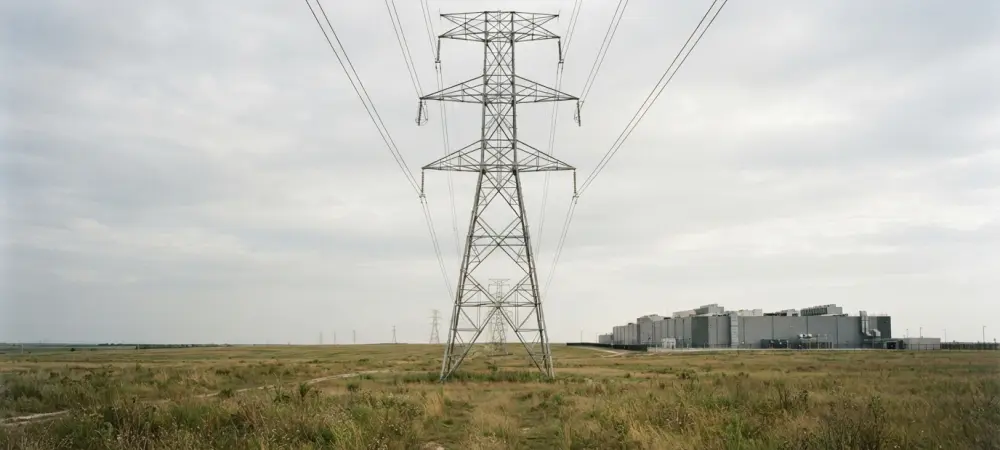
Behind the sleek interface of every large language model lies a massive network of processors that consumes electricity at a rate comparable to small nations, silently rewriting the economics of your local utility bill. While the average person interacts with artificial intelligence through a glowing screen, the physical manifestation of that interaction occurs in sprawling, windowless warehouses where thousands of high-performance chips hum in perpetual motion. These facilities are no longer just repositories for static data; they have become the intense, high-energy engines of a new digital economy. This transformation is placing an unprecedented strain on the aging electrical grids of the United States, raising a critical question about who will ultimately pay the price for this technological leap. As generative models become more sophisticated, the energy required to train and maintain them is climbing at a rate that traditional power planning cycles find nearly impossible to match.
The transition from standard cloud storage to high-intensity artificial intelligence computation has fundamentally altered the relationship between technology giants and the public power grid. In previous years, a data center acted as a relatively steady load, but AI training cycles create massive spikes in demand that can destabilize local distribution networks. This shift is not merely a technical challenge for engineers; it is a financial hurdle for the average household. Current projections indicate that the power requirements of these facilities will continue to escalate significantly between 2026 and 2030, effectively doubling their current footprint on the national grid. For the consumer, this means the invisible infrastructure supporting their favorite apps is becoming a visible line item on their monthly expenses.
The nut graph of this unfolding story is simple yet profound: the digital intelligence race is outstripping the capacity of our physical infrastructure. This creates a supply-and-demand imbalance that forces utilities to invest billions in new power plants and transmission lines. Under the existing regulatory framework, these costs are often distributed across the entire customer base, meaning that a family in a modest apartment might be subsidizing the high-voltage requirements of a multibillion-dollar tech corporation. As these “digital brains” expand, they move from being silent occupants of the grid to its most aggressive consumers, triggering a regressive shift in how infrastructure is funded and maintained.
Why the Data Center Surge Is Reshaping Your Utility Landscape
The fundamental conflict at the heart of the current energy crisis is the disparate timeline between the technology sector and the utility industry. A major technology company can commission, build, and populate a massive AI data center in less than two years, whereas the construction of a single high-voltage transmission line or a new natural gas plant often takes a decade or more. This mismatch leaves utility providers scrambling to meet enormous, immediate requests for power without the necessary lead time to expand capacity incrementally. Consequently, many regions are facing a situation where existing infrastructure is being pushed to its absolute thermal and electrical limits, forcing emergency measures that are rarely cost-effective.
Furthermore, the nature of AI computing requires a different kind of power profile compared to traditional internet services. While standard web traffic fluctuates based on human behavior, AI model training is an around-the-clock endeavor that demands a constant, unwavering flow of “firm” power. This prevents utilities from relying solely on intermittent renewable sources like wind or solar unless they also invest in incredibly expensive, large-scale battery storage or keep older, carbon-intensive plants running as a backup. This persistent demand reduces the overall flexibility of the grid, making it more difficult to manage peak usage periods during summer heatwaves or winter freezes, which in turn drives up the wholesale price of electricity for everyone.
The geographical concentration of these facilities complicates the issue further, as developers flock to specific “hubs” where fiber-optic connectivity and tax incentives are most favorable. This creates massive “load pockets” where the demand for power can exceed the local supply by a factor of ten or more. In these scenarios, the utility must often import power from distant regions, incurring transmission losses and congestion fees that are eventually passed through to the retail consumer. The rapid expansion of these hubs means that the grid is no longer evolving to serve the growth of communities, but is instead being re-engineered to feed the insatiable appetite of a singular, high-intensity industry.
The Mechanics of Asymmetric Energy Burdens
The financial pressure experienced by residential consumers is a direct result of the “rate base” model that governs most American utilities. In this system, the cost of building new infrastructure—whether it is a substation, a set of transmission towers, or a new generation facility—is pooled together and divided among all customers. Because AI data centers require specialized, high-capacity equipment that would not otherwise be necessary for residential or small-business service, the general public is essentially providing a low-interest financing mechanism for the tech industry’s expansion. This is a regressive economic shift where those with the least amount of financial leverage are footing the bill for the most profitable companies in human history.
Another layer of this burden involves the wholesale capacity markets, such as the PJM Interconnection that serves much of the Eastern United States. In recent auctions, the price of ensuring that there is enough power to meet future demand has skyrocketed, sometimes increasing by more than 800 percent in a single year. These price spikes are driven by the realization that data center demand is growing faster than new supply can be brought online. While these are wholesale costs, they are a primary component of the retail rates charged to homes. When capacity becomes scarce, the market responds with higher prices, and because electricity is a non-negotiable necessity, the average family has no choice but to pay the increased rate.
There is also the looming specter of stranded assets, which represents a significant long-term risk for ratepayers. If a utility company spends five billion dollars on a transmission project specifically designed to serve a cluster of AI data centers, that debt is typically amortized over thirty or forty years. If the AI industry experiences a downturn, or if a specific company decides to relocate its operations to a region with cheaper power, the remaining residential customers are left to pay off the debt for infrastructure they never needed. This scenario transforms the current tech boom into a potential decades-long financial liability for local communities, creating a permanent increase in the cost of living long after the initial investment has lost its luster.
Regional Battlegrounds: Where the Conflict Is Hitting Home
The tension between digital expansion and grid stability is most visible in Northern Virginia, home to “Data Center Alley.” In Loudoun and Prince William Counties, the sheer density of these facilities has necessitated the creation of massive new power corridors that cut through historic landscapes and residential neighborhoods. Local opposition has intensified as residents realize that these projects are not designed to improve their local service, but to ensure that high-performance chips can run without interruption. The resulting litigation and public protests have slowed some projects, but the pressure from the tech sector remains relentless, forcing a constant state of negotiation between corporate interests and public welfare.
In Georgia, the surge in demand has forced a startling reversal in environmental policy, as the primary utility has sought permission to keep coal-fired units operational and build new natural gas capacity to meet the needs of incoming tech giants. This move has sparked a fierce debate among regulators who are concerned that the state’s carbon reduction goals are being sacrificed at the altar of data center growth. The financial impact is equally concerning; as the utility invests in these new, expensive generation assets, the burden of funding them is placed squarely on the shoulders of Georgia’s residents. This creates a paradox where the transition to a high-tech economy is simultaneously driving a return to older, more expensive, and dirtier forms of energy production.
Texas offers a different but equally cautionary tale, as the ERCOT grid struggles to integrate the 24/7 needs of data centers and cryptocurrency mines into a system already prone to volatility. During extreme weather events, the massive load from these facilities can represent the difference between a stable grid and a catastrophic blackout. While some data centers participate in “demand response” programs to shut down during emergencies, the sheer volume of their consumption remains a constant stressor. The cost of maintaining this delicate balance is reflected in the high ancillary service fees that permeate the Texas market, further inflating the bills of households that are already coping with some of the most unpredictable energy prices in the country.
Strategies to Protect Residential Ratepayers
To prevent the AI boom from becoming a financial crisis for the public, several states have begun to pioneer “Large Load” tariffs. These innovative pricing structures depart from the traditional model by requiring high-volume users to pay a premium that reflects the actual cost of the infrastructure they require. In states like Ohio and Oregon, regulators are considering rules that would force data centers to provide significant financial collateral before a utility begins construction on their behalf. This ensures that if the company leaves or the project fails, the utility is not left with an unpaid bill that must be covered by the rest of the rate base, effectively insulating the average person from corporate risk.
Another promising approach involves the implementation of “load flexibility” mandates, which would require AI facilities to behave as sophisticated participants in grid management rather than just passive consumers. Under these models, a data center would be equipped with its own onsite generation or battery storage, allowing it to “island” itself from the grid during periods of peak demand. By acting as a buffer, these facilities could theoretically help stabilize the grid, though the high capital cost of AI hardware makes companies reluctant to let their chips sit idle for even a few minutes. However, as the grid reaches its breaking point, regulators are increasingly viewing this type of cooperation not as an optional service, but as a mandatory requirement for connecting to the public system.
Technological solutions are also being explored in the form of direct-to-chip liquid cooling and more efficient power conversion systems. While these improvements do not reduce the total demand for power, they can mitigate the “waste” energy used for cooling, which currently accounts for a massive percentage of a data center’s total footprint. By reducing the non-computational load, companies can squeeze more performance out of the same electrical budget, potentially slowing the rate at which they need to request new capacity. For the residential ratepayer, any reduction in the total growth of demand helps to keep wholesale prices lower and delays the need for expensive new transmission projects that would otherwise drive up monthly bills.
Ending Diminishing Economic Incentives
For over a decade, state and local governments have competed to attract data centers by offering massive property and sales tax exemptions, often totaling hundreds of millions of dollars. The logic was that these facilities would act as anchors for high-tech investment and job creation. However, the reality of the AI era has revealed a different outcome: data centers are capital-intensive but labor-light. A billion-dollar facility might only employ thirty to fifty permanent staff members once construction is complete. As a result, the “economic development” argument is losing its luster, and many municipalities are realizing that the tax revenue they are giving away could be better used to offset the rising utility costs of their citizens.
There is a growing movement to eliminate these “permanent” tax breaks and instead implement impact fees that directly fund community energy assistance programs. In this new framework, a data center would pay into a dedicated fund that helps low-income households upgrade their insulation or install more efficient appliances, directly counteracting the upward pressure the facility puts on local energy prices. By shifting the focus from “attracting investment” to “managing impact,” policymakers can ensure that the presence of the tech industry provides a tangible benefit to the community rather than just a strain on its resources. This approach acknowledges that the grid is a public good, and those who use it most aggressively must contribute proportionally to its health.
Ultimately, the goal is to create a more equitable social contract between the architects of artificial intelligence and the people whose homes power that intelligence. This involves a fundamental re-evaluation of what constitutes a “fair” utility rate and a recognition that the digital economy cannot thrive at the expense of the physical one. As we move from 2026 toward the end of the decade, the success of these regulatory shifts will determine whether AI becomes a tool for broad societal progress or a catalyst for a new form of energy-driven inequality. By demanding transparency and accountability from both utilities and tech giants, communities can ensure that the “light” of the digital age does not come at the cost of being able to keep the lights on at home.
The landscape of energy consumption underwent a massive shift as the digital intelligence race moved from the laboratory into the physical world. Regulators looked at the mounting evidence of cost-shifting and realized that the traditional utility model was no longer sufficient to protect the interests of the average citizen. Success stories emerged from regions that acted early to implement large-load tariffs and impact fees, proving that technological growth did not have to result in a financial burden for the vulnerable. The narrative shifted from one of unchecked expansion to one of responsible integration, where the price of innovation was finally paid by those who reaped the greatest rewards. This period served as a turning point, ensuring that the infrastructure of the future was built on a foundation of equity rather than subsidy. Looking ahead, the focus remained on refining these protective frameworks to accommodate the next generation of industrial-scale computing while maintaining the affordability of a basic human necessity. This era of rebalancing provided a clear roadmap for how a society could embrace the most advanced tools of the mind without losing sight of the essential needs of the household. As the initial shocks of the AI boom stabilized, the collective effort of policymakers and engineers established a more resilient and fair grid for everyone.