

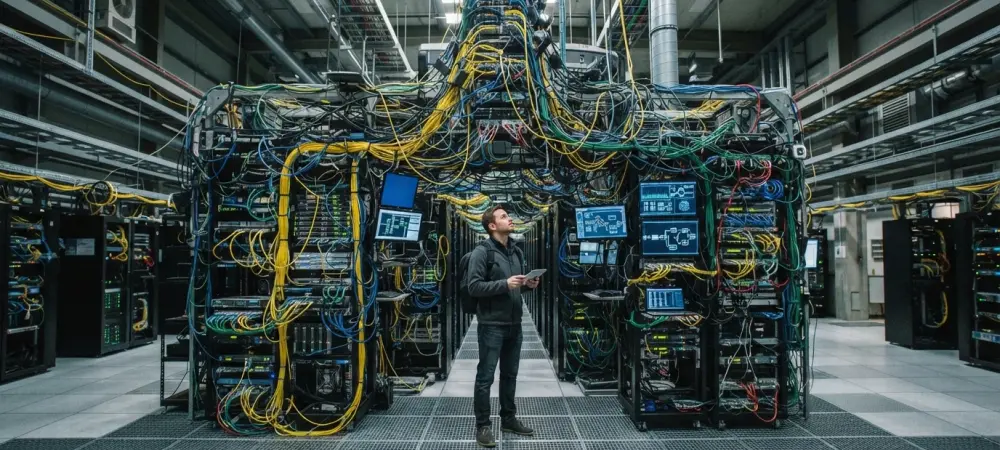
This invisible architecture, commonly referred to as data plumbing, provides the essential foundation for every modern business decision, yet the artisans who build these systems are becoming increasingly rare. While the corporate appetite for data-driven insights has accelerated into 2026, the specific expertise required to route, filter, and sanitize that information has not kept pace, creating a fundamental bottleneck for global technological progress.
In the current economic climate, where algorithmic precision defines market competitiveness, the data engineer has emerged as a primary architect of corporate strategy. This talent shortage represents a systemic risk that goes beyond simple recruitment delays; it is a structural barrier that threatens the stability of cloud infrastructures and the viability of generative artificial intelligence projects. Organizations that fail to address the scarcity of these professionals find their most ambitious innovation initiatives stalled by the weight of unreliable information and collapsing data pipelines.
The Invisible Plumbing Holding up Modern Business
Every time a chief executive officer views a real-time visualization of global sales or an automated system adjusts inventory based on a predictive model, a complex web of extraction and transformation is working in the background. Data engineering serves as this critical infrastructure, moving raw information from disparate sources like point-of-sale terminals and cloud applications into a format that analysts can actually use. Without this functional “plumbing,” the high-level analytics and artificial intelligence that companies rely on would be fed by inconsistent and erroneous data, leading to flawed conclusions.
The complexity of these systems has increased significantly as businesses move toward multi-cloud environments and streaming data architectures. Engineers must now manage not only the movement of data but also its security, governance, and latency across multiple jurisdictions and platforms. This role is no longer about simple database management; it involves building resilient software systems that must remain operational twenty-four hours a day, handling massive spikes in volume without losing a single transaction record.
Despite its importance, the work of a data engineer often remains hidden from the view of the broader organization until something breaks. When a dashboard fails to update or a machine learning model begins producing nonsensical predictions, the underlying cause is frequently a broken pipeline or an unhandled schema change. This lack of visibility contributes to the difficulty of recruitment, as the role lacks the public-facing glamour of data science or product design, even though it is the most vital component of the modern information stack.
Understanding the Growing Data Talent Gap
The struggle to hire data engineers is a direct consequence of the rapid evolution of the technology industry over the last several years. The role only achieved its own distinct professional identity within the last decade, transitioning from a secondary task for generalist software developers into a highly specialized discipline. As the volume of global information grew exponentially between 2024 and 2026, the technical requirements for managing that data became too complex for non-specialists to handle effectively. This rapid specialization has left the educational sector in a state of constant catch-up, as traditional computer science degrees often focus on theoretical software development rather than the practicalities of data orchestration. Consequently, the current pool of senior talent is composed almost entirely of self-taught veterans who learned their trade by managing high-stakes system failures in real-world environments. This “scar tissue” of experience is impossible to replicate in a classroom, making seasoned professionals who can design scalable architectures incredibly scarce.
Furthermore, the migration of legacy systems to modern cloud warehouses has created a massive spike in demand that far exceeds the natural growth of the labor market. Almost every mid-to-large organization is currently undergoing some form of data modernization project, all competing for the same narrow slice of the workforce. This imbalance has created a seller’s market where the most qualified engineers are frequently lured away by aggressive compensation packages and the promise of working with the most cutting-edge tooling.
Structural Roots of the Recruitment Crisis
Many hiring initiatives fail because they are based on a fundamental misunderstanding of the data engineering discipline. Organizations often publish “unicorn” job descriptions that demand mastery of dozens of unrelated tools, from specific cloud platforms to complex machine learning frameworks. By combining the responsibilities of three distinct roles—pipeline construction, data modeling, and infrastructure management—into a single position, companies unintentionally signal to top talent that the working environment will be disorganized and prone to burnout.
The recruitment process itself is often hindered by rigid applicant-tracking systems that prioritize specific keywords over engineering fundamentals. A highly capable software engineer with deep experience in distributed systems might be filtered out simply because their resume does not mention a specific, niche orchestration tool that could be learned in a week. This focus on temporary tool proficiency rather than long-term architectural judgment prevents many organizations from seeing the most promising candidates who could actually solve their underlying structural issues.
Moreover, a phenomenon of silent attrition occurs when top-tier candidates observe these unrealistic expectations and choose to ignore the job posting entirely. Professionals who have spent years in the field recognize that a role requiring 24/7 on-call availability alongside architectural design is a recipe for exhaustion. This creates a cycle where the most desperate companies, who need help the most, are the ones least likely to attract the high-caliber talent necessary to fix their systemic problems.
High Stakes of the Empty Engineer Seat
The financial impact of leaving a data engineering position vacant is often underestimated by management because it does not appear as a direct expense on a balance sheet. However, the accumulation of technical debt during a vacancy can cost a company far more than the salary of a senior hire. When data pipelines are maintained by non-specialists or overworked juniors, the result is a series of “quick patches” and fragile workarounds that inevitably fail under high volume, requiring expensive emergency repairs later.
Strategic stagnation is another severe consequence of the talent gap, particularly in the realm of artificial intelligence and machine learning. High-profile AI pilots and predictive analytics projects cannot progress beyond the prototype stage without a robust data infrastructure to feed them high-quality information in real time. Without dedicated engineers to build these foundations, a company’s competitive edge erodes as rivals with better-staffed teams successfully launch data-driven products and services.
The pressure of a vacancy also takes a heavy toll on the existing technical staff, who must absorb the additional workload to keep the business operational. This “double-duty” scenario frequently leads to a domino effect of resignations, as the most competent remaining employees seek positions with better work-life balance. What begins as a single vacancy can quickly turn into a total collapse of the data department, leaving the organization’s digital infrastructure in a state of paralysis.
Strategic Frameworks for Faster Hiring
To overcome the recruitment bottleneck, forward-thinking organizations have begun to overhaul their hiring workflows to prioritize speed and practical ability. In a market where top candidates sign offers within days, a traditional month-long interview process involving five or six rounds is a significant liability. Streamlining the process into a tight, two-week window—consisting of a technical screen, a practical system-design exercise, and a cultural assessment—allows companies to secure talent before they are lured away by competitors. Expanding the search toward global talent pools has also become a necessity for companies located in high-cost tech hubs. By embracing remote-first or hybrid models, organizations can tap into the deep reservoir of engineering talent in regions like Eastern Europe and Latin America. While this requires navigating different legal frameworks and time zones, the ability to access a broader demographic of experienced professionals often outweighs the administrative complexity. Furthermore, moving away from tool-specific testing toward an evaluation of engineering fundamentals has proven more successful in identifying long-term performers. Instead of asking candidates to recite documentation for a specific cloud service, effective interviewers focus on how a candidate handles scaling challenges, data integrity issues, and system failures. This approach identifies engineers who possess the adaptability to master whatever new tools might emerge during their tenure at the company.
Utilizing Interim Staffing Solutions
The industry eventually recognized that the pursuit of a perfect permanent hire could not come at the expense of current operational stability. Successful management teams addressed the immediate talent gap by integrating interim staffing solutions, such as specialized freelancers or staff augmentation services, into their long-term growth plans. These temporary measures provided the necessary expertise to maintain infrastructure integrity while the search for a permanent leader continued, preventing the accumulation of technical debt that usually accompanied a vacancy.
Organizations found that staff augmentation offered a more sustainable bridge than traditional project-based consulting because the external engineers were embedded directly into the internal teams. This integration ensured that institutional knowledge remained within the company through documentation and collaborative coding practices. By the time a permanent hire was eventually secured, the infrastructure was in a healthy state, allowing the new employee to focus on strategic innovation rather than fixing a backlog of inherited failures.
Ultimately, the most resilient companies treated data engineering recruitment as a continuous process rather than a reactive one. They shifted their focus toward building internal mentorship programs and creating clear career paths that allowed junior developers to transition into engineering roles over time. This holistic approach, combined with a willingness to utilize external experts for high-stakes transitions, ensured that the vital “plumbing” of the business remained robust, regardless of the fluctuations in the global labor market.