

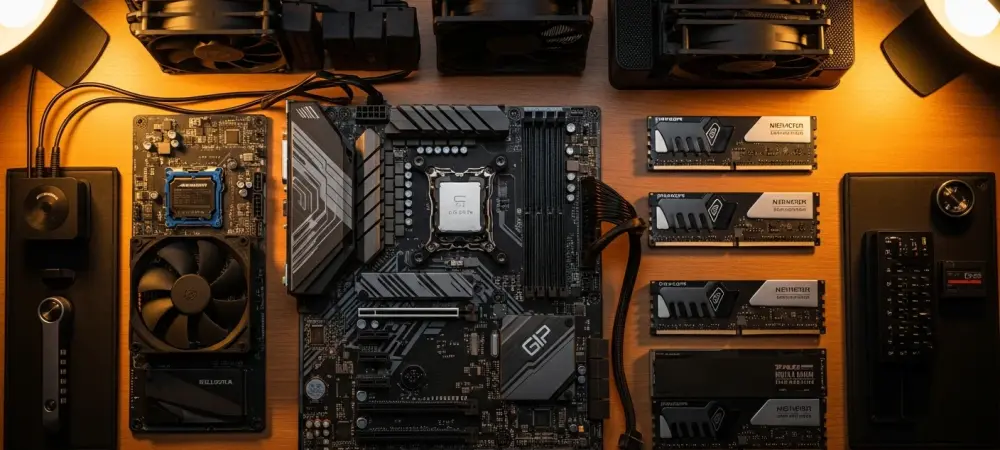
The decision by Advanced Micro Devices to officially support the AM5 socket through 2029 represents a significant departure from the rapid, often exhausting hardware cycles that have historically defined the personal computing industry. For years, PC builders and enthusiasts were forced to anticipate a total platform overhaul every two to three years, necessitating the purchase of new motherboards, cooling brackets, and occasionally, entirely new memory standards. By extending the life of the AM5 platform beyond the initial 2027 projection, the company has signaled a deep commitment to consumer value and long-term hardware reliability. This pivot is not just about convenience; it is a calculated response to the increasing costs of semiconductor development and the realization that architectural improvements can still flourish within an existing physical interface. This continuity provides a stable foundation for a market that has grown weary of frequent, forced upgrades that offer only marginal performance gains. As the landscape stands in 2026, this strategic roadmap serves as a blueprint for how a technology company can maintain a competitive edge by prioritizing the longevity of the user’s investment over the immediate profits of a socket transition. The ripple effects of this decision are being felt across the ecosystem, influencing how motherboard manufacturers design their products and how software developers optimize their applications for a consistent hardware target.
Building on the Multi-Generational Success of AM4
The inspiration for this extended commitment is rooted deeply in the massive success of the AM4 platform, which famously outlived its original timeline and remains viable even in 2026. By supporting AM5 through 2029, the company ensures that upcoming processor families, specifically those based on the Zen 6 and Zen 7 architectures, will remain compatible with existing motherboards. This strategy honors a legacy of backward compatibility that has become a hallmark of the brand, allowing users who purchased a high-quality X670 or B650 motherboard during the initial launch to continue upgrading their systems for nearly a decade. This approach creates a sense of brand loyalty that is difficult for competitors to replicate, as it effectively removes the “motherboard tax” from the upgrade path. Builders can invest in a premium board knowing that it will survive through multiple shifts in CPU power and efficiency, making the overall ecosystem more affordable and attractive to long-term planners who value stability.
Furthermore, the persistence of older platforms like AM4 serves as a real-world proof of concept for this customer-first philosophy. Even as newer technologies dominate the headlines, the continued release of refreshed components for aging sockets proves that there is a significant market for longevity. By extending the AM5 timeline to 2029, the company is doubling down on this observation, positioning itself as the rational choice for gamers and professional system builders who are tired of the constant churn of proprietary interfaces. This decision also benefits the second-hand market and budget-conscious builders, as a long-lived socket ensures a steady supply of compatible parts and a more predictable price curve over time. In an era where sustainability and electronic waste are becoming central topics of discussion, maintaining a single socket for many years reduces the number of motherboards discarded simply because a new CPU requires a different pin layout or power delivery system.
Navigating Engineering Complexity and Market Fluctuations
Designing a new desktop socket is a massive engineering undertaking that disrupts the entire PC ecosystem, from memory manufacturers to thermal solution designers. It involves a complete overhaul of the motherboard’s electrical architecture, including the rerouting of complex memory traces and the management of signal integrity for high-speed data interfaces. The company argues that these immense engineering hurdles and the resulting costs passed on to manufacturing partners only make sense when a new technology offers a massive leap in real-world performance. By choosing to optimize the existing AM5 infrastructure through 2029, the company avoids the engineering friction associated with a platform transition. This allows their internal teams to focus more resources on silicon-level innovation and power efficiency rather than the logistical nightmare of validating an entirely new physical and electrical interface every few years, which often leads to early-adopter bugs and stability issues.
Economic pressures have also played a substantial role in the decision to maintain the current platform standards for a longer duration. During the transition to AM5, the market experienced a period of significant volatility in DDR5 memory pricing, a phenomenon often referred to as the RAMpocalypse. These high costs acted as a barrier to entry for many users, slowing the adoption of the new platform and leaving many builders hesitant to jump into a new ecosystem. By committing to AM5 through 2029, the company provides the market with much-needed stability, allowing component prices to mature and settle before forcing another hardware transition. This patience helps mitigate the financial risks for consumers and ensures that the platform remains accessible across different budget tiers. It is a pragmatic stance that acknowledges that the health of the PC market depends on more than just raw speed; it depends on the ability of the average user to afford the latest innovations without being priced out by mandatory auxiliary hardware upgrades.
Technical Thresholds for the Post-AM5 Architecture
The company has established a very high bar for moving beyond the current AM5 socket, stating that a transition to a potential successor will only occur once next-generation standards are ready for mass adoption. Specifically, the leap to a new platform is contingent upon the widespread availability and performance benefits of DDR6 memory and PCIe Gen 6 connectivity. While these technologies represent the future of computing, they have not yet reached the point where they offer undeniable advantages for the typical desktop user. By waiting until these standards provide a significant, tangible improvement in system responsiveness or data throughput, the company ensures that any future socket change is justified by more than just a marketing checklist. This conservative approach to platform transitions prevents the fragmentation of the user base and ensures that the current infrastructure remains the gold standard for high-performance computing for several more years.
The criteria for changing a socket are strictly defined by three main factors: the maturity of industry standards, the actual benefit to the user experience, and the evolution of hardware requirements like power delivery or input-output density. Unless a new interface can demonstrably improve game loading times, rendering speeds, or overall system stability, there is little incentive to disrupt the community. The company believes that maintaining compatibility is the superior path forward, as it fosters a more cohesive environment for developers and hardware partners. In 2026, the current bandwidth provided by AM5 is still more than sufficient for the vast majority of consumer and professional tasks, including high-end content creation and the most demanding modern gaming titles. By sticking with a known quantity, the brand can continue to refine the existing communication protocols between the CPU and the rest of the system, squeezing out every bit of performance from the current silicon and motherboard designs.
Efficiency Through X3D and the Shift Toward Enthusiast Autonomy
One of the most compelling technical justifications for staying on the AM5 platform involves the efficiency of 3D V-Cache, or X3D technology, which has revolutionized the relationship between the CPU and system memory. Research into these processors has shown that the massive L3 cache integrated into the chip significantly reduces the performance impact of slower or less expensive RAM configurations. Because the processor can store so much data locally on the die, it is far less dependent on high-speed, dual-channel memory kits to maintain high frame rates in gaming. This allows builders on the AM5 platform to save money by opting for more modest memory setups without sacrificing the top-tier performance that the platform is known for. This technical synergy makes the AM5 ecosystem incredibly flexible, catering to both the budget builder who wants a high-end gaming experience and the professional who requires a massive pool of system memory for productivity.
In addition to hardware efficiency, the company is shifting its overarching philosophy regarding processor performance and the role of the enthusiast. Rather than shipping every processor pushed to its absolute thermal and voltage limits at the factory, the new strategy involves leaving more “headroom” for the user to tune their system manually. This change is a direct nod to the hobbyist community that enjoys the process of overclocking, undervolting, and fine-tuning their hardware to find the perfect balance between power consumption and speed. By keeping the socket consistent, enthusiasts can apply their accumulated knowledge of the platform across multiple generations of chips, perfecting their cooling setups and BIOS settings over time. This creates a playground for those who want to extract every ounce of value from their hardware, ensuring that the AM5 platform remains the primary destination for the DIY PC community and those who want a more hands-on relationship with their computing power.
Strategic Outcomes and the Evolution of Sustainable Computing
The roadmap established by this prolonged commitment ultimately redefined the expectations for mainstream desktop longevity by the end of the decade. By choosing to stabilize the platform through 2029, the focus shifted away from the physical socket and toward the meaningful innovations occurring within the silicon architecture itself. This allowed engineering teams to concentrate on refining branch prediction, improving cache latency, and optimizing power curves rather than solving the mechanical problems of a new interface every other year. The industry recognized that consumers were significantly more willing to invest in premium components when those components were guaranteed a functional life of five years or more. This pivot encouraged a more sustainable approach to high-end hardware, where the cycle of obsolescence was slowed by deliberate, long-term engineering choices that benefited both the environment and the consumer’s wallet.
Looking back, the decision to remain on AM5 helped the market weather periods of economic uncertainty and technological transition with minimal friction. The focus on providing a stable foundation allowed the ecosystem of motherboards and peripherals to mature to an unprecedented degree, resulting in some of the most reliable and feature-rich products ever released for the desktop. Future platform transitions were then seen as major milestones to be celebrated when the technology was truly ready, rather than as unavoidable burdens for the user base. The success of this strategy proved that in a world obsessed with the next big thing, there was immense value in staying the course and perfecting the current generation. The precedent set by this timeline ensured that the community remained engaged, and the hardware remained relevant, setting a new standard for how technology companies interact with their most loyal customers.