

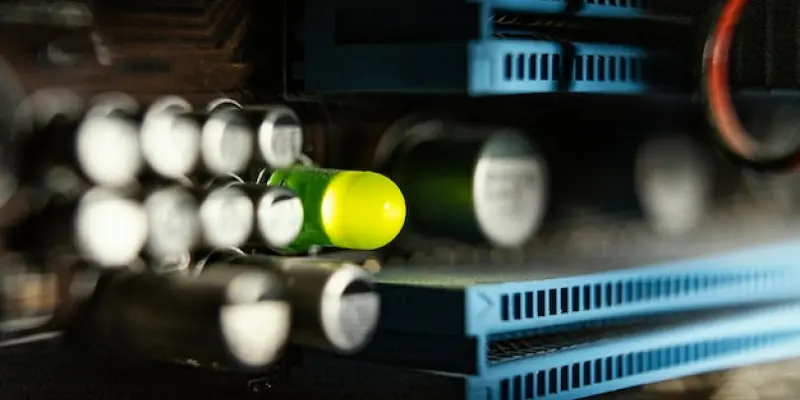
The ever-evolving world of technology often brings forth new challenges, and among the latest concerns is the melting of connectors used with Nvidia’s RTX 5090 graphics cards. Despite the numerous advancements that have accompanied the release of these powerful cards, an unsettling trend has emerged involving the connectors, specifically those designed by MSI featuring yellow tips. These connectors were intended to serve as a safeguard by providing a visual cue to ensure proper seating, thus preventing overheating. Yet reports continue to surface, like that of Reddit user VersauteGurke, who faced a partial melting incident with MSI’s connector while his RTX 5090 suffered no damage. This scenario has become a focal point of discussion, highlighting the complexity of integrating high-performance hardware into standard computer setups.
Design Challenges and User Practices
Central to the problem of connector melting is the delicate balance between sophisticated hardware designs and practical user interaction. With the RTX 5090’s immense power comes the challenge of ensuring that every component, including connectors, is up to par. MSI’s yellow-tipped connectors were a proactive attempt to mitigate user error by signaling whether a plug is fully and securely connected. However, instances of melting suggest that the mechanical and spatial requirements of these GPUs might clash with typical PC case designs. Often, these cases necessitate bending or manipulating cables to fit, potentially stressing the connectors beyond recommended guidelines and leading to thermal issues. The conversation around these incidents straddles the line between identifying genuine design shortcomings and understanding user practices that contribute to such problems.
Debates and Implications for Future Tech
The ongoing discussion around connector melting highlights broader challenges in tech advancement. Although the RTX 5090 faces fewer incidents compared to the earlier RTX 4090, persistent problems reflect the difficulty of aligning cutting-edge tech with existing consumer needs. Users and manufacturers are engaged in a back-and-forth about balancing innovative design with practical use, often leading to disputes over user error. This has prompted some to advocate for redesigns of PC cases or connectors to better support modern GPUs securely. In addition, it serves as a cautionary tale, underscoring the precision required in assembling and maintaining high-power computing setups. These discussions are likely to influence future strategies of both manufacturers and DIY PC enthusiasts alike, focusing on refining solutions to effectively merge power with practicality. As the tech community evolves, collaboration and feedback are key in navigating challenges and paving the path for seamless integration of future advancements.