

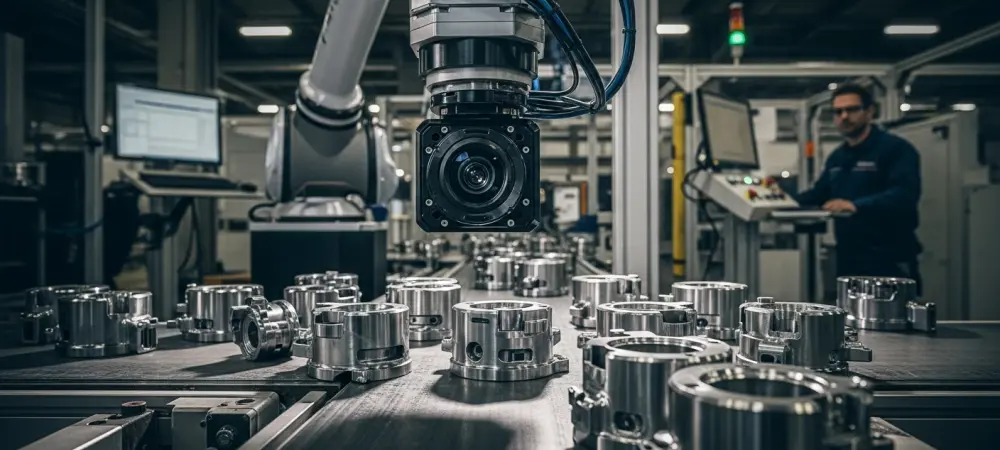
The captivating performance of a robotic arm, executing a complex task with flawless precision under the controlled lights of a demonstration, often convinces stakeholders that the future of their manufacturing process has arrived. This compelling display makes the decision to invest in automation seem not just logical, but inevitable. However, a significant and costly disconnect frequently emerges when that same technology is moved from the sterile environment of the lab to the dynamic, often chaotic, reality of the factory floor. The seamless operation witnessed in the demo gives way to a frustrating cycle of frequent errors, unexpected downtime, and a return on investment that remains stubbornly out of reach. This chasm between the promise of automation and its practical implementation is a pervasive issue, rooted in a fundamental misunderstanding of what it takes for robotic systems to transition from a carefully choreographed proof-of-concept to a robust, reliable, and economically viable production asset. The failure is rarely in the core robotic technology itself; instead, it lies in the complex and often invisible ecosystem of data, processes, human factors, and support infrastructure that demonstrations are engineered to circumvent.
The Data and Algorithm Gap From Lab to Reality
A primary point of failure for many robotic systems lies in their perception capabilities, which are increasingly reliant on artificial intelligence. During a demonstration, an AI vision system performs brilliantly because it has been meticulously trained on a small, curated dataset of images captured under perfect studio lighting with parts positioned exactly as expected. This creates a perception model that is highly effective in the lab but dangerously brittle in the field. The factory floor is an unpredictable sensory environment; fluctuations in ambient light from a nearby window, reflections off a worn part, or a fine layer of dust on a camera lens can introduce “noise” that instantly confuses an AI trained only on pristine data. This fragility means that the perception system, a cornerstone of the automation solution, often requires a fundamental and costly redesign. This involves an extensive new data collection effort under real-world conditions and a complete retraining of the model, a significant project that negates much of the initial progress shown in the demo and comes as a surprise to stakeholders. While synthetic data generation is often proposed as a shortcut, creating synthetic data that accurately mirrors the complex and subtle variations of a real factory is a massive undertaking in itself, rendering it impractical at the demonstration stage.
This vulnerability extends deep into the robot’s core planning and control algorithms, the software that dictates its movements and actions. Constrained by tight budgets and timelines, demonstration projects validate these critical algorithms using only a handful of representative part geometries. This limited testing regime fails to expose the countless “edge cases”—the unique shapes, orientations, and surface conditions—that are commonplace in a high-mix manufacturing run where hundreds of different parts may be processed. When the system is deployed into this diverse environment, it inevitably encounters a novel geometry that its planning software cannot handle, causing the entire production process to grind to a halt. This leads to a false sense of security, where conclusions about an approach’s feasibility, drawn from the limited scope of the demo, do not generalize to the production environment. Properly validating these systems for high-mix manufacturing requires rigorous testing against a vast library of part geometries, a scale of effort far beyond what is feasible for a demonstration. As a result, the seemingly robust software from the demo is revealed to be incomplete, necessitating significant and time-consuming upgrades after deployment.
The Human Factor of People Processes and Skills
One of the most critical conceptual errors in automation projects is the attempt to simply replicate a manual process with a robot. Human-centric processes are inherently designed around the unique capabilities of people: our unparalleled dexterity, rich sensory feedback, and cognitive flexibility to adapt to unforeseen circumstances. Robots, in contrast, possess a fundamentally different set of strengths, including the ability to apply immense force with unwavering consistency, operate at high speeds for extended periods, and perform motions that are ergonomically impossible for a human worker. Focusing on making a robot “human-competitive” within a human-designed task is often a recipe for a poor return on investment. True success lies in process innovation—re-engineering the task from the ground up to leverage the robot’s distinct advantages. For instance, a robot’s capacity for higher, more consistent force might allow for the use of less expensive abrasives, drastically cutting consumable costs. Its precision allows for more aggressive process parameters that can reduce cycle times without risking part damage. Most demonstrations, however, are narrowly focused on the automation task itself and lack the resources or mandate to explore these transformative process innovations, thereby failing to unlock the “superhuman performance” that truly justifies the significant capital investment.
Furthermore, in many complex applications, achieving 100% automation is either technically infeasible or prohibitively expensive. A more practical goal is to automate 90-95% of the task, leaving the most difficult or unpredictable steps for a human operator. While this model is sound in principle, demonstration projects almost universally ignore its profound practical implications. They fail to address the critical question: what does the human worker do while the robot is operating? If the human’s role is simply to wait for the robot to complete its cycle, their labor utilization plummets, rendering the entire automation project economically unviable. A successful system must be designed around a workflow where one operator can efficiently manage multiple robotic cells, or where a single cell has a long enough autonomous cycle time to free the operator for other value-added tasks. Because demonstrations focus on an isolated cell, these crucial system-level workflow considerations are overlooked. This neglect extends to the workforce itself. Automation fundamentally changes, rather than eliminates, the need for human involvement. It demands a workforce with the right skills to operate, interact with, and—most critically—maintain the new systems. The need for a skilled maintenance team, proficient in troubleshooting complex cyber-physical systems, is a massive challenge often completely ignored in demos, creating a major barrier to adoption for many organizations.
The Unseen Infrastructure and Support Systems for Success
To deliver tangible value, robotic cells must operate with extremely high availability, a stark contrast to the pampered environment of a short-term demonstration. High-mix robotic cells are complex systems operating in dynamic settings, making them susceptible to a wide range of issues that can escalate into major failures. Seemingly minor events, such as fluctuating air pressure affecting pneumatic tools, debris obscuring an imaging system, or a minor human error in loading a part, can lead to collisions that damage expensive tools or cables, resulting in significant and costly downtime. Achieving the high system availability required for production demands a proactive approach. The solution is an AI-based Prognostics and Health Management (PHM) system, which monitors the cell’s health in real-time to predict and prevent failures before they occur. However, like perception AI, an effective PHM system requires a vast amount of failure data for training. A single demonstration cell, designed to run perfectly, simply cannot generate this data. As a result, PHM development is deferred, leaving the deployed system vulnerable to a constant stream of preventable failures and unacceptably low availability.
Even if a sophisticated PHM system were in place, it represents only half of the solution. When the system detects an impending failure and enters a safe state, it requires a human to intervene and perform service. This necessitates a robust service infrastructure that is entirely outside the scope of a demonstration project. For large organizations, this may mean establishing an in-house team of specialized technicians with access to a comprehensive inventory of spare parts. For smaller companies, it requires securing a reliable third-party service provider with guaranteed response times. This entire support ecosystem—including service teams, spare parts logistics, and detailed service-level agreements—is a non-negotiable prerequisite for relying on automation for critical production. Without it, even minor issues can lead to prolonged downtime. This oversight is compounded by the fact that demos often present a misleadingly simple workflow. The overall cycle time of a production cell is determined not just by the core process but also by numerous auxiliary functions like automated tool changes, part loading, debris collection, and system calibration. Optimizing these functions, which is essential for production efficiency, requires additional hardware and software, increasing the system’s cost and complexity well beyond what was presented in the initial, simplified demonstration.
The Broader Context of System and Financial Realities
Perhaps the most significant strategic error is viewing the automated cell in isolation, as if it were an island detached from the rest of the factory. In reality, a manufacturing process is a single step in a larger, interconnected production workflow. The efficiency of a newly automated cell can be completely nullified by bottlenecks in upstream or downstream processes. For instance, a hyper-efficient automated sanding process will sit idle if the subsequent manual inspection process cannot keep up with its output. Furthermore, the quality of inputs and outputs is critical. A manual upstream process with high variability can introduce defects that the automated cell cannot fix, or it may force the robot to slow down to compensate, negating its speed advantage. Conversely, the high-quality, consistent output from an automated cell might be compromised by a sloppy manual process further down the line. A successful deployment requires a holistic, system-level analysis of the entire workflow, which may necessitate changes to multiple process steps—both before and after the robot—to unlock the full value of the automation investment. This comprehensive analysis is never part of a demonstration’s scope.
Ultimately, when all the previously unaddressed factors are accounted for—the redesign of perception systems, the development of a PHM system, the optimization of the full work cell, and the creation of a service infrastructure—the cost of a production-ready system often escalates far beyond the initial estimate derived from the demonstration. This makes it exceedingly difficult to justify the investment based on direct labor savings alone, which is the simplistic metric often used in initial proposals. The business case had to evolve to incorporate the broader, often unquantified, value streams that robust automation can unlock. These included significant reductions in the usage of consumables like abrasives, improved part quality and consistency that led to less rework and scrap, and the potential for entirely new manufacturing processes enabled by the robot’s unique capabilities. Demonstration projects, with their narrow focus on a single task, rarely explored these additional value drivers. This resulted in an incomplete and often unfavorable ROI calculation that stalled the project’s transition from a promising demo to a fully deployed, value-generating asset on the factory floor.