

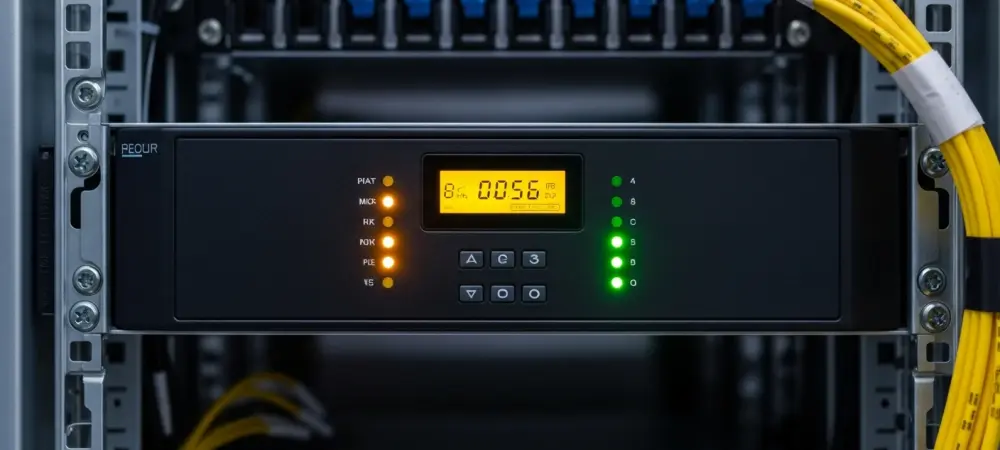
The rapid acceleration of high-performance computing has fundamentally shifted the baseline requirements for power distribution, turning what was once a simple hardware component into a sophisticated pillar of infrastructure management. For decades, the Power Distribution Unit, or PDU, functioned primarily as a high-capacity power strip designed to deliver electricity from a central source to individual server racks without much concern for the granular data passing through the wires. However, the current landscape of 2026 demands a far more nuanced approach as Artificial Intelligence and Machine Learning workloads push electrical consumption to unprecedented levels within the facility. Modern facility managers no longer view the PDU as a passive conduit but rather as an intelligent, network-integrated device that provides the essential visibility needed to maintain uptime in a high-density environment. This transition represents a broader industry movement toward a data-centric operational model where every watt of power is tracked, analyzed, and optimized to ensure maximum reliability and cost-effectiveness. By integrating intelligence directly into the final link of the power chain, organizations can now address the dual challenges of extreme energy demand and the need for absolute operational transparency.
This evolution is driven by the necessity of managing complex environments where traditional methods of monitoring simply cannot keep pace with the speed of modern digital transactions and processing. As data centers become more dense and distributed, the ability to remotely oversee and control power flow has moved from being a luxury feature to a core requirement for any enterprise-grade facility. Smart PDUs serve as the eyes and ears of the power infrastructure, offering real-time insights into consumption patterns that were previously invisible to administrators. This shift toward intelligent power distribution is not merely about hardware upgrades; it is a strategic reimagining of how energy is utilized to support the global digital economy. With the rise of edge computing and the decentralization of data processing, the intelligence embedded within these units provides the foundational support necessary for scaling operations without a proportional increase in physical labor or manual oversight. Ultimately, the smart PDU has become the critical interface between the physical electrical grid and the virtual world of high-speed data, ensuring that the infrastructure remains resilient in the face of ever-increasing computational demands.
Market Dynamics: The Growing Dominance of Intelligent Power
The global data center market is currently experiencing a profound realignment where intelligent power solutions are rapidly replacing legacy hardware across both hyperscale and enterprise facilities. Statistical evidence from 2026 indicates that smart PDUs have captured a dominant market share of over 62%, with this figure expected to climb significantly as older facilities undergo mandatory modernization cycles. This trend is fueled by the intersection of three major forces: the exponential growth of generative AI workloads, the proliferation of edge computing sites, and the implementation of stricter environmental transparency regulations worldwide. For many operators, the traditional “dumb” PDU has become a significant operational bottleneck, as it fails to provide the granular telemetry required to manage the high-density power profiles common in today’s server racks. Consequently, the industry is moving toward a standard where power distribution must be coupled with real-time data reporting to satisfy both technical and financial reporting requirements.
Beyond simple adoption rates, the shift toward intelligence represents a change in the fundamental philosophy of data center design, where the PDU is treated as an active node within the Internet of Things ecosystem. This connectivity allows facility managers to move beyond basic metrics like Power Usage Effectiveness and toward more sophisticated measurements that track efficiency at the individual server or even the individual outlet level. The ability to integrate this power data into broader Data Center Infrastructure Management platforms has turned the smart PDU into a strategic asset for cost containment and resource allocation. As electricity prices fluctuate and carbon taxes become more prevalent in various jurisdictions, having the precise data to justify power usage has become essential for maintaining profitability. The market is no longer asking if a PDU should be smart, but rather how much intelligence can be packed into the device to provide a competitive edge in an increasingly crowded and expensive infrastructure landscape.
Functional Evolution: Monitored Versus Switched Capabilities
Understanding the true value of a smart PDU requires a detailed look at the two primary functional tiers that define modern power distribution: monitored and switched units. Monitored smart PDUs are primarily focused on the comprehensive acquisition of data, providing a constant stream of information regarding voltage, current, and power factor at both the aggregate and individual outlet levels. These units act as sophisticated diagnostic tools, maintaining exhaustive logs of events and environmental conditions such as temperature and humidity within the rack. The primary benefit of this tier is situational awareness; by establishing automated alerts based on specific thresholds, administrators can identify potential overloads or cooling failures long before they lead to hardware damage. This proactive approach to monitoring allows for a more efficient use of power capacity, as operators can safely push their infrastructure closer to its theoretical limits without the fear of unexpected circuit breaker trips or thermal runaway.
Switched smart PDUs encompass all the data acquisition features of monitored units but add a critical layer of active remote control that is essential for modern “lights-out” operations. These devices enable administrators to remotely toggle individual power receptacles, providing the ability to power cycle frozen servers or decommission underutilized hardware without ever stepping foot inside the data center. In a crisis scenario, such as a major cooling failure or a primary power outage, the ability to systematically shut down non-essential equipment via a switched PDU can significantly extend the runtime of Uninterruptible Power Supply systems for mission-critical applications. This level of granular control reduces the need for expensive on-site technical staff and minimizes the time required to resolve routine hardware issues. By combining real-time data with immediate remote action, switched PDUs offer a comprehensive management solution that addresses both the informational and operational needs of a modern, highly distributed IT environment where physical access is often limited or delayed.
Technological Infrastructure: The Anatomy of Intelligence
The “intelligence” of a modern PDU is defined by its sophisticated onboard processing capabilities and its seamless integration into the broader corporate network. Unlike legacy hardware that operated in isolation, a smart PDU functions as a high-speed communication hub, utilizing advanced microcontrollers to process electrical data locally before transmitting it to centralized management platforms. These devices are typically equipped with high-resolution displays for local troubleshooting and redundant network interfaces to ensure that management connectivity is never lost, even if a primary network switch fails. The underlying software architecture of these units often includes robust Application Programming Interfaces that allow for custom integration with existing monitoring tools, making the PDU a flexible component in a larger software-defined infrastructure. This technological depth ensures that the power chain is no longer a “black box” but a transparent and programmable part of the data center stack that can be managed with the same precision as a virtual machine.
Modern intelligent PDUs are increasingly incorporating machine learning and predictive analytics to move from reactive monitoring to proactive optimization. By analyzing historical power consumption trends and correlating them with environmental data, these units can identify subtle anomalies that may indicate a failing power supply or a server that is beginning to operate inefficiently. Furthermore, the integration of environmental sensors directly into the PDU chassis allows the device to act as a centralized environmental monitoring station for the entire rack. This holistic approach means that a single networked device can track power, temperature, airflow, and even security factors like rack door access, feeding all this information into a unified management dashboard. This consolidation of functions reduces the complexity of rack-level cabling and simplifies the overall management architecture of the data center. The result is a more resilient and agile infrastructure that can adapt to changing workloads and environmental conditions in real-time, guided by the precise data generated at the point of power delivery.
Reliability and Environmental Durability in High-Density Zones
As data centers evolve to accommodate denser hardware configurations, the physical reliability and thermal tolerance of the smart PDU have become paramount considerations for facility operators. Because these intelligent units contain complex electronic components and network controllers, they are inherently more sensitive to environmental stress than the simple copper bars found in traditional power strips. To counter this, leading manufacturers have implemented rigorous quality assurance protocols, including 100% unit testing under full load and the use of high-grade components rated for continuous operation at elevated temperatures. The added complexity of a smart PDU must never become a liability; therefore, the most advanced models utilize a “fail-safe” design where the power distribution remains active even if the onboard management controller fails or requires a firmware update. This separation of the power path from the logic path ensures that intelligence enhances the system without introducing new points of failure that could jeopardize critical workloads.
The shift toward higher operating temperatures in modern data centers, often aimed at reducing the energy consumed by cooling systems, places extreme thermal demands on rack-level hardware. In the “hot aisles” of a high-density facility, ambient temperatures can frequently exceed 60 degrees Celsius, a range that would cause standard consumer electronics to degrade rapidly. Smart PDUs designed for 2026 and beyond are engineered with specialized materials and thermal management systems that allow them to operate reliably in these harsh conditions without performance loss. This environmental durability is especially critical for racks supporting AI-centric hardware, which generates significantly more heat than traditional compute clusters. A PDU that is not specifically rated for these extreme temperatures can become a weak link, leading to premature component failure and costly downtime. By investing in thermally hardened intelligent power distribution, organizations can confidently implement more aggressive cooling strategies, knowing that their power infrastructure is capable of withstanding the increased heat while continuing to provide accurate data and control.
Managing the Massive Electrical Demands of Artificial Intelligence
The explosion of Artificial Intelligence and Machine Learning has fundamentally rewritten the rules for power distribution within the data center, moving the industry from a focus on kilowatts to a focus on massive, concentrated electrical loads. While a standard enterprise server rack in the past might have required 15 kW to 20 kW, the specialized GPU clusters used for training large language models in 2026 often demand between 60 kW and 130 kW per rack. Managing these staggering amounts of power requires the granular visibility and precision that only a smart PDU can provide. These intelligent units allow facility managers to balance loads across multiple phases and branches with extreme accuracy, preventing the uneven electrical distribution that leads to localized overheating or premature circuit failure. Without the real-time feedback provided by intelligent hardware, operating at these extreme densities would be a high-stakes guessing game that puts millions of dollars of hardware at risk every single day.
Furthermore, smart PDUs are essential for managing the dynamic nature of AI workloads, which can see power consumption spike from idle to maximum capacity in a matter of milliseconds. These rapid fluctuations can place immense stress on the electrical infrastructure, potentially causing voltage drops or harmonic distortions that affect neighboring equipment. Intelligent units equipped with high-speed sampling and advanced filtering can monitor these transients and provide the data necessary to tune the upstream power system for better stability. They also facilitate the use of universal outlet designs, which can be dynamically reconfigured to support different plug types and voltages as hardware is refreshed or expanded. This flexibility is critical for future-proofing the data center, allowing operators to pivot their infrastructure to support the next generation of high-performance chips without a complete overhaul of the power distribution system. In the AI era, the smart PDU is the essential regulator that ensures massive power demands are met with equally massive levels of control and insight.
Redundancy and Scalability: Building a Resilient Power Grid
Achieving the coveted “five-nines” of availability in a modern data center requires a sophisticated approach to redundancy that extends all the way to the individual server inlet. Smart PDUs play a vital role in this architecture by facilitating complex power configurations such as N+1 or 2N redundancy models with greater transparency and ease of management. Many intelligent units now feature dual-input designs and integrated Automatic Transfer Switches that can seamlessly transition between two independent power sources if one fails. This automated response occurs in milliseconds, ensuring that single-corded devices remain powered without any human intervention or service interruption. The data collected by these units also allows administrators to verify that redundant paths are truly isolated and that a failure in one branch will not cause a cascading outage across the entire rack. This level of verification is essential for maintaining the high service level agreements expected by modern cloud and enterprise customers.
Scalability is another area where the smart PDU has become a game-changer for growing organizations that need to expand their capacity incrementally. Modular designs now allow for the “brains” of the PDU—the network management card and display—to be hot-swapped or upgraded while the unit continues to provide uninterrupted power to the connected equipment. This means that as networking standards evolve or security requirements become more stringent, the intelligence of the PDU can be refreshed without a costly and disruptive power outage. Furthermore, the use of alternating phase designs in smart PDUs simplifies the process of load balancing as new servers are added to the rack, reducing the complexity of cabling and ensuring that electrical capacity is utilized as efficiently as possible. This modular and flexible approach to power distribution allows data centers to grow organically, adding intelligence and capacity exactly when and where it is needed most. By building a power grid that is both redundant and scalable, organizations can protect their current investments while staying ready for the unforeseen technological shifts of the future.
Strengthening the Cybersecurity Framework of the Power Chain
As smart PDUs are fundamentally networked devices, they represent a critical component of the data center’s attack surface that must be defended with the same rigor as any server or switch. In the current threat landscape of 2026, cyber attackers are increasingly targeting industrial control systems and IoT infrastructure to cause physical disruption or gain a foothold in secure networks. Consequently, modern intelligent PDUs are built with a “security-first” mindset, incorporating advanced features such as hardware-based encryption, secure boot processes, and support for the latest authentication protocols. It is no longer enough for a PDU to simply have a password; it must be integrated into a zero-trust architecture where every access attempt is verified and every command is logged. This ensures that the power grid—the literal lifeblood of the data center—cannot be compromised by unauthorized actors looking to sabotage operations or hold the facility to ransom.
Effective security for intelligent power distribution also involves a combination of digital and physical layers to prevent both remote and on-site tampering. From a digital perspective, features like Multi-Factor Authentication and role-based access control ensure that only specifically authorized personnel can toggle outlets or change sensitive power thresholds. On the physical side, many smart PDUs now include locking mechanisms for individual power cords to prevent accidental dislodgement or unauthorized removal, which could lead to inadvertent outages. Furthermore, the ability to segment the management traffic of the PDU onto a dedicated, isolated network adds another layer of defense against lateral movement by attackers. By treating the PDU as a high-security network node, organizations can leverage the benefits of intelligent monitoring and control without exposing their facility to unnecessary risk. This comprehensive approach to security ensures that the power infrastructure remains a resilient foundation for the business rather than a vulnerability that can be exploited in a digital conflict.
Supporting the Expansion of Edge and Remote Computing
The strategic importance of the smart PDU is perhaps most visible in the rapid expansion of edge computing, where data processing is moved out of centralized hubs and into smaller, often unmanned facilities closer to the end user. These edge sites—ranging from micro-data centers at the base of cell towers to small server closets in retail locations—often operate as “lights-out” environments where on-site technical support is non-existent. In these scenarios, a smart PDU is the primary tool for maintaining uptime, providing the remote visibility and control needed to manage the site from hundreds of miles away. The ability to remotely reboot a hung gateway or monitor the temperature in a remote cabinet can be the difference between a five-minute software fix and a multi-hour “truck roll” that costs thousands of dollars in travel and labor. For companies managing thousands of edge locations, the operational savings provided by smart PDUs are not just incremental; they are fundamental to the viability of the business model.
Compact, high-durability smart PDUs are specifically engineered to meet the unique physical constraints of edge environments, which may lack the precision cooling and clean power found in a traditional data center. These units often feature extended operating temperature ranges and robust physical enclosures designed to protect the internal electronics from dust and vibration. They also serve as the central connectivity point for external sensors, allowing a single networked device to provide a complete picture of the remote site’s health, including smoke detection, water leakage, and unauthorized entry. This consolidation of functions is vital for edge deployments where space is at a premium and complexity must be kept to a minimum. By providing enterprise-grade management capabilities in a compact and ruggedized form factor, smart PDUs enable organizations to extend their digital reach with confidence, knowing that their remote infrastructure is being monitored and protected with the same level of precision as their flagship data centers.
Navigating Environmental Responsibility and Regulatory Compliance
Sustainability has transitioned from a voluntary corporate goal to a mandatory reporting requirement for many global organizations, placing the smart PDU at the center of Environmental, Social, and Governance compliance efforts. To meet the rigorous transparency standards required in 2026, data centers must be able to provide accurate, real-time data on their energy consumption and carbon footprint. Smart PDUs are the primary instruments for this data collection, offering the granular, outlet-level reporting necessary to assign energy costs and environmental impact to specific departments, clients, or even individual applications. This level of precision allows organizations to move beyond general estimates and provide verified proof of their energy efficiency claims to regulators, investors, and customers. In many jurisdictions, this data is now a legal requirement for operating a large-scale compute facility, making intelligent power distribution an essential component of the corporate compliance strategy.
Beyond simple reporting, the intelligence embedded in these PDUs provides the actionable insights needed to drive meaningful energy savings and reduce the overall environmental impact of the data center. By identifying “zombie servers”—equipment that remains powered on but performs no useful work—smart PDUs allow facility managers to decommission or consolidate hardware, leading to immediate reductions in power and cooling demand. They also facilitate the automation of Power Usage Effectiveness calculations, allowing operators to see the impact of their efficiency initiatives in real-time. This data-driven approach to sustainability ensures that resources are not wasted and that the facility is operating as leanly as possible. As the digital economy continues to grow, the ability to prove a commitment to environmental responsibility through hard data has become a key differentiator in the market. The smart PDU provides the transparency and control necessary to align IT operations with the global push for a more sustainable and energy-efficient future.
Implementing Actionable Intelligence for Long-Term Success
The shift toward intelligent power distribution has moved from a technological trend to a foundational requirement for any facility aiming for operational excellence in the modern era. The convergence of extreme power densities, decentralized edge networks, and strict sustainability mandates has rendered traditional, passive PDUs obsolete for most enterprise and hyperscale applications. Organizations that transitioned to smart PDUs found themselves better equipped to handle the volatile demands of the AI surge, leveraging granular data to prevent outages and optimize their electrical footprint. These devices provided a trifecta of essential benefits: efficiency through precise load balancing, reliability through environmental sensing and remote management, and security through hardened network oversight. While the initial capital expenditure for intelligent hardware was higher, the return on investment was quickly realized through reduced downtime, lower maintenance costs, and more accurate resource allocation.
Moving forward, the focus for data center operators was on integrating this power intelligence more deeply into automated management systems to further reduce the need for manual intervention. The successful implementations focused on selecting hardware that was not only smart but also durable enough to withstand the thermal stresses of high-density computing. They also prioritized security, ensuring that every networked PDU was treated as a mission-critical asset within a zero-trust framework. By treating power distribution as a data-rich, programmable layer of the infrastructure, these facilities were able to scale their operations with a level of agility that was previously impossible. The smart PDU proved to be more than just a power delivery tool; it became the essential interface that allowed organizations to navigate the complex relationship between energy, heat, and information. As computing continues to evolve, the intelligence at the rack level will remain the cornerstone of a resilient, sustainable, and high-performance digital infrastructure.