

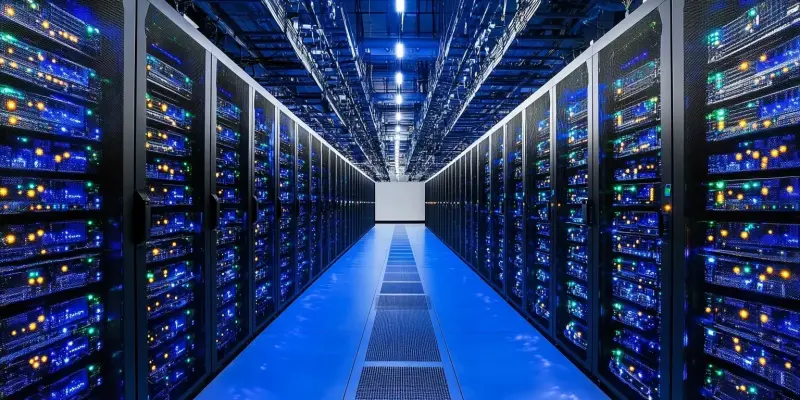
The demand for data centers is growing rapidly worldwide, driven by the need for quick expansion and the ability to relocate as business needs change. Traditional brick-and-mortar data centers often fall short in meeting these demands due to their lengthy construction times and lack of flexibility. This is where prefabricated Integrated Modular Solutions (IMS) come into play, offering a more efficient and adaptable alternative. The advantages of IMS over traditional data center construction methods make them an appealing option for modern enterprises facing dynamic business environments.
Speed and Efficiency
Prefabricated modular data centers are constructed and deployed much faster than traditional data centers. These modular units are shipped fully fitted and ready for assembly on-site, drastically reducing installation and commissioning times. In ideal conditions, a data center could go live within six months, a sharp contrast to the extensive timelines required for traditional builds. Reports indicate that manufacturers, responding to the surge in demand, have tripled their production capacities, further expediting the availability of these modular solutions.
Moreover, IMS can be built concurrently with site preparations and approval processes. This parallel construction capability shortens deployment schedules significantly, allowing for simultaneous progress on the facility and its infrastructure. This efficiency is a key advantage for organizations needing rapid data center deployment. Such concurrent construction means that site readiness and data center assembly occur in tandem, drastically reducing the overall project timeline. This speed advantage enables businesses to meet urgent operational demands and reduces the time to market for crucial services and applications.
Flexibility and Scalability
One of the standout features of modular data centers is their flexibility and scalability. These units are designed to be joined or stacked, offering a ‘pay-as-you-grow’ model that allows organizations to add capacity in phases. This modularity is especially beneficial for businesses that anticipate future growth or relocation needs. As demand for data processing and storage increases, companies can easily expand their data center capacity by incorporating additional modular units rather than undergoing extensive and costly traditional construction projects.
The ability to relocate modular data centers is another significant advantage. For organizations that rent office spaces or foresee relocation needs, these units can be moved without disrupting operations. Extensions to these modular units are straightforward, involving the removal of internal walls without interrupting data center functions. This flexibility makes IMS an ideal choice for businesses with evolving infrastructure requirements, ensuring that their data center solutions can adapt seamlessly to changing conditions and locations without significant downtime or operational interruptions.
Consistency and Versatility
Prefabricated modular data centers provide uniformity and standardization, which is crucial for organizations requiring consistent environments across multiple locations. This is particularly important in industries like mining, oil, and gas, where portability and reliable performance under challenging conditions are vital. Smaller IMS units are also used in specialized applications such as radar stations and disaster recovery setups, showcasing their versatility. The standardized design of IMS ensures that all units meet stringent quality and performance criteria, delivering consistent results regardless of geographical location or environmental challenges.
The fixed pricing and enhanced safety of IMS projects are additional benefits. Unlike traditional construction projects that are prone to delays and cost overruns, IMS projects come with fixed costs. The manufacturing of these units in a factory ensures standardized processes and stringent quality controls, reducing risks and ensuring higher safety standards. By minimizing the uncertainties associated with on-site construction, IMS offers a more predictable and reliable approach to data center deployment, allowing organizations to plan more effectively and mitigate potential risks.
Quality and Customization
Factory acceptance testing is a significant advantage of IMS. This step allows clients to inspect and request modifications before the units are shipped to the site, ensuring compliance with local standards and specific requirements. This capability ensures that the final product is precisely what the client needs, with potential for higher rack density and optimized use of space. The opportunity to conduct thorough inspections and modifications in a controlled factory setting guarantees that the delivered units meet the highest quality standards and are tailored to the unique requirements of each client.
Additionally, the controlled environment of factory assembly reduces on-site labor requirements, particularly in remote or inaccessible locations. This minimizes risks and ensures that quality is not compromised, further enhancing the appeal of prefabricated modular data centers. By assembling units in a factory, manufacturers can maintain strict quality control and implement consistent production processes, resulting in reliable and high-performing data center solutions. This approach also reduces the likelihood of construction issues and delays that are common in on-site builds.
Environmental Considerations
The demand for data centers is skyrocketing globally, driven by the pressing need for rapid growth and the agility to move as business needs evolve. Traditional brick-and-mortar data centers often fall short of these demands because of their lengthy construction times and limited flexibility. This challenge opens the door for prefabricated Integrated Modular Solutions (IMS), a more efficient, adaptable alternative. IMS offers significant benefits over traditional data center construction, making them an attractive option for modern enterprises navigating dynamic business landscapes. These modular units are built off-site in a controlled environment, ensuring higher quality and reduced construction time. They can be easily transported and quickly assembled on location, providing unparalleled flexibility that allows businesses to adapt to changing needs swiftly. Additionally, IMS can be customized to meet specific requirements, from power and cooling systems to security features, making them highly versatile. This adaptability and efficiency make IMS a superior choice for companies aiming to stay competitive in today’s fast-paced market.