

The rapid proliferation of sophisticated machine learning models has led many music enthusiasts to believe that the era of effortless, one-click lyrical modification has finally arrived in full force. While the ability to generate a completely new composition from a simple text prompt has become a common feature of the current digital landscape, the specific task of altering an existing recording remains a far more daunting technical challenge. Most users operate under the assumption that because a computer can mimic a celebrity’s voice, it can also seamlessly integrate new words into a pre-existing musical arrangement without sacrificing quality. However, this perspective overlooks the fundamental difference between generative artificial intelligence, which builds content from scratch, and transformative systems, which must surgically modify established audio files. The reality of professional-grade audio production in 2026 demonstrates that high-fidelity customization requires more than just raw processing power; it demands a deep understanding of the acoustic relationships between a vocalist and the surrounding instrumentation.
The Structural Divide: Generative Platforms Versus Transformative Tools
Current industry leaders in the generative space, such as Suno or Udio, have revolutionized how people conceive of songwriting by allowing for the instant creation of full-length tracks. Despite their impressive capabilities, these platforms are fundamentally designed to generate entirely new “seeds” rather than editing the granular components of a commercial recording that already exists. When a user attempts to force these tools to modify a specific song, the system typically produces a new version that, while perhaps similar in style, lacks the exact instrumental timbre and structural timing of the original. This limitation exists because generative models are trained to predict the next sequence of sounds based on patterns, not to isolate and replace a single vocal layer while keeping the rest of the audio environment intact. Consequently, anyone seeking to maintain the integrity of a specific masterpiece will find that automated generators are structurally incapable of performing the delicate surgery required for a true lyric swap.
Building on this technical gap, basic vocal conversion tools often fail to capture the subtle emotional cues that define a legendary performance, leading to the phenomenon known as the uncanny valley. Even if a software package can successfully overlay a new voice onto a track, the resulting audio frequently feels hollow or robotic because it ignores the micro-nuances of human expression. Elements like the slight tremor in a singer’s voice during a bridge, the strategic timing of a breath, or the way a vocalist leans into a specific rhythm are often lost in automated processes. These tools prioritize mathematical accuracy over artistic intent, which results in a product that sounds technically correct but emotionally flat. Without the guiding hand of a producer to adjust the delivery and ensure the performance matches the energy of the backing track, the output remains a mere imitation rather than a believable piece of music. This lack of nuance is particularly evident when the AI fails to account for the dynamic swells that characterize professional recordings.
Linguistic Engineering: The Foundation of Believable Modifications
A successful modification of a song’s narrative begins with the meticulous reconstruction of the text to ensure it adheres to the original’s rigid architectural constraints. Linguistic adaptation is not merely about finding words that mean the same thing; it involves an intensive engineering process where syllable counts, stress patterns, and rhyme schemes must be perfectly aligned with the existing melody. If a new lyric contains even one extra syllable or shifts the emphasis to the wrong part of a word, the entire flow of the song is compromised, making the edit immediately obvious to the listener. Professional lyric swappers must analyze the prosody of the original track, ensuring that the new message fits the “mouth feel” of the singer’s established style. This stage of the process requires a level of creative intuition and linguistic expertise that current algorithmic models simply cannot replicate, as they often prioritize literal meaning over the rhythmic fluidity necessary for a convincing musical performance.
Moreover, the emotional resonance of a lyric is tied directly to how it interacts with the specific melodic intervals of a composition. When a human writer adapts a song, they consider how certain vowels sound better at higher pitches or how a hard consonant might disrupt a soft, legato passage. Automated text generators often suggest lyrics that are grammatically correct but phonetically clunky, leading to a final product that feels disjointed and jarring. The goal of a professional lyric swap is to make the new words feel as though they were the artist’s first choice, which requires a deep understanding of songwriting mechanics. By focusing on the interplay between phonetics and melody, experts can create a seamless transition that preserves the listener’s immersion. This level of craftsmanship ensures that the modified track maintains the same impact as the original, preventing the distraction that occurs when lyrics are forced into a space where they do not naturally belong.
The Hybrid Model: Merging Craft and Technology
The most effective strategy for achieving a studio-quality result involves a hybrid workflow that prioritizes human performance as the foundational layer for AI transformation. Instead of asking a computer to guess the emotional delivery of a line, professional services utilize a human vocalist to record a “reference track” that captures the timing, energy, and stylistic quirks of the target performance. This reference act serves as a high-fidelity map for the AI, providing it with the necessary data to understand where to place emphasis and how to navigate complex melodic runs. By combining the natural phrasing of a real singer with the advanced voice-cloning capabilities of modern software, producers can create a final vocal that possesses both the technical likeness of a celebrity and the authentic warmth of a living performer.
This approach naturally leads to a more convincing final product because it bypasses the inherent limitations of purely algorithmic vocal generation. When the AI has a human guide to follow, it is less likely to produce the digital glitches or unnatural pitch shifts that often plague fully automated systems. The human-in-the-loop system allows for real-time adjustments, such as changing the tone of a specific word to sound more aggressive or softening a phrase to better match a quiet instrumental section. This level of control is essential for high-stakes projects where the final audio must be indistinguishable from a professional studio session. The synergy between human artistry and machine precision represents the current peak of audio customization, ensuring that the technology serves the creative vision rather than dictating its boundaries. This method effectively bridges the gap between the raw potential of voice cloning and the sophisticated requirements of the modern music industry.
Precision Engineering for Professional Audio Standards
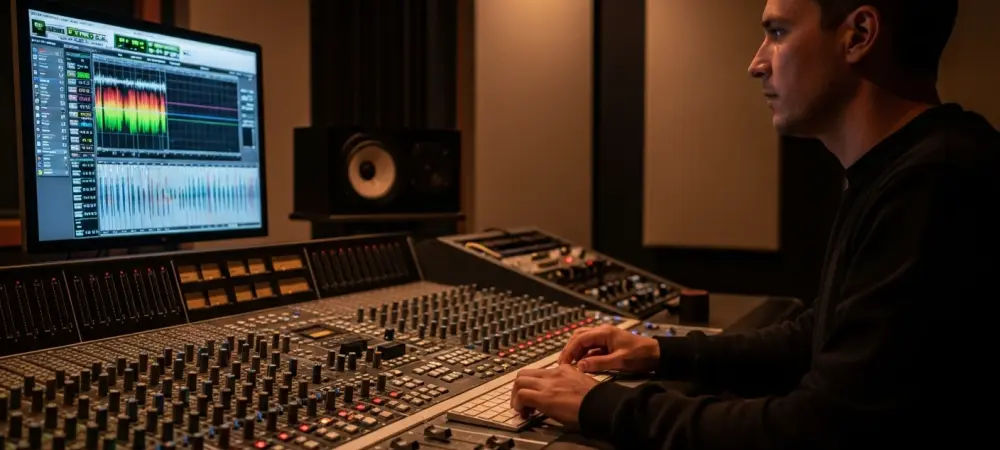
The final phase of creating a flawless lyric swap involves advanced audio engineering that integrates the new vocal into the original sonic environment. A professional engineer must carefully balance the frequencies of the new recording, ensuring that it occupies the same “space” as the original vocal did within the mix. This requires the application of specific reverb, delay, and compression settings that mirror the original production techniques used during the song’s initial creation. If the new vocal sounds too “dry” or sits too high in the mix, it will feel disconnected from the backing track, destroying the illusion of authenticity. Automated tools rarely have the capability to analyze the complex spatial characteristics of a professional recording, often leaving the user with a vocal that sounds like it was recorded in a completely different room. Expert engineering ensures that the new performance is fully embedded into the musical tapestry of the track.
In retrospect, the industry recognized that the transition from basic AI experiments to professional-grade audio required a significant shift in methodology. Organizations that adopted a collaborative approach, blending human expertise with machine learning, successfully avoided the pitfalls of low-quality, automated content. It became clear that for high-stakes applications such as corporate branding, wedding surprises, or high-end personalized gifts, the reliance on one-click solutions was a strategic error. Moving forward, professionals sought out specialized services that offered human-driven reference tracks and custom mixing rather than generic software interfaces. This evolution proved that while the technology provided the tools, it was the human touch that delivered the final, polished result. The market eventually solidified around the idea that true innovation in music production was found in the intentional application of AI, rather than its unfiltered use, ensuring that craftsmanship remained at the heart of the creative process.