

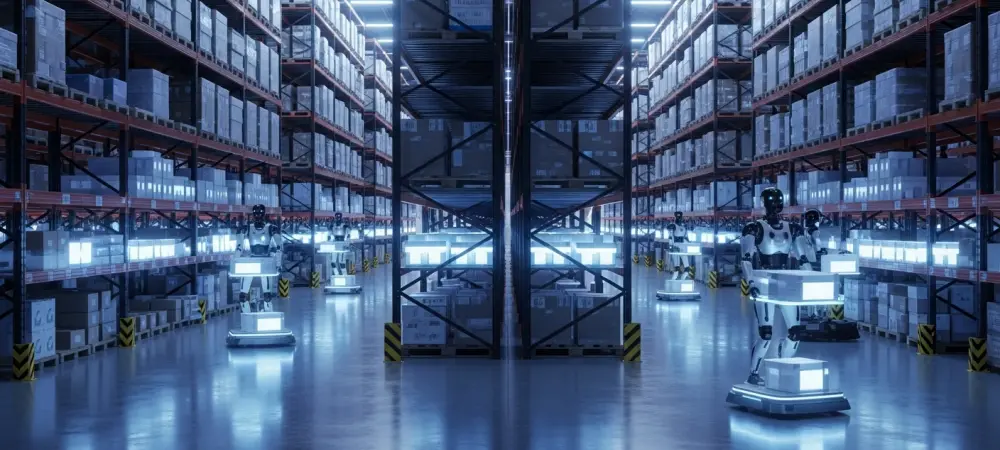
Beyond the digital hum of servers and the quiet glow of screens, the most significant technological transformation of this era is unfolding as intelligent machines learn to walk, grasp, and reason within the physical world. For years, the public conversation centered on the disembodied minds of AI chatbots and image generators. Now, that intelligence is growing a body. The theoretical has become tangible, and the abstract has become animated. This is the breakout year, the moment these thinking machines are stepping out of controlled labs and into the dynamic, unpredictable environments of factories, warehouses, and homes, fundamentally reshaping the landscape of labor, logistics, and daily life. The question is no longer if this will happen, but who is poised to command this new physical frontier.
The Dawn of Embodied Intelligence More Than Just a Machine
The shift toward embodied intelligence marks a profound turning point in the evolution of artificial intelligence. While language models captivated the world with their ability to process and generate text, a parallel and arguably more complex revolution was gaining momentum. This movement is focused on granting AI systems the physical agency to interact with and manipulate their surroundings. This year represents a critical confluence of factors: hardware, including advanced actuators and sensors, has become powerful and affordable; software, driven by breakthroughs in foundation models, allows for unprecedented learning and adaptation; and a powerful market demand for resilient supply chains and enhanced productivity has created the perfect environment for deployment.
The arrival of embodied AI in mainstream applications is not merely an incremental improvement over existing automation. It is a categorical leap. These systems are designed to operate in human-centric spaces, performing tasks that require perception, judgment, and dexterity far beyond the capabilities of their predecessors. From assisting workers on an assembly line to providing care in a domestic setting, these robots are not just tools but collaborators. The implications of this transition are immense, promising to unlock new levels of efficiency and create entirely new service categories, making this the most consequential technological deployment of the decade.
From Pre-Programmed to Perceptive The Critical Shift to Embodied AI
At its core, this revolution is defined by the transition from pre-programmed industrial arms to autonomous agents. For decades, robots were confined to repetitive, single-purpose tasks within the structured confines of a safety cage, executing a script with precision but without comprehension. Embodied AI shatters this paradigm. These new machines perceive their environment through a suite of sensors, reason about the state of the world using advanced AI models, and learn from experience to improve their performance on complex, unscripted tasks. This ability to generalize from one task to another, such as learning to fold laundry after mastering the sorting of objects, is the hallmark of this new era.
The societal stakes of this technological inflection point are exceptionally high. In logistics and manufacturing, autonomous humanoids are beginning to address chronic labor shortages and build more resilient supply chains. In healthcare, they offer the potential to augment the capabilities of medical staff and provide in-home assistance for aging populations. Simultaneously, their integration into daily domestic life promises to redefine household chores and personal assistance. This widespread deployment is set to have a cascading impact on global labor markets, economic productivity, and the very nature of human work, prompting a necessary reevaluation of skills and roles across nearly every industry.
The Contenders Charting Key Players and Their Strategies
The race to dominate this new market is fiercely contested, with companies adopting distinct strategies. A key battleground is the development of the foundational AI “brain.” Physical Intelligence is aggressively pursuing the creation of a universal software platform, akin to an “Android OS” for robotics, that could power a diverse range of hardware. In parallel, Skild AI, a venture with roots at Carnegie Mellon University, is building a massive knowledge base for physical movement. Its system allows robots to learn from millennia of simulated experience in seconds, using a Sim-to-Real approach to master complex actions before they are ever attempted in the physical world.
While some focus on the brain, others are perfecting the body, with the general-purpose humanoid emerging as the dominant form factor. Figure AI, backed by industry giants like NVIDIA and Jeff Bezos, is an industrial frontrunner, having already deployed its humanoids in BMW manufacturing facilities to handle logistics tasks. Not far behind, Texas-based Apptronik is developing its Apollo robot with a modular design philosophy, likening it to the “iPhone of robots” and targeting the global supply chain. Meanwhile, Agibot represents the rapid advancement of “China Speed,” aiming to mass-produce affordable humanoids for the automotive industry and capture the global mid-market with cost-effective, high-performance hardware.
The ambition extends from industrial floors to consumer living rooms. Unitree Robotics, known for its quadrupedal robots, has disrupted the market with a bipedal humanoid priced at an astonishing $16,000, making advanced robotics accessible to small businesses and researchers for the first time. In contrast, 1X Technologies, supported by OpenAI, prioritizes safety for domestic applications. Its NEO robot utilizes soft-bodied engineering and muscle-like actuators, specifically designed to operate safely alongside people in home environments, positioning it as a key player in the emerging domestic assistance market.
A thriving ecosystem of specialists providing critical enabling technologies is also essential to the revolution. Sanctuary AI is a master of dexterity, focusing its efforts on developing robots with fine motor skills capable of tasks like intricate electronics assembly and medical lab work. Across the Atlantic, Germany’s Neura Robotics pioneers “Cognitive Robotics,” creating collaborative machines with integrated sensory perception for shared human workspaces. Completing the picture, PaXini Tech is building the fundamental sensory infrastructure, developing a robotic “sense of touch” through advanced tactile sensors that function like skin, enabling future robots to handle delicate objects with human-level finesse.
Expert Insights Key Trends Shaping the Competitive Landscape
The robotics revolution is unfolding against a backdrop of intense geopolitical competition. Innovation hubs in Silicon Valley, China, and Europe are vying for platform dominance, with each region leveraging its unique strengths in software, manufacturing, and regulatory frameworks. This global race is not merely for market share but for the opportunity to set the technical standards that will govern the future of physical automation. The outcome will determine which nations lead in advanced manufacturing, logistics, and AI-driven services for decades to come. At the heart of this competition is a central strategic debate: is it more valuable to build the universal “brain” or the perfect “body”? Companies like Physical Intelligence are betting that a hardware-agnostic software platform will ultimately command the ecosystem, much like operating systems in the personal computing and mobile eras. Conversely, hardware-centric players like Figure AI and Agibot argue that a tightly integrated system of hardware and software is necessary to achieve the performance and reliability required for mass deployment. The resolution of this debate will shape the industry’s structure, determining whether it evolves into an open ecosystem or one dominated by a few vertically integrated giants.
Underpinning these strategic and geopolitical currents is the powerful force of economics. The aggressive push toward affordability is perhaps the most critical trend turning this niche technology into a mass-market reality. By driving down the cost of humanoid robots, companies like Unitree are radically expanding the potential customer base from multinational corporations to small and medium-sized enterprises. This democratization of advanced robotics is accelerating adoption rates and creating a virtuous cycle of investment, innovation, and deployment that is fueling the entire revolution.
A Framework for the Future How to Identify a Robotics Leader
To identify a future leader in this dynamic field, one must first evaluate the company’s core strategy. Is its primary focus on creating the foundational AI brain, a versatile physical body, or a critical enabling sense like touch or vision? A company building a universal operating system has a different path to dominance than one mass-producing hardware for a specific industry. Understanding this fundamental strategic choice provides the first lens through which to assess long-term potential and competitive advantage. Next, a close analysis of the go-to-market plan is essential. A strategy targeting heavy industry, as seen with Figure AI’s deployment at BMW, requires a focus on durability, safety, and integration with existing manufacturing processes. In contrast, a company targeting the consumer home, like 1X Technologies, must prioritize safety, user-friendliness, and aesthetics. The immediate target market dictates a company’s engineering priorities, sales cycle, and ultimate path to profitability, making it a crucial indicator of its commercial viability.
Finally, the ecosystem of partnerships and investments offers a clear signal of momentum. Strategic collaborations, such as those between robotics firms and major corporations or AI labs, validate a company’s technology and provide a direct path to market deployment. High-profile investments from established venture capital firms and corporate backers not only provide necessary capital but also serve as a powerful endorsement of a company’s vision and execution. Tracking these relationships is key to distinguishing between promising concepts and businesses on a clear trajectory toward market leadership.
The landscape of embodied artificial intelligence that had solidified by this year was the result of a convergence of strategic bets, technological breakthroughs, and intense global competition. It became clear that the revolution would not be led by a single company, but by an ecosystem of innovators specializing in intelligence, hardware, and sensory perception. The foundational elements of a robotic society—from thinking brains and versatile bodies to an advanced sense of touch—had moved decisively from concept to commercial reality. The competition was no longer about building a single, superior machine; it was about defining the standards and operating systems that would govern our interaction with the physical world, blurring the boundary between science fiction and everyday utility.