

Today, we’re joined by Dominic Jainy, an IT professional whose work at the intersection of artificial intelligence and machine learning gives him a unique lens on the technological revolution happening in medicine. He offers a compelling perspective on how robotics is not just changing surgery but fundamentally reshaping the future of patient care. We’ll explore the tangible experience of robotic surgery from both the surgeon’s and the patient’s viewpoint, delve into the collaborative teamwork that makes it successful, and look ahead to how intelligent systems will further enhance surgical precision.
The text mentions the da Vinci system enhances a surgeon’s control. Can you describe what it feels like at the console during a complex procedure like a prostatectomy? How does the system’s 3D imaging and wrist-like flexibility help you navigate hard-to-reach areas with such precision?
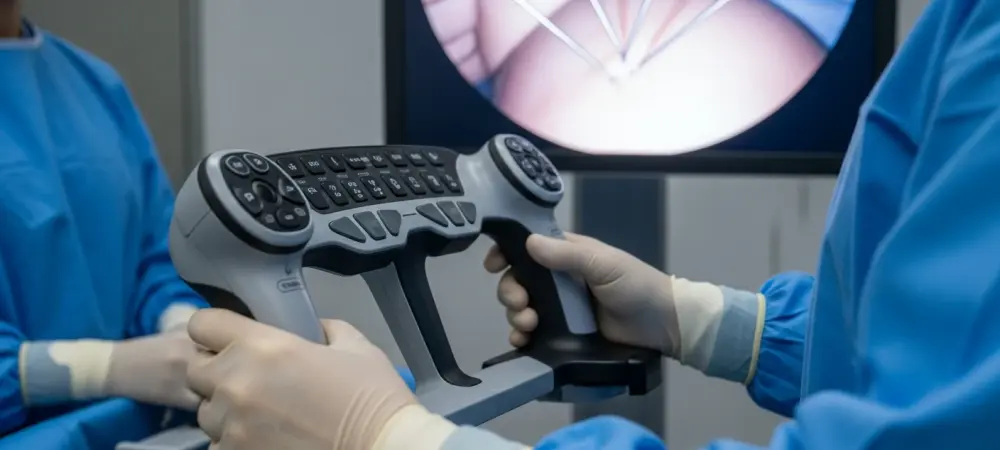
Sitting at the console is an immersive experience. It’s less like holding a scalpel and more like you’ve been miniaturized and placed directly inside the surgical site. The 3D, high-definition imaging provides a level of depth perception and clarity that’s simply impossible to get with the naked eye. You can see every tiny nerve and vessel in vivid detail, which is critical in a delicate prostatectomy. The real magic, though, is how the robotic arms translate your hand movements. They mimic the human wrist but with a far greater range of motion and no tremor. You can perform these incredibly intricate maneuvers, stitching and dissecting in tight, confined spaces with a level of control that feels almost intuitive, allowing for a precision that protects surrounding tissue and leads to much better outcomes.
You highlight that robotic surgery leads to faster recovery. For a common procedure like a gallbladder removal or hernia repair, could you share some typical recovery time metrics compared to open surgery and walk us through the advanced recovery program that helps patients get back to normal life sooner?
While every patient is different, the contrast in recovery is stark. With open surgery for something like a hernia repair, you’re dealing with a large incision that cuts through layers of muscle, leading to a long and often painful recovery. With the robotic approach, we’re talking about a few small, keyhole incisions. This minimized trauma is the key. Patients experience significantly less postoperative pain and require less medication. This allows our advanced recovery programs to kick in almost immediately. We focus on early mobilization—getting patients up and walking sooner—which speeds healing and reduces complications. The result is that patients can often return to their normal lives in a fraction of the time it would take after traditional surgery.
Your program emphasizes a multidisciplinary approach. Could you provide an anecdote where surgeons from different specialties, like gynecology and colorectal surgery, collaborated on a complex endometriosis case? What specific steps did the team take during preoperative planning to ensure the best outcome for the patient?
I recall a particularly complex case of severe endometriosis that had spread from the uterus to the bowel. In the past, this might have required two separate, major surgeries. Instead, our gynecology and colorectal surgeons came together from the very beginning. During preoperative planning, they sat down with the patient’s comprehensive imaging, mapping out the entire procedure as a single, coordinated effort. They determined the safest approach, deciding which team would address specific areas and how to hand off seamlessly. This collaboration meant the patient underwent one minimally invasive robotic procedure. The gynecological surgeon precisely excised the endometrial tissue, and the colorectal surgeon was right there to meticulously repair the bowel. This unified approach not only ensured a better surgical outcome but also dramatically reduced the patient’s overall trauma and recovery time.
The article points to minimized trauma and blood loss as key benefits. During a delicate procedure like a coronary artery bypass, how exactly do the tiny incisions and robotic precision reduce tissue damage? Please explain the step-by-step advantages this offers over traditional methods for patient safety.
Traditionally, a coronary bypass is a major operation involving a long incision and splitting the breastbone to access the heart. The physical trauma is immense, and the risk of infection and blood loss is significant. Robotic surgery completely changes this dynamic. Instead of that large incision, the surgeon makes a few small ports between the ribs. The robotic arms, equipped with tiny instruments, are inserted through these ports. The high-definition camera gives the surgeon a magnified, stable view of the heart. The robotic instruments, with their incredible dexterity, can then perform the delicate task of grafting the new vessel with a level of precision that minimizes damage to the surrounding heart muscle and tissue. This step-by-step reduction in trauma means less blood loss during the procedure and a much lower risk of wound infection afterward, which is a huge leap forward for patient safety.
You note that patient candidacy is determined by a team. Can you walk me through the preoperative assessment for a patient considering robotic-assisted hip replacement? What specific factors in their health history and the procedure’s complexity might make them an ideal candidate for this technology?
The assessment is a truly collaborative process. It begins with our orthopedic team evaluating the patient’s specific condition using advanced imaging to analyze their anatomy and the extent of joint damage. But it doesn’t stop there. We bring in experts from other specialties to conduct a full risk analysis based on the patient’s overall health history. We’re looking for factors that make them an ideal candidate. For a hip replacement, this might be a patient who wants the greater alignment and longevity the robot can provide for their prosthesis. Or perhaps their specific anatomy makes a traditional approach more complex. A patient’s desire for a shorter hospital stay, less pain, and a quicker return to their active life are also important considerations. It’s about matching the powerful benefits of the technology to the individual needs and health profile of each patient.
What is your forecast for the future of robotic surgery? As technologies like artificial intelligence become more integrated, how do you see these platforms evolving to further personalize procedures and advance the field of precision medicine?
The future is incredibly exciting. We’re moving beyond robotics as a simple tool and into an era of intelligent surgical platforms. I foresee AI becoming a crucial co-pilot in the operating room. Imagine an AI that analyzes thousands of previous surgeries and, based on a new patient’s specific anatomy from their preoperative scans, suggests the most optimal surgical pathways to the surgeon. During the procedure, the system could provide real-time feedback, highlighting critical nerves or vessels to avoid, essentially giving the surgeon superhuman awareness. This level of data integration will lead to true precision medicine, where each operation is completely personalized and optimized for the individual, leading to even better outcomes and safer procedures. The robot won’t just be an extension of the surgeon’s hands; it will be an extension of their mind.