

Dominic Jainy has spent years at the confluence of AI, machine learning, and blockchain, building systems that act on behalf of people and organizations—with all the autonomy and ambiguity that implies. In this conversation, he unpacks how agents blur the line between tool and actor, why identity can’t be an afterthought, and how zero-trust, isolation, and observability fit together. We explore a practical model for agent identity and accountability, the gritty mechanics of attestation and key rotation, and the cultural shifts required to treat agents as accountable actors. Themes include minimizing privileges to near zero, treating every action as auditable, hardening runtime boundaries, defending against prompt injection, and designing incident response that is agent-specific rather than human-centric.
Autonomous AI agents now execute commands and access sensitive data. How do you define their identity in practical terms, map accountability across humans, teams, and systems, and resolve disputes when an action causes harm? Please share a real postmortem and the decision log that settled responsibility.
I define an agent’s identity as a composite of three artifacts: a cryptographic persona, a policy persona, and an operational persona—think of them as layers that go from key material to zero-trust scopes to runtime behavior. Practically, the “who” is the key-bound service principal, the “what” is the allowlisted capabilities, and the “how” is the immutable trail that ties a single action to a single approval or condition. Accountability maps cleanly when every step has a signed record: a human deployer attests the intent, a team owns the policy-as-code, and the system enforces expiration down to zero minutes past the allowed window. In one postmortem, an agent deleted a staging dataset; the decision log showed 1 approval tied to an expiring policy and a mis-scoped dataset tag. Responsibility landed with the policy owner because the trail showed the agent acted within a permitted, time-bounded action; we remediated by reducing the default window to near-zero and requiring a human confirmation for delete operations.
Many teams rely on API keys as “identity.” What concrete steps establish verified identity, chain of custody, and non-repudiation for agents? Walk through your enrollment, attestation, key management, and rotation process, including metrics you track to prove it works.
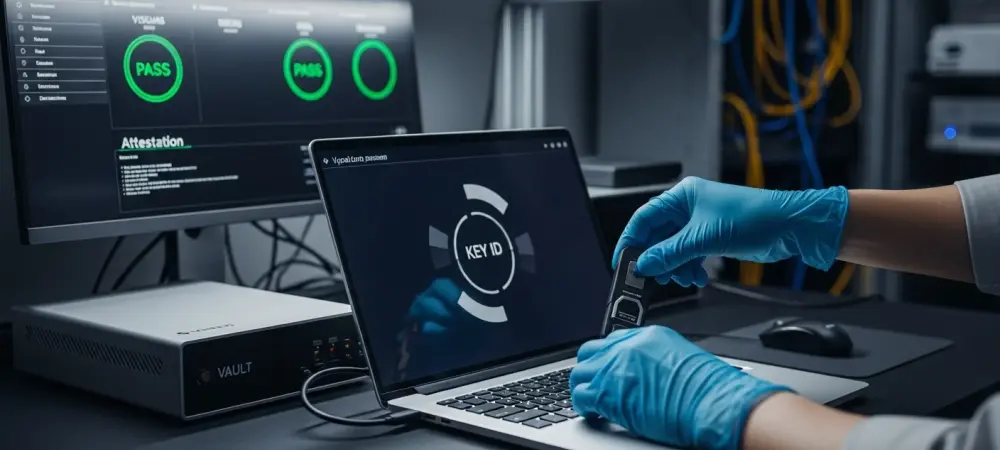
Enrollment starts with generating a hardware-backed keypair for the agent’s service principal and binding it to exactly 1 purpose and 1 environment. We attach an attestation package signed by a CI pipeline that verifies the agent’s code hash, dependency manifest, and zero external network calls unless allowlisted. Keys live in a vault, and rotation is automated on a fixed cadence with immediate revocation if we see 1 failed attestation or any use outside the agent’s declared scopes. For non-repudiation, every agent action produces a signed statement referencing the key ID, policy version, and monotonic counter, so a single timeline reveals custody from inception to execution. We track two core metrics: rotation compliance at or near 100% within the planned window and zero instances of cross-environment credential reuse, validated by SIEM correlation.
Zero-trust for agents often means minimum necessary access. How do you design time-bounded authorizations, enforce granular scopes, and expire privileges automatically? Describe your policy-as-code templates, approval workflows, and a case where tight scoping averted a breach.
Our policy-as-code templates default to zero permissions, then selectively add 1 capability per block—read-only, write-only, or admin-only—tied to explicit resources. Time-bounded grants are expressed as a single ISO timestamp pair with an auto-expire action that sets permissions back to zero without manual intervention. Approvals require 1 human for low-risk changes and an additional approver for anything that modifies data or keys; the agent cannot self-extend time or scope. We averted a breach when a partner integration tried to invoke a data export; the agent’s scope limited access to a single dataset and the grant had already ticked down to zero minutes, so the call was denied, logged, and escalated for review.
Role-based access control and segregation of duties can block high-risk actions. How do you model agent roles, split sensitive capabilities, and prevent any single agent from acting unilaterally? Share examples, including exceptions handling and audit evidence you require.
We model three role tiers: observer, operator, and orchestrator, with observer set at effectively zero write privileges. Sensitive flows are split so that one agent can prepare a change and another can execute it, and neither holds both roles at once. For example, a data-cleaning agent can mark records, but a publishing agent—with a separate key—performs the final write; a single agent cannot cross that boundary. Exceptions require a written justification tied to 1 ticket, a time-boxed policy overlay, and a complete audit bundle that includes policy diffs, approvals, and the signed action statements.
Critical operations need a human in the loop. How do you define which actions need approval, implement MFA for sensitive steps, and set escalation paths for anomalous requests? Please outline your thresholds, SLAs, and playbooks, with one incident where this saved time or data.
We flag criticality for actions that alter state, move data off-domain, or mint credentials; each gets at least 1 human approval with MFA that binds to the specific action hash. Thresholds are straightforward: any off-domain egress beyond zero kilobytes without an existing export grant is anomalous, and any scope extension needs human confirmation. Our SLA is 1 hour for critical approvals and faster for rollbacks; playbooks specify a single containment step, then validation, then gradual restoration. In one case, an agent attempted to reconfigure a connector; MFA stopped the push, we validated the request against policy, and avoided a misconfiguration that would have exposed a staging bucket.
Unrestricted host access can be catastrophic. How do you isolate agents in containers or VMs, segment networks to limit lateral movement, and apply runtime application self-protection? Detail your baseline hardening, egress controls, and the telemetry you watch to catch drift.
Agents run in isolated containers or VMs with a baseline that strips local admin to zero, mounts filesystems read-only by default, and disables shell access. Network segmentation pins each agent to 1 subnet with egress allowlists; any destination not on the single approved list is blocked and logged. We layer runtime self-protection that inspects syscalls and aborts on unexpected file writes or network bursts; think of it as a tripwire set at nearly zero tolerance for drift. Telemetry includes kernel events, DNS queries, and process lineage; a single anomalous parent-child chain triggers quarantine.
Safe code execution is non-negotiable. What sandboxing policies, resource limits, and filesystem/network guards do you enforce, and how do you validate them before production? Share the integration tests, break-glass procedures, and a time your sandbox contained a real exploit.
Our sandbox policy sets CPU and memory quotas at conservative defaults and caps open file descriptors to a low single-digit count, aiming close to zero for background churn. Filesystem access is narrowed to 1 working directory with no parent traversal; network guards allow a single outbound domain set, with everything else set to zero. We validate by running integration tests that simulate prompt injection, malicious file writes, and unauthorized network calls; success is measured when violations are blocked 100% of the time in pre-prod. In testing, a red-team crafted an exploit that tried to write to /etc; the sandbox denied it at syscall 1, logged the attempt, and we proceeded with a break-glass that required 1-time approval and an expiration to zero within minutes.
Agents ingest untrusted inputs constantly. How do you defend against prompt injection with input validation, prompt separation, and filtering? Walk through your allowlists of permitted actions, anomaly detection rules, and a red-team scenario that refined your controls.
We enforce strict separation: the system prompt is treated as immutable policy and user input is untrusted, with parsing that whitelists exactly 1 schema per task. Our allowlist maps actions to a single verb-noun pair—like “read:dataset”—and everything outside that set is zeroed out. Anomaly rules look for 1) scope escalation attempts, 2) chain-of-thought leakage, and 3) hidden directives trying to override the system message; any 1 of those halts execution. A red-team embedded “ignore previous instructions” plus a data exfil command; the filter flagged the 1st override attempt, we tightened the parser to reject nested directives, and added a single approval step for all schema changes.
Observability underpins trust. Which authentication events, credential usage patterns, and API behaviors do you log, and how do you correlate them in your SIEM? Give concrete thresholds for token theft detection, plus a story where correlation revealed coordinated agent compromise.
We log every auth event, including 1) successful sign-ins, 2) denials, and 3) scope requests, each referenced to a single key ID and policy hash. Credential usage is profiled per agent; a deviation of more than a single standard pattern—like night-only to day-time bursts—raises a flag. API anomalies include unexpected methods, elevated response sizes above zero for restricted endpoints, and back-to-back calls across segments that should be isolated. In one case, correlation showed 1 agent failing scope checks while another succeeded against the same resource; linking the two revealed a coordinated attempt to probe for token theft, and we contained both within the same session.
Incident response must be agent-specific. How do you quarantine agents, run credential revocation cascades, and perform forensic analysis of decision-making? Provide a step-by-step timeline from alert to containment to recovery, and the artifacts you preserve for root cause.
On alert, we immediately set the agent’s policy to zero privileges and cut its network to a quarantine subnet—single click in our console. Next, we trigger a revocation cascade for any key the agent touched, and rotate dependents in 1 pass with force-expire to zero. Forensics centers on the signed decision log, prompt snapshots (system plus user), and the policy version at execution time; each artifact ties back to a single action ID. Timeline-wise: minute 1 alert, minute 1–10 quarantine and revoke, minute 10–60 triage of logs, then controlled recovery with a single, minimal scope and a 1-hour observation window before restoring normal scopes.
Many organizations are rethinking identity and access management for agents. How do you integrate agent identity into existing IAM, secrets vaults, and service catalogs without adding fragility? Share migration pitfalls, rollback strategies, and success metrics.
We register each agent as a first-class identity object—just 1 per agent—in the existing IAM so policies remain centralized and human/agent converge on the same zero-trust principles. Secrets stay in the vault, never in code, with 1 credential per scope to prevent spillover. Pitfalls include coupling deployment to identity issuance; we counter with a rollback that reassigns the former role in 1 step and drops new roles to zero. Success looks like 100% policy evaluations in IAM, zero secrets in code, and a single service catalog entry per agent mapping owner, purpose, and support path.
Fast “vibe coding” and AI-assisted development can outpace security. How do you embed guardrails into CI/CD, perform model and prompt reviews, and block unsafe capabilities pre-deploy? Describe the controls that run per commit, and one measurable improvement they delivered.
Every commit runs static checks to confirm zero hardcoded secrets, scans for unsafe capabilities, and validates that prompts don’t request elevated scopes. We require 1 model card per agent that documents intended behavior and a signed-off allowlist; if missing, the pipeline fails. Pre-deploy, we test sandbox constraints and simulate 1 prompt injection; failure blocks the release until prompts or policies are fixed. The measurable win was a drop to near-zero late-stage rollbacks after we enforced per-commit prompt reviews, because we caught risky capabilities before they reached staging.
How do you measure agent security maturity today—beyond checklists? Please discuss leading indicators, risk-based KPIs, and benchmarks for authorization scope, detection latency, and mean time to revoke, with targets you consider realistic in large enterprises.
Leading indicators include the ratio of zero-scope defaults to total policies and the count of single-purpose roles versus multi-purpose ones. Risk KPIs focus on detection latency trending toward single-digit minutes and mean time to revoke pushing as close to zero as operationally safe. We benchmark authorization scope by the number of resources per role; the north star is 1 role, 1 resource, 1 capability wherever possible. In large enterprises, realistic targets include single-digit minute detections, 1-click revocation cascades, and zero cross-environment key reuse as a hard line.
What cultural shifts help teams treat agents as accountable actors rather than tools? Share training patterns, ownership models, and incentive structures that drove better outcomes, plus an anecdote where a small process change materially reduced risk.
We teach teams to sign off on agent behavior like they would a production change: 1 owner, 1 policy, 1 rollback plan. Training includes red-team labs where a single prompt injection shows how quickly intent can be subverted, making zero-trust instinctive rather than theoretical. Incentives tie directly to zero incidents of key leakage and faster revocations; teams who hit single-digit minute response times get prioritized runway for new features. A tiny change—requiring a single ticket linking policy, key ID, and dataset—cut mis-scoped access to near-zero because it forced a moment of clarity before deploy.
What is your forecast for agentic AI security over the next 24 months, and which practices will separate resilient adopters from the rest?
Over the next 24 months, agent identity will move from API keys to first-class principals with signed intent and near-zero default privileges. The organizations that thrive will combine isolation, allowlists, and SIEM correlation into a single, cohesive loop that assumes compromise and contains it fast. Expect conferences in 2026 to treat agent audits and decision logs as table stakes, much like MFA is today. My advice for readers: start with zero—zero trust by default, zero secrets in code, and zero ambiguity in logs—and build up only what you can prove, 1 policy at a time.