

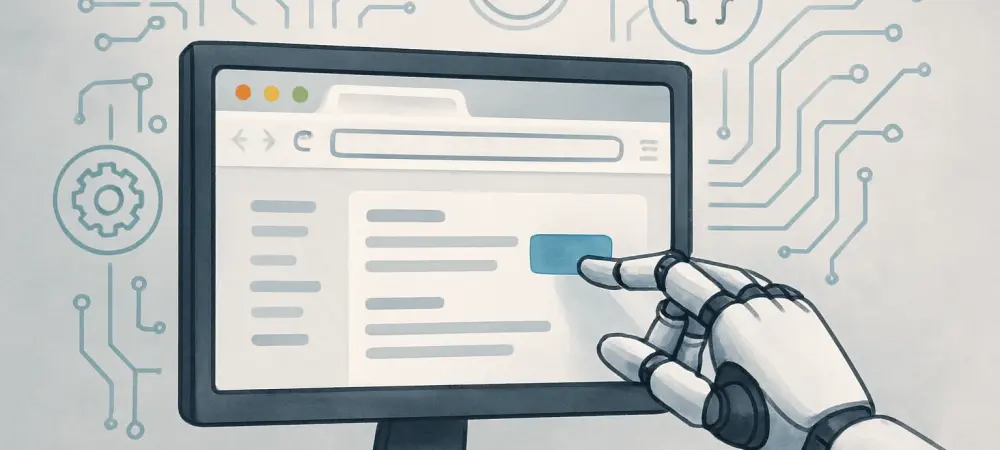
The realm of automation is witnessing a seismic shift with the rise of browser agents—AI-driven tools designed to mimic human interactions within web browsers by clicking buttons, filling forms, and navigating complex websites. Imagine a scenario where repetitive tasks in critical industries like healthcare and insurance are handled not by overworked staff, but by intelligent systems that operate with precision and speed. This potential to revolutionize workflows underscores the importance of understanding where browser agents stand today and what barriers remain before they achieve true transformation. The significance of this technology lies in its capacity to save time, reduce errors, and enhance efficiency on a massive scale.
This FAQ article aims to address the most pressing questions surrounding browser agents and their role in automation. It explores core concepts, current challenges, and emerging trends to provide clarity on when these tools might fully realize their potential. Readers can expect to gain insights into different approaches, real-world applications, and the future direction of this evolving field, equipping them with a comprehensive understanding of what lies ahead.
Key Questions About Browser Agents in Automation
What Are Browser Agents and Why Do They Matter?
Browser agents are automated systems powered by artificial intelligence, engineered to interact with web browsers in ways that replicate human behavior, such as entering data or navigating through webpages. Their purpose is to streamline repetitive, time-consuming tasks that often burden employees, particularly in enterprise settings. The importance of these agents stems from their ability to boost productivity while minimizing human error, especially in sectors where accuracy is non-negotiable.
The drive toward automation with browser agents addresses a critical need for efficiency in industries handling vast amounts of data daily. For instance, in healthcare, these tools can automate patient form processing, freeing up staff for more direct care roles. Their relevance continues to grow as businesses seek scalable solutions to manage increasingly complex digital workflows, making them a pivotal innovation in modern technology.
What Are the Main Approaches to Browser Automation?
Two primary methodologies dominate the landscape of browser automation: vision-based and DOM-based agents, each with distinct strengths and limitations. Vision-based agents interpret browser screens as visual images, much like a human would, using multimodal models to analyze screenshots and execute actions such as clicking at specific coordinates. While this approach offers flexibility across varied interfaces, it often struggles with slowness and imprecision, particularly when detecting subtle page changes.
In contrast, DOM-based agents interact directly with a webpage’s structured data, known as the Document Object Model, allowing for faster and more accurate actions by targeting specific elements without relying on visual guesswork. An example of this precision is seen when an agent uses a structured snapshot to locate a search button on a familiar site with exactness. However, this method can falter with dynamic or non-standard layouts, highlighting the need for complementary strategies to cover all scenarios.
Why Aren’t Browser Agents Fully Reliable Yet?
Despite significant advancements, browser agents face persistent reliability challenges that prevent widespread adoption in high-stakes environments. Early vision-based models, for instance, encountered issues with rendering differences and latency, leading to unacceptable failure rates, even as low as 1%, in enterprise contexts. Such limitations reveal why standalone visual interpretation often falls short when precision is paramount.
Moreover, complex webpage layouts and unpredictable changes in interface design further complicate automation efforts. These inconsistencies can disrupt an agent’s ability to perform consistently, especially in critical sectors where errors carry heavy consequences. Overcoming these hurdles requires ongoing innovation to ensure systems can handle diverse and evolving digital environments with unwavering dependability.
How Do Hybrid Systems Improve Browser Automation?
Recognizing the shortcomings of singular approaches, hybrid systems have emerged as a leading solution, combining vision-based and DOM-based techniques for enhanced performance. These systems leverage the precision of structured data interaction for text-heavy, predictable sites while employing visual analysis as a fallback for dynamic or image-rich interfaces like dashboards. This dual strategy ensures greater adaptability across different tasks. A notable advantage of hybrid models is their ability to prioritize reliability by selecting the most effective method for each situation, often supplemented by deterministic scripting for consistent replay of actions. This balanced approach has become a standard in current automation practices, addressing many of the flaws seen in earlier, less versatile models. As a result, enterprises are increasingly turning to these systems for more robust outcomes.
What Role Does Adaptability Play in the Future of Browser Agents?
Adaptability stands as a crucial frontier for the evolution of browser agents, moving beyond mere task completion to learning and self-optimization. A proposed two-stage process involves exploration, where agents navigate unfamiliar webpages using visual or computer-use models to identify successful paths, followed by execution, where these paths are encoded into reusable scripts. This method mirrors how a skilled worker refines efficiency through repetition. Advancements in large language models further enable agents to write and refine code, allowing continuous improvement over time. Such self-learning capabilities promise to transform automation by creating systems that not only perform tasks but also adapt to new challenges independently. This shift toward intelligent, evolving tools marks a significant step in achieving long-term transformation in the field.
How Are Browser Agents Being Applied in Key Industries?
In critical sectors like healthcare and insurance, browser agents are already proving their worth by automating repetitive processes such as data entry and form processing. These applications directly alleviate the burden on staff, enabling a focus on higher-value activities like patient interaction or claims analysis. The impact of even partial automation in these areas is substantial, driving operational efficiency.
However, the stringent demand for near-perfect reliability in such environments underscores the necessity of hybrid and self-improving systems. Current deployments demonstrate that while progress is evident, achieving seamless integration requires addressing remaining precision gaps. Tailoring solutions to sector-specific needs remains a priority to maximize the benefits of this technology.
Summary of Key Insights
Browser agents represent a groundbreaking development in automation, poised to redefine efficiency across various industries through their ability to handle web-based tasks. This article has explored their core methodologies, highlighting the strengths of DOM-based precision and the flexibility of vision-based systems, while emphasizing the superior reliability of hybrid approaches. Challenges like adaptability and current reliability issues have also been examined, alongside promising applications in high-stakes sectors. Key takeaways include the recognition that hybrid systems are setting a new standard for performance, while self-learning capabilities signal the next leap forward. The ongoing evolution toward adaptable, intelligent agents suggests a future where automation transcends basic functions to become a dynamic partner in workflows. For those seeking deeper knowledge, exploring resources on AI-driven automation or enterprise technology trends can provide additional context and updates on this rapidly advancing domain.
Final Thoughts
Reflecting on the journey of browser agents, it is clear that their path from experimental tools to near-production-ready systems has been marked by both impressive strides and persistent obstacles. The blend of vision and structure in hybrid models has shown remarkable potential to address past shortcomings, paving the way for more dependable solutions. Their early impact in critical fields has already hinted at a broader capacity to reshape daily operations. Looking ahead, the focus should shift to fostering adaptability through self-learning mechanisms, ensuring that these agents can evolve alongside changing digital landscapes. Stakeholders and businesses are encouraged to invest in hybrid technologies and explore tailored applications that meet specific industry demands. By staying engaged with emerging innovations, there is an opportunity to harness the full power of browser agents, turning automation into a cornerstone of efficiency and progress.