

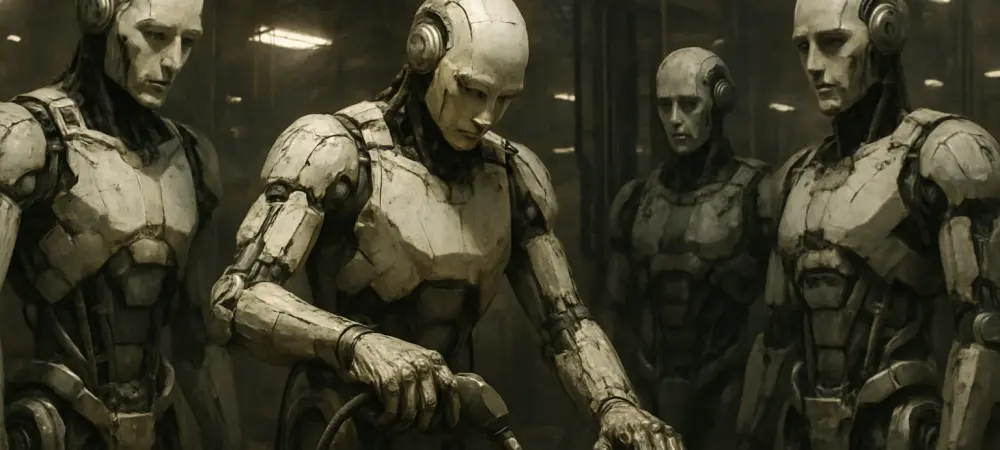
In the heart of modern manufacturing hubs, a quiet revolution is unfolding as humanoid industrial robots step onto factory floors, performing tasks once reserved for human hands with uncanny precision. These advanced machines, epitomized by models like UBTech’s Walker S2, are not just tools but potential game-changers in how industries tackle labor shortages and efficiency demands. With global automation investments soaring, the rise of such robots signals a transformative shift, prompting a closer examination of their capabilities, real-world impact, and the challenges they face in reshaping industrial landscapes.
Core Features and Technological Innovations
Autonomous Intelligence and Decision-Making
At the forefront of humanoid industrial robots is their ability to operate with minimal human oversight, thanks to sophisticated intelligent systems. UBTech’s proprietary Co-Agent technology, integrated into the Walker S2, enables these robots to understand intentions, plan tasks, and detect anomalies autonomously. This level of independence allows them to handle complex operations, such as self-replacing batteries, reducing downtime and enhancing workflow continuity in high-stakes environments.
Beyond basic automation, these systems represent a leap toward adaptive problem-solving in industrial settings. The capacity to adjust to unexpected issues without constant supervision marks a significant departure from traditional robotic systems, which often require predefined instructions. This autonomy not only boosts efficiency but also positions humanoid robots as viable partners in dynamic, unpredictable workspaces.
Ergonomic Design and Environmental Adaptability
Equally critical to their functionality is the physical design of humanoid robots, engineered to mirror human movements for seamless integration into existing industrial setups. Models like the Walker S2 boast ergonomic builds that allow them to navigate tight spaces, handle intricate tools, and execute tasks with precision akin to human workers. Such design considerations ensure they can operate alongside humans without necessitating major infrastructural changes.
The adaptability of these robots to varied environments further underscores their utility. Innovations in materials and mechanics provide the robustness needed to endure harsh factory conditions while maintaining flexibility for diverse tasks. This balance of durability and versatility makes them suitable for a range of applications, from assembly lines to logistics hubs, amplifying their practical value across sectors.
Performance in Industrial Applications
Humanoid industrial robots are making tangible impacts in high-demand sectors, notably automotive manufacturing, smart factories, and logistics centers. UBTech’s partnerships with industry giants like BYD, Geely Auto, and Foxconn highlight the robots’ deployment in real-world scenarios, where they streamline repetitive tasks and enhance output. For instance, their use in automotive assembly lines has demonstrably reduced production times and operational costs.
Their role extends beyond mere task execution to data collection and process optimization in specialized facilities. A notable deployment in a data collection center in Zigong showcases how these robots manage large-scale information handling with efficiency, a testament to their multifaceted capabilities. Such applications reveal their potential to transform labor-intensive industries by addressing both physical and analytical demands. The financial backing for these implementations speaks volumes about industry confidence, with UBTech securing orders worth over 800 million yuan ($113 million) for the Walker model in a single year. Contracts valued at 250 million yuan ($35 million) and 159 million yuan ($22 million) underscore the scale of adoption, reflecting a broader trend of integrating advanced robotics into critical operational frameworks to drive productivity.
Challenges in Scaling and Integration
Despite their promise, deploying humanoid industrial robots on a large scale presents significant hurdles, starting with high production costs that can deter smaller enterprises from adoption. The financial investment required for development and deployment often limits accessibility, creating a barrier to widespread use in cost-sensitive markets. Addressing this issue remains a priority for manufacturers aiming to democratize access to such technology.
Technical and logistical challenges also persist, particularly in integrating these robots into pre-existing workflows without disrupting operations. Compatibility with legacy systems and the need for specialized training for staff add layers of complexity to implementation. Overcoming these obstacles demands innovative solutions, such as modular designs and user-friendly interfaces, to ease the transition for industries.
Regulatory and market barriers further complicate the landscape, as varying standards across regions can slow deployment timelines. Collaborative efforts between robotics firms and industry stakeholders are underway to navigate these constraints, focusing on standardizing protocols and fostering acceptance. Until these issues are resolved, the pace of adoption may remain uneven across global markets.
Future Trajectory and Industry Impact
Looking ahead, the trajectory for humanoid industrial robots appears robust, with UBTech targeting production of 5,000 units annually by 2026 and scaling to 10,000 units by 2027. These ambitious goals reflect a maturing robotics sector and a growing appetite for automation solutions worldwide. If achieved, such milestones could redefine industrial capacities, particularly in labor-intensive regions.
Technological breakthroughs on the horizon, including enhanced AI algorithms and more resilient hardware, promise to further elevate the capabilities of these robots. Broader industry adoption seems inevitable as costs decrease and scalability improves, potentially reshaping labor dynamics by reallocating human workers to more strategic roles. This shift could herald a new era of efficiency, provided the balance between automation and human input is carefully managed.
The long-term implications extend beyond operational metrics to societal impacts, as industries grapple with the ethical and economic consequences of widespread robot integration. Discussions around job displacement and workforce retraining are gaining traction, signaling the need for proactive policies to accompany technological advancements. How these challenges are addressed will likely determine the ultimate footprint of humanoid robots in industrial ecosystems.
Final Reflections
Looking back, the strides made by humanoid industrial robots, led by pioneers like UBTech with the Walker S2, mark a pivotal chapter in automation history. Their advanced autonomy, adaptable designs, and proven applications in diverse sectors underscore a transformative potential that captivates industries worldwide. Yet, the journey is not without its struggles, as cost barriers and integration complexities test the limits of early adoption. Moving forward, stakeholders must prioritize cost-reduction strategies and streamlined integration frameworks to unlock the full potential of this technology. Collaborative innovation between robotics developers and industrial leaders should focus on creating accessible, scalable solutions that bridge current gaps. Additionally, investing in workforce transition programs will be crucial to mitigate labor displacement concerns, ensuring a harmonious blend of human and machine contributions.
As the robotics field continues to evolve, continuous monitoring of regulatory landscapes and market needs will be essential to sustain momentum. Encouraging pilot programs in varied industrial contexts can provide valuable insights, refining deployment strategies over time. Ultimately, a balanced approach that champions both technological progress and societal well-being will shape the enduring legacy of humanoid industrial robots in redefining industrial efficiency.