

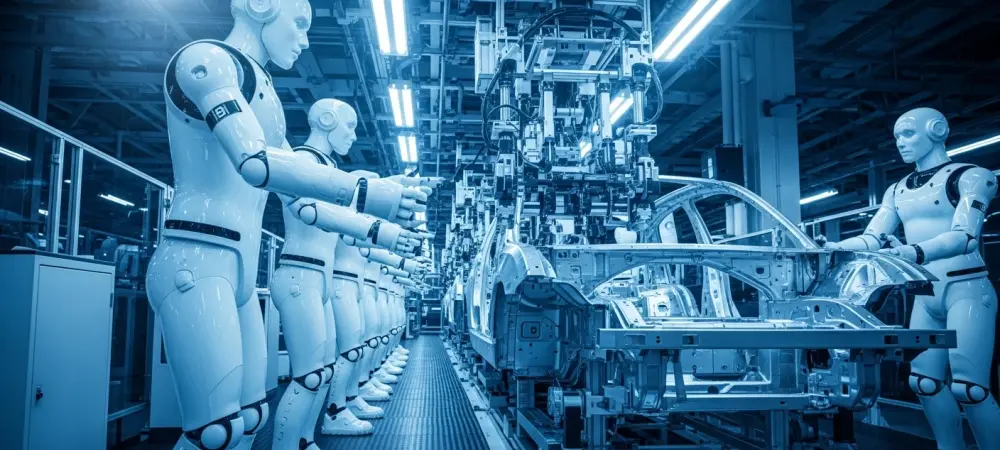
A monumental financial surge is quietly underway within the robotics industry, with projections indicating the global market for humanoid robot actuators will skyrocket from a modest base to nearly $9.9 billion by 2031. This explosive expansion is not merely a forecast but a reflection of a fundamental shift, as humanoid robots move decisively from experimental pilot programs into widespread commercial and industrial applications. At the heart of this transformation are actuators, the intricate components that function as the muscles and joints of these advanced machines. These systems are responsible for converting software intelligence into physical motion, defining a robot’s dexterity, balance, and strength. The escalating demand for more capable robots in sectors such as manufacturing, logistics, and healthcare is directly fueling the need for higher-performance actuators, marking a critical turning point where the underlying hardware becomes as important as the controlling AI.
The Technical and Geographic Forces at Play
The increasing deployment of humanoids in demanding industrial environments is a primary catalyst for this market acceleration, as factories and warehouses require robots with actuators capable of enduring higher loads, longer duty cycles, and sustained mechanical stress without failure. Consequently, manufacturers are intensely focused on developing and sourcing actuators that deliver exceptional precision control, a compact design for seamless integration, high energy efficiency to extend operational time, and uncompromising durability for a reliable return on investment. Geographically, this growth is not uniform. The Asia Pacific region has emerged as a major hub, driven by a widespread push for manufacturing automation and the establishment of sophisticated supply chains. Concurrently, North America is a significant growth area, with its strong emphasis on advanced robotics research and the burgeoning demand for service robots in commercial and public spaces. Ultimately, the future success of suppliers in this burgeoning field will depend heavily on their ability to provide customized, scalable, and easily integrated actuator solutions tailored to the specific needs of a diverse and rapidly expanding client base.