

A New Era in Robotics: The Quest for a Universal Mind
In a landmark move signaling a dramatic acceleration in the artificial intelligence arms race, Pittsburgh-based startup Skild AI has secured a staggering $1.4 billion in a Series C funding round. The investment, which catapults the company’s valuation to an impressive $14 billion, is aimed at a single, audacious goal: creating a universal “brain” for robots. This article will delve into the groundbreaking technology behind Skild AI’s vision, explore the powerful coalition of investors betting on its success, and analyze the profound implications of a future where any robot can be powered by a single, general-purpose intelligence.
The Fragmented Past of Robotics and the Dawn of Generalization
For decades, the world of robotics has been defined by specialization. From the powerful arms on an automotive assembly line to the precise manipulators in a surgical suite, each robot has been a purpose-built machine, running on bespoke software designed for a narrow set of repetitive tasks. This fragmented approach has made robotics powerful but also rigid, expensive, and difficult to scale. The dream of a general-purpose robot—one that could adapt to new tasks as easily as a human—has remained elusive, primarily due to this software bottleneck. Skild AI is tackling this fundamental challenge head-on, proposing that the key isn’t just better hardware but a unified, adaptable software mind that can inhabit any physical form.
Unpacking Skild AI’s Vision and Technology
The Skild Brain: An Omni-Bodied Foundation Model
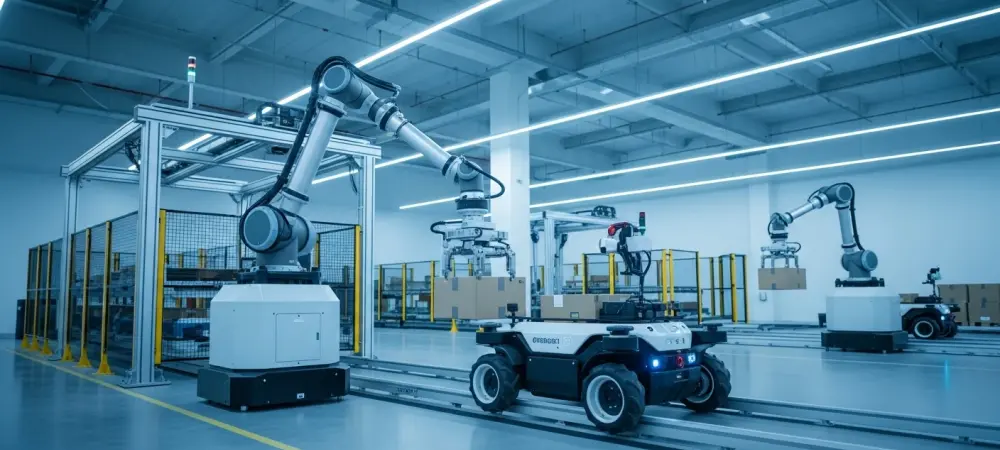
At the heart of Skild AI’s ambitious project is the “Skild Brain,” a unified robotics foundation model designed to be “omni-bodied.” This core innovation allows the AI to operate a vast array of robotic hardware—from humanoid figures to simple tabletop arms—without needing to be retrained for each specific physical form. This hardware-agnostic approach means a robot powered by the Skild Brain can generalize its understanding of tasks across different bodies. It can learn the principles of grasping an object with a two-fingered gripper and then intuitively apply that knowledge to a multi-fingered hand, enabling it to perform complex, nuanced actions like loading a dishwasher or dynamically adjusting its balance on a slippery floor.
In-Context Learning: How a Robot Brain Becomes Versatile
The Skild Brain develops its versatile skill set not through rigid programming but through a sophisticated process the company calls “In-Context Learning.” The model is trained on an immense library of online videos depicting human actions, which it complements with extensive physical simulations. This method, according to CEO Deepak Pathak, forces the model to move beyond simple memorization and learn to adapt its behavior in real time to new environments and unexpected physical constraints. This process creates a “continuous data flywheel,” where every task performed by a Skild-powered robot, regardless of its hardware, generates new data that refines and improves the central model for all other units, accelerating its learning curve exponentially.
A Powerhouse of Investors and a Tripled Valuation
The $1.4 billion investment, which tripled Skild AI’s valuation since last summer, is as notable for its size as it is for its participants. The round was led by Japan’s SoftBank and drew a diverse coalition of high-profile backers, including Nvidia’s NVentures, Bezos Expeditions, Macquarie Capital, and 1789 Capital, which counts Donald Trump Jr. as a partner. Crucially, the round also includes strategic corporate investors like Samsung, LG, and Salesforce Ventures. This blend of venture capital, tech giants, and enterprise leaders signals broad industry confidence that Skild AI’s software-centric approach is the most promising path toward unlocking the commercial potential of general-purpose robotics.
From Enterprise Solutions to the Automated Home of Tomorrow
Having already reached $30 million in revenue in 2025, Skild AI is poised to use its massive infusion of capital to aggressively scale its model training and commercial deployment. While the long-term vision is to power robots in homes, the company’s immediate strategy is firmly rooted in enterprise applications. By targeting sectors like logistics, manufacturing, and warehouse automation, Skild AI can demonstrate a clear ROI for businesses struggling with labor shortages and the need for greater efficiency. This pragmatic go-to-market approach allows the company to prove its technology in controlled industrial environments, paving the way for its eventual, more complex deployment in the unpredictable setting of the human home.
Strategic Imperatives in a New Robotic Landscape
The emergence of a well-funded leader like Skild AI establishes a new benchmark for the robotics industry. For hardware manufacturers, the focus may shift from developing proprietary software to building machines that are fully compatible with a dominant universal brain, turning them into “vessels” for a centralized intelligence. Businesses should begin evaluating how adaptable, multi-task robots could be integrated into their workflows, moving beyond single-task automation to more dynamic operational models. For investors and technologists, Skild AI’s success underscores a critical insight: the future of robotics is not just a hardware problem, but a grand AI software challenge.
A Pivotal Moment for a Unified Robotic Future
Skild AI’s monumental funding round was more than just a financial headline; it was a declaration that the era of the universal robot brain is arriving. By pioneering an omni-bodied AI that learned from human action, the company attempted to solve the foundational software problem that had long held robotics back. The journey from specialized industrial machines to truly general-purpose assistants is long, but with a $1.4 billion war chest and a powerful technological vision, Skild AI has positioned itself at the forefront of this transformation. The ultimate success of the Skild Brain could redefine our relationship with machines, ushering in an age of automation that is as adaptable and versatile as the humans it is designed to assist.