

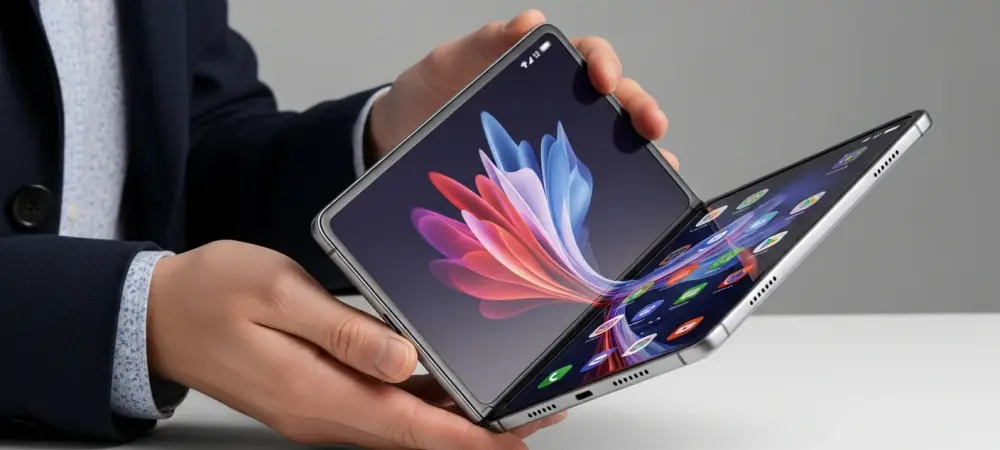
The technology landscape has shifted dramatically as consumers move away from mere hardware iterations toward deeply integrated artificial intelligence that anticipates user needs before they are explicitly articulated. Samsung’s upcoming Unpacked event is poised to redefine the flagship experience. The Galaxy S26 Ultra is the centerpiece, likely featuring a thinner chassis and a more immersive display. Beyond the phone, the emphasis rests on Galaxy AI. This suite of tools has matured since its debut, now focusing on multi-modal interactions. This means the device understands context across voice, text, and visual inputs simultaneously. Rumors suggest a significant redesign for the Fold and Flip series as well, targeting a nearly invisible crease and improved durability. These refinements are not just about aesthetics; they enable a more seamless transition between mobile and tablet modes for professional workflows. The event serves as a bellwether for the mobile industry’s trajectory from 2026 to 2028.
Refining the Neural Core: The Evolution of Silicon
At the heart of the latest hardware lies a custom-tuned processor designed specifically to handle localized large language models without relying heavily on cloud processing. This shift ensures that data privacy remains a priority while providing near-instantaneous responses for generative tasks. Specifically, the integration of a second-generation 3nm architecture allows for better thermal management, which has been a pain point for heavy users in recent years. This silicon efficiency translates directly into extended battery life, even when running intensive background AI processes like real-time translation or live video upscaling. Moreover, the camera system is expected to utilize these computational gains to offer true 8K video at higher frame rates, coupled with predictive autofocus that tracks subjects based on intent rather than just movement. This synergy between the neural engine and the optical sensors represents a pivotal moment in mobile photography, where the software effectively bridges the gap between smartphone lenses and professional-grade equipment.
Ecosystem Synergy: Expanding the Galaxy Horizon
Beyond the smartphone, the Unpacked event highlighted how wearable technology became an essential extension of the digital self. The Galaxy Ring and Watch series offered sophisticated health monitoring that provided actionable wellness scores based on metabolic data and sleep quality. Looking ahead, developers were encouraged to optimize their applications for this cross-device environment to ensure that notifications and tasks migrated fluidly between screens. The introduction of an updated XR headset also signaled a commitment to mixed reality, suggesting that the mobile device would soon serve as a primary hub for spatial computing. By focusing on an interconnected ecosystem, the strategy moved away from isolated product launches toward a unified user experience. Users who prioritized privacy and high-performance productivity found that the new hardware-software combination addressed their most pressing concerns. The focus transitioned toward sustainable materials and long-term software support, ensuring that the technology remained functional through the transition from 2026 to 2029.