

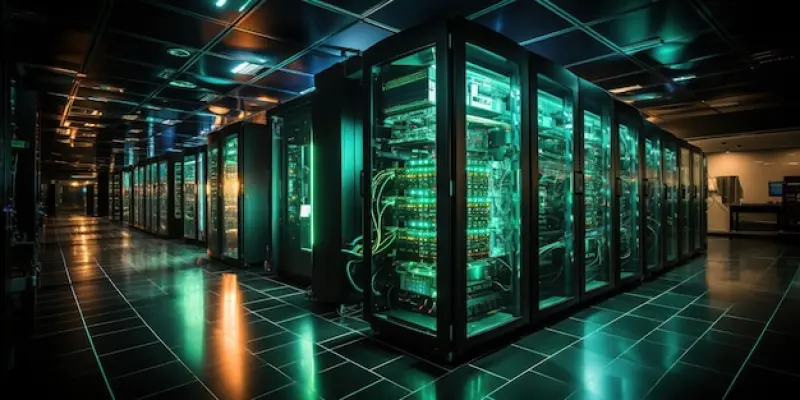
The rapid advancement of artificial intelligence has ushered in unprecedented demands for computational resources, and the construction of major AI data centers across the United States is a direct response. At the forefront of this development is the colossal AI data center campus being developed in Abilene, Texas. This venture, spearheaded by Crusoe, has successfully secured $11.6 billion in financing for its second phase. The site is pivotal for OpenAI’s ambitious Stargate initiative, which aims to establish a $500 billion network of large-scale data centers spanning the U.S. This transformative project is not just about meeting the growing computational demands but also promises to bring significant economic benefits to the region. By mid-2026, the addition of six new buildings is expected to boost capacity by another gigawatt, further underlining its potential impact on the economy.
Employment and Economic Growth
The construction and operation of these large-scale data centers represent a substantial economic undertaking. Crusoe’s project in Abilene is poised to create a multitude of job opportunities, both in its construction phase and during ongoing operations. From skilled technical positions to support roles, the data center is set to become a major employment hub in the region. The influx of jobs can spur local economic growth, fostering the development of auxiliary businesses and services. Moreover, this initiative illustrates a new era of infrastructure investment where modern technology meets traditional economic growth strategies. Local communities are likely to benefit from increased tax revenues and improved local services, further enhancing the region’s economic stability. Such robust infrastructure investments underscore Texas’ pivotal role in accommodating the surge in AI-driven computational needs, solidifying its future as a technological powerhouse.
Future Prospects and Challenges
While the economic incentives are promising, the unfolding phases of this data center expansion present notable challenges and considerations. The environmental impact is a primary concern, given the data centers’ vast energy requirements. Integrating renewable energy sources will be essential to mitigate its carbon footprint and align with sustainable development goals. Concurrently, the regional infrastructure must adapt to heightened demands, including enhanced connectivity and logistics capabilities, to support these burgeoning facilities. As the construction progresses towards its completion target in mid-2026, the necessity for resilient supply chains and trained technical personnel will be paramount. Addressing these challenges effectively will position Texas as a front-runner in AI infrastructure, setting a precedent for future ventures. As such, the transformative power of these data centers will hinge equally on sustainable practices and strategic innovation.