

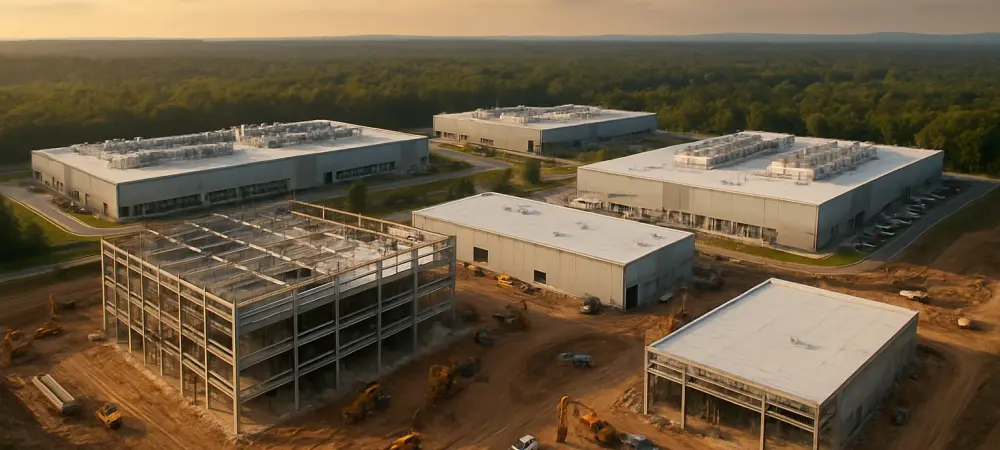
In the ever-evolving world of data centers, few experts are as insightful as Dominic Jainy. With significant expertise in artificial intelligence, machine learning, and blockchain, Dominic offers a unique perspective on the technological advancements shaping our industries. Amidst HostDime’s ambitious plans for a new data center in João Pessoa, Brazil, Dominic shares his thoughts on the strategic and technological aspects of this monumental project.
Can you elaborate on the reasons behind choosing João Pessoa for the new data center location?
Choosing João Pessoa was strategic for several reasons. The city provides access to a robust technological ecosystem and offers geographic diversity necessary for service reliability. Its coastal positioning also optimizes submarine cable connectivity, making it a smart location for processing-intensive operations that demand high-speed data transfers.
How does the $40 million investment reflect HostDime’s strategic goals in Brazil?
This investment is a clear commitment to expand HostDime’s footprint in the Latin American market, specifically Brazil, which is crucial for growth in demand for cloud and AI services. By choosing to allocate such substantial resources here, HostDime underscores its dedication to positioning itself as a leader in AI processing and data center innovation in the region.
Could you discuss the specific features and capabilities that will distinguish this new João Pessoa facility from your existing data centers?
The João Pessoa facility will be state-of-the-art, featuring racks supporting up to 150 kVA and a total capacity of approximately 15MW. It is designed with lateral connectivity to facilitate optical networks, reaching bandwidths of 800Gbps. These capabilities are paramount for AI-intensive tasks, far surpassing the capabilities of our existing facilities.
What challenges did you face in designing a facility capable of supporting up to 150 kVA racks and approximately 15MW?
Designing a facility of this magnitude posed significant challenges, particularly in ensuring efficient cooling and power distribution systems that can handle such high-density requirements. We also had to integrate cutting-edge technology to manage heat dissipation and energy consumption effectively, balancing performance with sustainability.
How will the lateral connectivity for optical networks enable 800Gbps bandwidth, and why is this important for AI environments?
Lateral connectivity is essential for facilitating high-speed data exchanges, and reaching an 800Gbps bandwidth ensures we can support the massive data throughput required for AI operations. This capability allows for near real-time data analysis and processing, which is crucial for machine learning applications that depend on large datasets.
What benefits does Tier IV certification provide, and why is achieving this certification significant for your new facility?
Achieving Tier IV certification is significant because it represents the highest level of redundancy and reliability in data centers. It means that the facility can operate without disruption even if multiple systems fail. This level of assurance is crucial for clients who rely on constant uptime, particularly in AI processing which can’t afford interruptions.
How does the João Pessoa data center fit into HostDime’s broader global strategy, especially considering your operations in Angola and upcoming projects?
The João Pessoa center is a pivotal addition to HostDime’s global strategy, reinforcing its commitment to expanding its presence in emerging markets. By integrating operations in Angola and upcoming facilities, like those in Orlando and Guadalajara, HostDime is building a cohesive network of data centers that can support global demand seamlessly.
Could you provide insight into the timeline and progress of the planned data center in Orlando?
The Orlando data center is scheduled to be operational by the last quarter of 2025. The project is on track, with construction phases being meticulously planned to incorporate the latest technological advancements. This facility will further enhance HostDime’s capacity to handle global data demands efficiently.
What are some unique aspects of Guadalajara’s upcoming Tier IV certified public data center in Mexico?
Guadalajara’s data center will be unique in its design, focusing on both robust security features and energy efficiency. The center will span approximately 7,500 sqm and provide 6MW of capacity, making it a significant addition to Mexico’s digital infrastructure. Its Tier IV certification further highlights our commitment to excellence in uptime and sustainability.
How do you ensure alignment between the management team and HostDime’s vision for building state-of-the-art facilities worldwide?
Alignment comes from a shared vision and clear communication among our leadership. Regular collaboration between key figures, like our CEOs and technical teams, ensures that everyone is on the same page regarding strategic goals and operational execution. Our history of successful projects reflects this unity in vision.
What long-term impacts do you anticipate this series of investments will have on HostDime’s market position?
These investments are likely to solidify HostDime’s market position as a forward-thinking leader in the data center industry. By expanding our global reach and integrating cutting-edge technology, we can attract more clients seeking reliable, high-performance solutions, thus enhancing our market share and influence.
Could you explain the benefits of these purpose-built data centers for your clients and how they’ve helped HostDime grow over the years?
Purpose-built data centers cater specifically to the needs of modern enterprises, offering reliability, security, and enhanced performance. Clients benefit from tailored solutions that can scale according to their needs. Over the years, this approach has helped HostDime build a strong client base that trusts us with their ongoing and future technological demands.
Do you have any advice for our readers?
Diversifying investments in innovative technologies, like AI and blockchain, is essential for staying competitive in today’s rapidly changing landscape. It’s crucial to anticipate market shifts and position oneself strategically to capitalize on new opportunities as they arise.