

Introduction
Imagine a scenario where a major corporation loses access to its critical data due to a power outage in its primary data center, halting operations for hours and costing millions in revenue, which underscores the vital role of redundancy in data center design. Such disruptions highlight how redundancy acts as a safeguard to ensure continuous uptime even when components fail. Data center redundancy refers to the deployment of backup systems for essential functions like power, cooling, and networking, protecting businesses from costly downtime. This article aims to demystify the concepts of N-levels and tiers, two key frameworks for measuring redundancy, by addressing common questions and providing actionable insights. Readers can expect to gain a clear understanding of these systems, their limitations, and how to apply this knowledge to align redundancy strategies with specific operational needs.
The topic holds immense relevance in an era where digital infrastructure underpins nearly every industry, from finance to healthcare. With increasing reliance on cloud services and data-driven decision-making, ensuring uninterrupted access to data is no longer optional but a fundamental requirement. This discussion will explore the nuances of redundancy classifications, offering clarity on how businesses can evaluate and enhance the reliability of their data center facilities.
Key Questions or Key Topics
What Is Data Center Redundancy and Why Does It Matter?
Data center redundancy involves the implementation of duplicate systems or components within a facility to prevent operational failures in critical areas such as power supply, cooling mechanisms, and network connectivity. This concept is distinct from server redundancy, which pertains to the IT equipment housed within the data center, focusing instead on the infrastructure that supports these systems. The importance of redundancy lies in its ability to minimize downtime, a critical concern for businesses where even brief interruptions can lead to significant financial losses or reputational damage.
The need for robust redundancy becomes evident when considering the potential risks of system failures. For instance, a power outage without a backup generator could render an entire facility inoperable, disrupting services for clients and stakeholders. By maintaining spare components or duplicate setups, data centers can switch to backups seamlessly, ensuring continuity. This protective layer is particularly crucial for industries handling sensitive data or real-time transactions, where uptime is non-negotiable.
How Are N-Levels Used to Measure Redundancy?
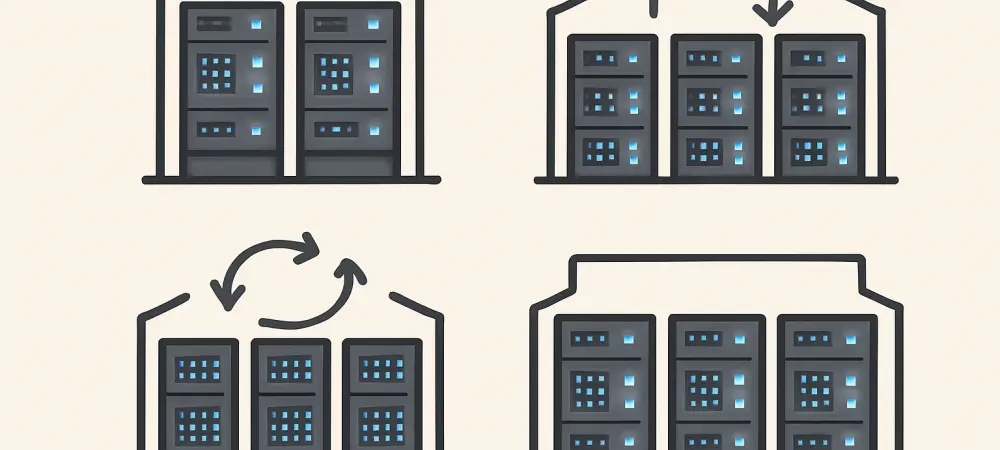
N-levels provide a quantitative approach to assessing redundancy by comparing the number of components needed for normal operations (denoted as “N”) to the total number available. For example, an N+1 configuration indicates one additional component beyond the minimum requirement, offering a single backup in case of failure. At a higher level, 2N redundancy means the facility has twice the necessary components, essentially providing a fully mirrored system ready to take over if the primary fails.
This framework offers a straightforward way to understand backup capacity, with higher N-levels typically indicating greater resilience. However, the effectiveness of N-levels can vary depending on the system in question. While N+1 might suffice for power systems where a single generator can support the entire load, it may be less impactful for complex setups like uninterruptible power supply units in large facilities, where one extra unit offers minimal added reliability. Businesses evaluating N-levels should therefore consider the specific context of each critical system.
What Are Data Center Tiers and How Do They Relate to Redundancy?
Data center tiers, developed by the Uptime Institute, represent a classification system ranging from Tier I to Tier IV, with each level reflecting increasing degrees of redundancy and operational capability. A Tier I facility provides basic capacity with limited backup, while a Tier IV data center offers the highest redundancy, often featuring multiple, independent systems to ensure uptime even during major disruptions. This system is widely recognized in the industry as a benchmark for facility reliability.
Unlike N-levels, tiers do not prescribe specific redundancy metrics but focus on overall design and performance standards. A key challenge with tiers is the potential for self-reporting without third-party validation, which can lead to inflated claims about a facility’s capabilities. Despite this, tiers remain a valuable starting point for businesses seeking to gauge a data center’s ability to withstand failures, provided they are complemented by detailed inquiries into actual redundancy measures.
What Are the Limitations of N-Levels and Tiers in Assessing Reliability?
While N-levels and tiers serve as useful tools for evaluating redundancy, both frameworks have notable shortcomings that businesses must recognize. N-levels, for instance, fail to account for the varying impact of redundancy across different systems, as a single backup may be adequate for one area but insufficient for another. Additionally, these metrics focus solely on internal components, ignoring external risks that could compromise an entire facility.
Tiers, on the other hand, lack precision in defining redundancy and can be subject to misrepresentation if not independently verified. A more significant limitation shared by both systems is their inability to address catastrophic events like natural disasters or physical attacks, which can render even the most redundant data center unusable. This underscores the importance of looking beyond these classifications to consider geographic and external risk factors when planning for reliability.
How Can Businesses Address External Risks to Data Center Operations?
Internal redundancy alone cannot protect against total facility outages caused by events such as floods, earthquakes, or deliberate sabotage. To mitigate these risks, businesses are encouraged to replicate critical workloads in a secondary data center located in a different geographic area, reducing the likelihood of simultaneous failures. This strategy ensures that if one facility is compromised, operations can shift to an alternate site with minimal disruption. An alternative, often more cost-effective solution is to maintain a scaled-down production environment in a public cloud as a failover option. This hybrid approach leverages the scalability and flexibility of cloud infrastructure to complement traditional data centers, offering a practical way to enhance resilience. Adopting such measures reflects a growing trend toward diversified risk management in the industry, balancing internal safeguards with external contingency plans.
What Practical Steps Can Businesses Take to Evaluate Redundancy?
Beyond relying on N-levels or tiers, businesses should conduct thorough due diligence when assessing a data center’s redundancy. This involves asking specific questions about how redundancy is calculated, such as the percentage of spare components relative to operational needs, and understanding the processes for transitioning to backup systems during failures. Such inquiries provide deeper insight into a facility’s true reliability.
Transparency from data center providers is essential in this evaluation process. Requesting detailed documentation on system designs and failover protocols can help clarify the effectiveness of redundancy measures. Additionally, businesses should prioritize facilities with high redundancy benchmarks, such as 2N or Tier IV, while remaining mindful of their unique operational requirements and budget constraints.
Summary or Recap
This discussion unpacks the essentials of data center redundancy, clarifying the roles of N-levels and tiers as foundational frameworks for measuring backup capacity and reliability. N-levels offer a clear, numerical perspective on component redundancy, while tiers provide a broader assessment of facility design and performance. Despite their utility, both systems have limitations, particularly in addressing external risks and system-specific variations, necessitating a more nuanced approach to evaluation. Key takeaways include the importance of distinguishing data center redundancy from server redundancy and the need to complement internal safeguards with external risk mitigation strategies like workload replication or cloud-based backups. Businesses are advised to dig deeper into specific redundancy calculations and transition processes to ensure alignment with their operational goals. For those seeking further exploration, resources from the Uptime Institute or industry reports on hybrid infrastructure models can provide valuable insights into advancing redundancy planning.
Conclusion or Final Thoughts
Reflecting on the insights shared, it becomes clear that achieving robust data center redundancy demands a tailored approach, blending high internal standards with strategic external protections. Businesses are encouraged to take proactive steps by partnering with providers who offer transparency and detailed reporting on redundancy measures. Exploring hybrid solutions, such as integrating cloud environments for failover, emerges as a forward-thinking tactic to bolster resilience against unforeseen disruptions.
Looking ahead, the focus shifts to building partnerships with data center operators who prioritize ongoing risk assessments and adaptability in their designs. A commitment to regularly reviewing and updating redundancy strategies in response to evolving threats stands out as a critical action for sustaining operational continuity. By embracing these practices, organizations position themselves to navigate the complexities of data center reliability with confidence and foresight.