

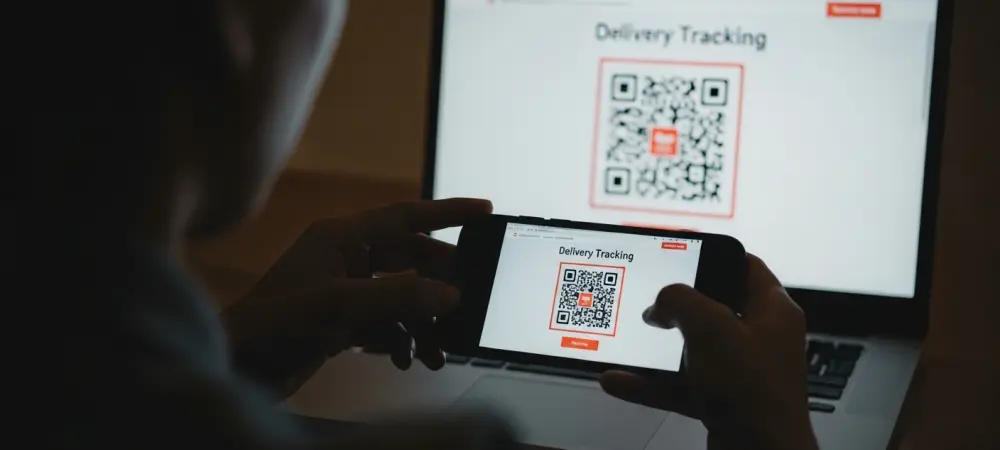
The ubiquitous black-and-white squares of QR codes, once symbols of convenient access to information, have been insidiously repurposed into a potent delivery mechanism for sophisticated cyberattacks. The use of weaponized QR codes in mobile malware campaigns represents a significant evolution in attack methodologies, shifting the focus of state-sponsored actors toward the rich repositories of data stored on personal smartphones. This review will explore a recent campaign by the Kimsuky hacking syndicate, its sophisticated attack flow, the technical features of the deployed malware, and the impact of these tactics on mobile security. The purpose is to provide a thorough understanding of this emerging threat, its current capabilities, and its potential for future development.
The Emergence of QR-Based Mobile Threats
The core concept of weaponizing QR codes for malware distribution hinges on exploiting user trust in a seemingly harmless technology. The North Korean-linked Kimsuky group has masterfully adapted its tactics to target mobile devices, which have become critical hubs for sensitive personal and financial data. By embedding malicious links within QR codes, attackers can bypass conventional security filters that typically scrutinize emails and text messages, directing users to compromised sites under the guise of legitimacy. This attack vector’s relevance is rapidly growing in a world increasingly reliant on smartphones for everything from banking to communication. The seamless nature of scanning a QR code lowers user suspicion, making it an ideal tool for social engineering campaigns. As Kimsuky’s latest operation demonstrates, this method allows threat actors to precisely target mobile platforms, ensuring their malware reaches the intended environment where it can inflict the most damage.
Anatomy of a Kimsuky Campaign
The Multi-Stage Social Engineering Attack Flow
The attack process begins with a socially-engineered smishing (SMS phishing) message, a common yet effective lure. This message contains a link that directs the victim to a meticulously crafted phishing website impersonating a legitimate package delivery service. The choice of a delivery service is strategic, as it preys on the common anticipation of receiving a package, making users more likely to follow instructions without question. A particularly clever element of this campaign is the redirection mechanism designed to isolate mobile targets. If a user accesses the phishing link from a desktop computer, the website displays a message claiming the page cannot be viewed from a PC for security reasons, prompting them to scan a QR code with their phone. However, if accessed directly from an Android device, the site initiates a fake security scan before instructing the user to download a supposed “security app.” This differential treatment ensures the malicious payload is delivered exclusively to the intended mobile devices.
Technical Analysis of the DOCSWAP RAT
At the center of this campaign is an updated variant of the “DOCSWAP” Remote Access Trojan (RAT), an Android-based malware with formidable capabilities. To maximize its reach, the malware impersonates a variety of trusted applications, including the popular South Korean delivery service CJ Logistics, VPN applications, and even cryptocurrency authentication systems. This diverse range of decoys allows the attackers to deceive a broader spectrum of victims.
To avoid detection by security tools, DOCSWAP employs several evasion techniques. Its command and control (C2) communications utilize Base64-encoded URLs to obscure the destination of stolen data. Furthermore, the C2 server employs user-agent filtering, delivering different content depending on whether the request comes from a genuine mobile device or an automated analysis tool. This server-side logic makes it significantly more challenging for security researchers to study the threat.
Advanced Payload Decryption and Persistence
The malware’s infection process is a multi-stage affair, beginning with a primary APK file that contains a secondary, encrypted payload. This new DOCSWAP variant showcases a significant technical upgrade, moving from a simpler Java-based decryption routine to a more advanced native library. This native library executes a three-step decryption algorithm on the encrypted payload, involving bit inversion, a 5-bit left rotation, and an XOR operation with a hardcoded key.
Once decrypted and installed, the malware establishes a robust persistence mechanism to ensure its continuous operation. It registers a background service that is configured to launch automatically in response to key system events, such as the device being rebooted or connected to a power source. This ensures that even if the device is turned off, the RAT will reactivate upon startup, maintaining the attacker’s foothold on the system.
Innovations in Evasion and Deception Tactics
While the malware operates covertly, the application presents a convincing decoy to the user to maintain the illusion of legitimacy. It displays a fake authentication screen that prompts for a delivery tracking number and a verification code, information conveniently supplied in the initial smishing message. This interactive element further solidifies the user’s belief that they are engaging with a genuine service.
After the user enters the provided information, the application uses a webview to load the official, legitimate website of the impersonated delivery service. This final step is a masterstroke of deception, as it provides the expected functionality and convinces the victim that the app is authentic. With the user satisfied, the RAT is free to carry out its espionage activities in the background without raising suspicion.
Espionage Capabilities and Real-World Impact
The DOCSWAP RAT is a powerful espionage tool, equipped with 57 distinct commands that grant attackers comprehensive control over a compromised device. Its capabilities are extensive, including the ability to record audio and video, exfiltrate call logs and SMS messages, track the device’s real-time location, and execute remote shell commands. This allows for a complete takeover of the victim’s digital life. A particularly invasive function is its keylogger, which leverages Android’s Accessibility Service to capture sensitive user input. This feature records everything the user types, including passwords, private messages, and financial information, along with timestamps and the names of the apps being used. This data is then compressed, encoded, and exfiltrated to the attackers, posing a severe threat to user privacy and security.
Attribution and Security Challenges
Researchers attribute this campaign to the Kimsuky group with high confidence based on compelling evidence. The C2 infrastructure shares significant overlaps with previously identified Kimsuky operations, and a unique server artifact—a string reading “Million OK !!!!”—has been observed in past attacks linked to the group. Additionally, the presence of Korean-language comments and error messages in the phishing site’s source code provides strong linguistic ties to the North Korean threat actor.
These socially-engineered, multi-stage attacks pose significant difficulties for both automated security solutions and end-users. The use of a QR code to initiate the attack can bypass many network-level defenses, placing the burden of detection on the individual. This highlights a critical challenge in cybersecurity: protecting users from attacks that are designed to exploit human psychology rather than just technical vulnerabilities.
Future Outlook on Mobile-Centric Threats
The success and sophistication of this campaign suggest that Kimsuky and other threat actors will continue to refine their use of QR codes and similar mobile-centric tactics. This approach has proven effective at bypassing traditional defenses and targeting high-value individuals directly on their personal devices. The barrier to entry for creating such attacks is relatively low, while the potential rewards for espionage are high.
Future iterations of these threats will likely integrate more advanced evasion techniques and potentially leverage AI to create more convincing social engineering lures. This trend signals a long-term shift in the threat landscape, increasing the pressure on mobile operating system developers, security vendors, and organizations to adapt their security postures. Consequently, heightened user education on the dangers of unsolicited QR codes and app installations will become more critical than ever.
Conclusion and Key Findings
This campaign decisively demonstrated Kimsuky’s strategic pivot toward mobile espionage, showcasing a sophisticated and patient approach to compromising high-value targets. The innovative use of QR codes as a primary delivery vector proved to be a highly effective tactic, successfully bypassing conventional security measures and deceiving users into installing the malware. Ultimately, the technical evolution of the DOCSWAP RAT, combined with its robust persistence mechanisms and extensive espionage features, marked it as a significant and formidable threat. The operation highlighted critical vulnerabilities within the mobile ecosystem and the persistent challenge of defending against socially-engineered attacks. This incident underscored the urgent need for multi-layered security solutions and continuous user vigilance to protect against the ever-advancing frontier of mobile cyber threats.