

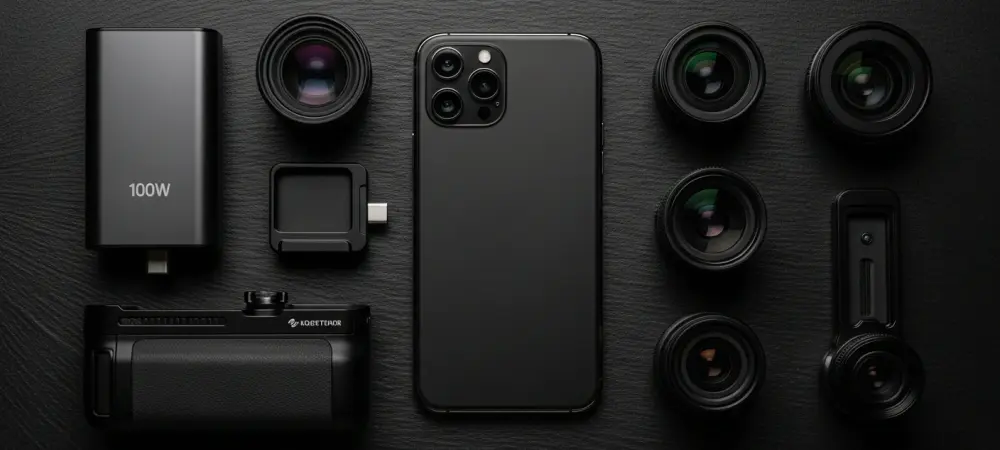
The boundary between professional optical instruments and mobile telecommunications has effectively vanished with the arrival of a device that prioritizes light gathering over traditional pocketability. The Vivo X300 Ultra represents a significant advancement in the premium smartphone industry, signaling a shift where computational photography no longer merely mimics high-end glass but seeks to replace it. This review will explore the evolution of the technology, its key features, performance metrics, and the impact it has had on various applications. The purpose of this review is to provide a thorough understanding of the technology, its current capabilities, and its potential future development.
Evolution of the Vivo Ultra Series
The lineage of this series has always been defined by a relentless pursuit of focal length versatility, yet the leap from the X200 Ultra to the X300 Ultra marks a fundamental change in hardware philosophy. While previous iterations focused on software-driven HDR and aggressive sharpening, the current model leans into raw sensor power and physical light intake. It emerged in a landscape where consumers are increasingly trading dedicated mirrorless cameras for devices that offer immediate connectivity without sacrificing depth of field.
This shift is relevant because it acknowledges that mobile users are no longer satisfied with “good enough” social media snaps. By moving toward the X300 Ultra, Vivo has repositioned the flagship as a specialized tool for creators. This transition reflects a broader technological trend where the smartphone is becoming the central hub for professional-grade imaging, rather than just a secondary communication device.
Core Hardware and Architectural Upgrades
The 200MP Imaging System and Optical Refinement
At the heart of this machine lies a dual-threat 200MP configuration that redefines how mobile sensors handle data density. The 35mm primary sensor offers a more natural perspective than the wide-angle lenses typically found in phones, though the move to an f/1.9 aperture suggests a heavier reliance on sensor size to manage low-light noise. This refinement ensures that the “per-pixel” quality is higher, providing a canvas that allows for significant cropping without losing the fine textures of a subject’s skin or the intricate details of a landscape. The 85mm periscope lens utilizes the HP0 sensor, which drastically improves the speed of phase-detection autofocus. In practical terms, this means the device can track moving subjects with a level of precision usually reserved for dedicated sports cameras. Even with the lens aperture sitting at f/2.7, the sheer size of the sensor compensates for the slower glass, producing a bokeh effect that feels organic rather than artificially blurred by AI algorithms.
High-Density Battery Technology and Charging Efficiency
Powering such a resource-heavy imaging system required a radical rethink of internal space, leading to the implementation of a 6,600mAh high-density battery. This engineering feat allows the device to maintain a manageable weight while offering a ten percent increase in capacity over its predecessor. In real-world endurance tests, this translates to a phone that can survive a full day of 4K video recording, a task that typically drains standard flagship batteries by mid-afternoon.
The transition to 100W USB-C charging further modernizes the user experience, moving away from the older 90W standards. This efficiency isn’t just about speed; it is about thermal management during the charging cycle. By optimizing the energy intake, Vivo ensures that the high-capacity cells do not degrade prematurely under the stress of rapid power delivery, providing a longer lifespan for the hardware.
Structural Design and Ergonomic Shifts
The most polarizing change in this generation is the shift from curved aesthetics to a flat glass architecture. This transition prioritizes durability and functional utility over the “infinity” screen look that dominated the last decade. While the device feels blunter in the hand, the flat edges provide a more secure grip when holding the phone horizontally for photography, reducing the likelihood of accidental screen touches during a critical shot.
However, the removal of physical hardware controls, such as a dedicated shutter button, represents a significant trade-off. By relying on haptic feedback and on-screen triggers, the design achieves a sleeker look but sacrifices the tactile “half-press” for focus that many purists prefer. This shift suggests that Vivo is betting on the maturity of haptic technology to bridge the gap between mechanical and digital interfaces.
Trends in Mobile Computational Photography
The industry is currently moving toward a “sensor-first” approach where AI is used to enhance reality rather than rewrite it. Modern mobile photography now integrates larger sensors that capture more raw data, allowing AI-driven image processing to focus on color accuracy and dynamic range. Consumers are no longer just looking for bright photos; they are seeking professional-grade tools that offer a specific “look” or “character” in their images.
Moreover, there is a clear trend toward modularity in the professional ecosystem. As mobile sensors reach the limits of what can fit in a pocket, the reliance on external optics and specialized kits has grown. This allows users to customize their hardware for specific tasks, whether it is high-speed journalism or cinematic storytelling, moving the smartphone closer to a modular camera body.
Real-World Applications and the Professional Ecosystem
Professional Mobile Cinematography and Photography
The X300 Ultra is being deployed in environments where traditional gear would be too intrusive or cumbersome. Independent filmmakers are utilizing the 200MP sensors to capture high-bitrate footage that can be seamlessly integrated with professional color-grading workflows. The ability to shoot in Log formats while benefiting from the device’s built-in stabilization makes it a formidable tool for on-the-go content creation.
Furthermore, the professional ecosystem has embraced the device for social-first commercial photography. Because the image quality is high enough for print and large-scale digital displays, brands are increasingly using these smartphones for high-end campaigns. This reduces production costs and allows for a more spontaneous, authentic style of imagery that resonates with modern audiences.
The Photography Kit and Modular Hardware Usage
The revamped Photography Kit, priced at €599, elevates the device from a phone to a specialized optical system. By including a detachable grip and filter rings, Vivo allows users to interact with the device as they would a traditional Leica or Sony camera. The introduction of 200mm and 400mm teleconverter lenses is particularly significant for niche sectors like wildlife and sports photography, where reach is the most important factor.
These modular components solve the problem of physical space constraints. Instead of trying to fit a massive zoom lens inside the chassis, Vivo provides high-quality external glass that maintains the integrity of the sensor’s resolution. This approach offers a compromise between daily portability and professional capability, catering to a market that values versatility above all else.
Technical Hurdles and Market Constraints
Physical Limitations of Large Sensors and Optics
Despite the advancements, the X300 Ultra faces the undeniable laws of physics regarding sensor size and lens aperture. To fit a massive 200MP sensor into a slim frame, the designers had to settle for apertures like f/1.9 and f/2.7. While the sensor size helps, these narrower apertures can struggle in extremely low-light environments compared to smaller sensors paired with wider f/1.4 glass. This trade-off requires the software to work harder to maintain detail in the shadows.
There is also the issue of lens flare and internal reflections that often plague large-sensor mobile systems. As the glass elements become more complex to accommodate high-resolution sensors, the risk of optical artifacts increases. Balancing these physical limitations while trying to keep the camera bump from becoming too unwieldy remains one of the primary engineering challenges for the ultra-premium segment.
Market Adaptation and Design Trade-offs
The shift toward a thicker, flatter design has met with mixed reactions from a market accustomed to the slim, tapered profiles of the past. There is a tangible tension between making a device a great phone and making it a great camera. The added thickness required for the 6,600mAh battery and the large camera modules makes the device less comfortable for one-handed use during standard tasks like texting or browsing.
Additionally, the removal of dedicated physical buttons may alienate a segment of the “Pro” market that demands tactile reliability. While the photography kit adds these buttons back, it requires an extra purchase and adds bulk. Navigating these design trade-offs involves a delicate balance of satisfying enthusiast demands without making the device too niche for the general flagship consumer.
The Future of Ultra-Premium Mobile Technology
Vivo’s roadmap suggests a future where the smartphone becomes a completely modular computing block. We are likely to see breakthroughs in solid-state battery technology, which would allow for even higher capacities without increasing the physical footprint. This would free up internal space for even more sophisticated optical arrays or cooling systems, further closing the gap between mobile and professional hardware.
The long-term impact on the industry will likely be a stratification of the market, where “Ultra” devices become truly distinct from standard flagships. We may see the further miniaturization of liquid lenses or the integration of variable aperture systems that don’t rely on bulky mechanical parts. As the hardware stabilizes, the focus will shift toward the “AI-optical” hybrid, where the lens and the processor work in a perfectly synchronized loop.
Final Assessment of the Vivo X300 Ultra
The evolution of the Ultra series culminated in a device that prioritized raw performance over the traditional elegance of thin-and-light design. By embracing a flat architecture and massive sensor arrays, the technology moved toward a specialized utility that challenged the necessity of stand-alone cameras. The balance between incremental battery improvements and major leaps in telephoto resolution created a tool that felt purpose-built for the creator economy.
This assessment revealed that while physical constraints still dictated certain trade-offs in aperture and ergonomics, the integration of a modular photography ecosystem provided a viable path forward for the industry. The X300 Ultra functioned as a bridge between two worlds, proving that mobile devices could handle professional workloads if users were willing to accept a more substantial form factor. Ultimately, the development of this flagship pushed the boundaries of what high-density hardware could achieve in a handheld format.