

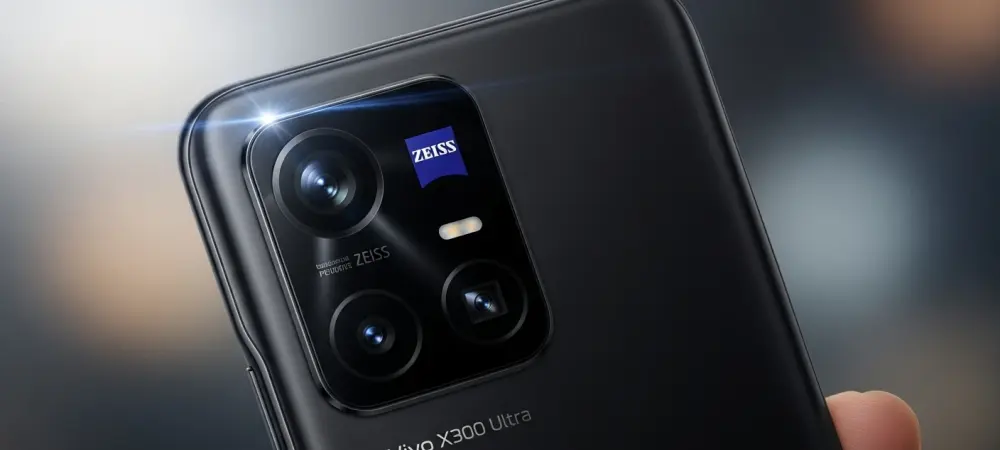
The traditional reliance on bulky glass and heavy mechanical bodies is facing its most significant challenge yet as optical engineering miniaturizes professional performance into a pocketable form factor. With the unveiling of the X300 Ultra, the industry moves beyond simple software enhancements to embrace a hardware-centric approach that challenges the dominance of traditional cameras. This debut represents a pivot from computational photography toward physical optics, offering a glimpse into a future where your primary phone is also your primary professional lens.
This transition reflects a broader shift in how creators perceive mobile devices. While software algorithms have long simulated depth and clarity, the physical limitations of light cannot be bypassed by code alone. By integrating high-end glass and modular components, this new flagship addresses the growing demand for authentic optical fidelity, transforming the smartphone into a versatile tool capable of handling professional-grade assignments without the typical compromises of mobile imaging.
The Evolution of the Mobile Photography Ecosystem
Mobile imaging has traditionally been limited by the physical constraints of a slim smartphone body, forcing users to rely on digital zoom and artificial blurring. However, as social media and professional content creation demand higher fidelity, consumers are seeking tools that offer genuine optical depth and long-range clarity. The partnership with Zeiss signifies a strategic move to address these demands, transitioning the smartphone from a casual snapshot device into a modular photography workstation capable of handling professional assignments.
The landscape of 2026 demands that a device be more than just a communication hub; it must serve as an extension of the creator’s vision. This requires a move away from the “one-size-fits-all” sensor and toward a system that can be adapted for specific environments. As users move between street photography, wildlife observation, and high-fashion portraiture, the hardware must evolve to match the context of the shoot.
Breaking Down the Zeiss Professional Accessory Kit
The X300 Ultra distinguishes itself through a massive collection of specialized hardware designed to mimic the tactile experience of a high-end camera. Central to this kit is a redesigned protective case that serves as the foundation for an integrated grip, allowing for stable one-handed shooting. To accommodate professional workflows, the bundle includes a dedicated lens mount with filter rings, a tripod mount for long-exposure shots, and a shoulder strap for easy transport. This comprehensive ecosystem is rounded out by a custom carrying bag, ensuring that the transition from a phone to a professional rig is seamless and efficient.
Beyond the aesthetics, the kit emphasizes ergonomics and durability. The inclusion of filter rings allows photographers to use physical neutral density or polarizing filters, which are essential for controlling light in ways that software cannot replicate. This modularity ensures that the device remains functional as a standard phone for daily use while being ready to transform into a dedicated imaging machine at a moment’s notice.
Unprecedented Reach: 200mm and 400mm Teleconverters
While internal sensors provide the foundation, the true power of the X300 Ultra lies in its external optical extenders. The kit introduces two teleconverters that push the device’s reach to 200mm and 400mm focal lengths, allowing users to capture subjects that were previously out of reach for mobile sensors. Real-world performance of these attachments was showcased through high-action imagery from the Miami Open, demonstrating the ability to freeze motion and maintain sharpness at extreme distances—a feat typically reserved for bulky telephoto lenses used by sports photojournalists.
These teleconverters are not merely magnifying glasses; they are precision-engineered elements that maintain light transmission and minimize chromatic aberration. By utilizing external glass, the system avoids the “oil painting” effect often seen in high-ratio digital zooms. This breakthrough allows for clean, detailed shots of athletes or distant wildlife, effectively bridging the gap between hobbyist photography and professional reportage.
Native Sensor Prowess and Color Accuracy
Beyond the external add-ons, the X300 Ultra is built on a foundation of high-performance internal hardware. The device features a 200 MP main sensor and a new dedicated color sensor specifically engineered to ensure high chromatic accuracy across various lighting conditions. To demonstrate this native power, professional portrait samples from photographer Xiao Quan highlight the device’s capability at 50mm and 85mm focal lengths. These images reveal natural skin tones and sophisticated bokeh without the need for external attachments, proving that the phone is as effective for intimate portraiture as it is for long-range sports photography.
This focus on color science is critical for professional workflows where post-processing requires a neutral and accurate starting point. The dedicated color sensor works in tandem with the primary 200 MP array to map out complex lighting environments, ensuring that the final output matches the reality of the scene. Such precision allowed the device to capture the subtle textures of skin and fabric with a level of detail that rivaled mid-range dedicated mirrorless systems.
Mastering the Modular Photography Workflow
For users looking to maximize the potential of the Vivo X300 Ultra, the workflow involved a blend of native sensor mastery and strategic accessory use. Photographers utilized the 50mm and 85mm native modes for high-resolution portraits where natural light and color accuracy were paramount. When the situation shifted to sports, concerts, or wildlife, the modular lens mount allowed for the rapid attachment of the 400mm teleconverter. By integrating the filter rings for long-exposure landscapes or using the integrated grip for handheld video, creators adapted the device to nearly any professional scenario. The success of this modular approach suggested a future where the hardware kit becomes as important as the smartphone itself. As mobile sensors continue to grow, the industry likely moved toward more specialized external glass to bypass the physical limits of slim chassis designs. Those who embraced this hybrid workflow found themselves equipped with a full studio kit contained within a single shoulder bag, fundamentally changing the logistics of professional field photography.