

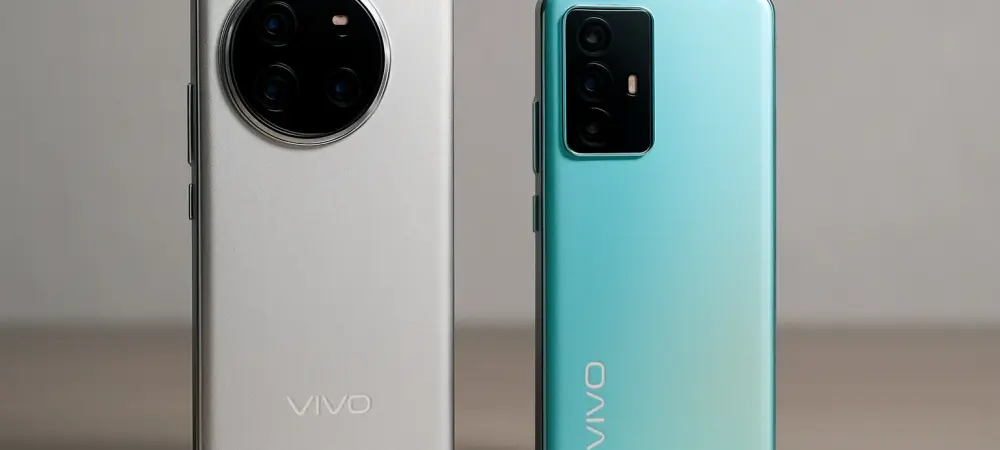
Introduction: The Tale of Two Identical Flagships
The global smartphone market frequently sees fascinating rebranding strategies, where a device launched in one region appears elsewhere under a completely new name, and the upcoming Vivo X300 FE appears to be the latest chapter in this story. Based on compelling evidence from international certification bodies, this new global release is shaping up to be a mirror image of the powerful, China-exclusive Vivo S50 Pro Mini. This analysis is therefore not a competition between two different devices but an examination of how a top-tier handset, equipped with technology from industry giants like Qualcomm and Sony, is being adapted for a worldwide audience.
Recent listings on Singapore’s IMDA and Germany’s TUV Rheinland certification websites have provided the first concrete details, setting the stage for this comparison. These certifications strongly suggest that the core specifications of the X300 FE will align perfectly with those of the S50 Pro Mini. This comparison dissects the shared DNA of these two phones, from their processing power and camera systems to their battery technology, to understand what global consumers can expect from Vivo’s next flagship contender.
Core Hardware and Performance Breakdown
Processing Power: The Snapdragon 8 Gen 5 Engine
At the heart of both the Vivo X300 FE and the S50 Pro Mini lies a formidable performance engine, eliminating any difference in raw power between the two. Both models are expected to be driven by the cutting-edge Qualcomm Snapdragon 8 Gen 5 chipset, a processor designed to handle the most demanding applications and games with ease. This central processing unit is complemented by the Adreno 829 GPU, which promises to deliver a superior graphics experience, whether for high-fidelity gaming or creative work.
This flagship-level processing is further supported by an equally impressive memory and storage configuration. The devices are slated to include up to 16GB of high-speed LPDDR5x Ultra RAM, ensuring seamless multitasking and fluid performance even with numerous apps running simultaneously. For storage, the inclusion of up to 512GB of UFS 4.1 technology guarantees lightning-fast read and write speeds, significantly reducing app loading times and accelerating file transfers, making both phones identically powerful performers.
Display Technology and Visual Fidelity
The visual experience on both smartphones is poised to be another area of perfect alignment, centered around a premium display panel. The Vivo X300 FE and S50 Pro Mini will likely feature a compact yet immersive 6.31-inch AMOLED screen. This technology is known for its vibrant colors, deep blacks, and excellent contrast, providing a stunning canvas for all types of content. The sharp 1216×2640 pixel resolution ensures that text, images, and videos are rendered with exceptional clarity and detail.
Moreover, the fluidity of the user interface and motion on screen is enhanced by a 120Hz refresh rate. This feature allows for incredibly smooth scrolling, animations, and gameplay, contributing significantly to the overall premium feel of the device. Consequently, whether a user is in the global market with the X300 FE or in China with the S50 Pro Mini, the visual fidelity and responsiveness of the display will be indistinguishable and equally impressive.
Camera Systems: A Sony-Powered Photography Duel
In the realm of mobile photography, both the Vivo X300 FE and the S50 Pro Mini are positioned to be formidable competitors, thanks to an identical and versatile camera system powered by Sony sensors. The rear of each device is expected to house a sophisticated triple-camera setup designed to excel in a variety of shooting scenarios. The centerpiece is a 50-megapixel primary Sony sensor, engineered to capture stunningly detailed and vibrant images even in challenging lighting conditions.
This primary lens is accompanied by an equally impressive 50-megapixel Sony periscope telephoto lens, enabling high-quality optical zoom for capturing distant subjects without sacrificing clarity. An additional ultra-wide-angle camera rounds out the rear setup, offering creative flexibility for landscape and group shots. For selfie enthusiasts, the high-resolution 50-megapixel front-facing camera ensures that self-portraits are sharp and detailed, solidifying the status of both phones as powerful pocket-sized cameras.
Battery Endurance and Charging Capabilities
Power management is a critical aspect of any flagship smartphone, and here again, the Vivo X300 FE and S50 Pro Mini demonstrate their shared heritage. Both devices are anticipated to be equipped with a massive 6,500mAh battery, a capacity that suggests excellent endurance and the ability to easily last through a full day of heavy use. This large battery ensures that users can take full advantage of the powerful processor and brilliant display without constant anxiety about finding a power outlet.
The charging technology is another key point of convergence, highlighted by the TUV Rheinland certification for the X300 FE. This certification confirms 90W wired fast charging, a specification that matches the S50 Pro Mini and promises to refuel the substantial battery in a remarkably short amount of time. One lingering question, however, is whether the 40W wireless fast charging featured on the S50 Pro Mini will also be carried over to its global counterpart. If it is, it would offer global users an added layer of convenience and solidify the X300 FE’s position as a true flagship.
Final Verdict: Which Model Is Right for You?
The comparative analysis of the Vivo X300 FE and the Vivo S50 Pro Mini leads to a straightforward conclusion: these are not rivals but regional variants of the same exceptional device. Every core aspect, from the elite performance of the Snapdragon 8 Gen 5 chipset to the advanced Sony-powered camera system and robust battery life, is identical across both models. The evidence overwhelmingly supports the theory that the X300 FE is simply the global identity for the S50 Pro Mini. Therefore, the decision between these two smartphones is not a matter of features, performance, or design, but purely one of geography. For consumers residing in the Chinese market, the Vivo S50 Pro Mini is the designated flagship to acquire. Conversely, for the international audience eagerly awaiting this powerful package, the Vivo X300 FE is the model to watch for. The choice is made for you by location, with both paths leading to the same outstanding mobile experience.