

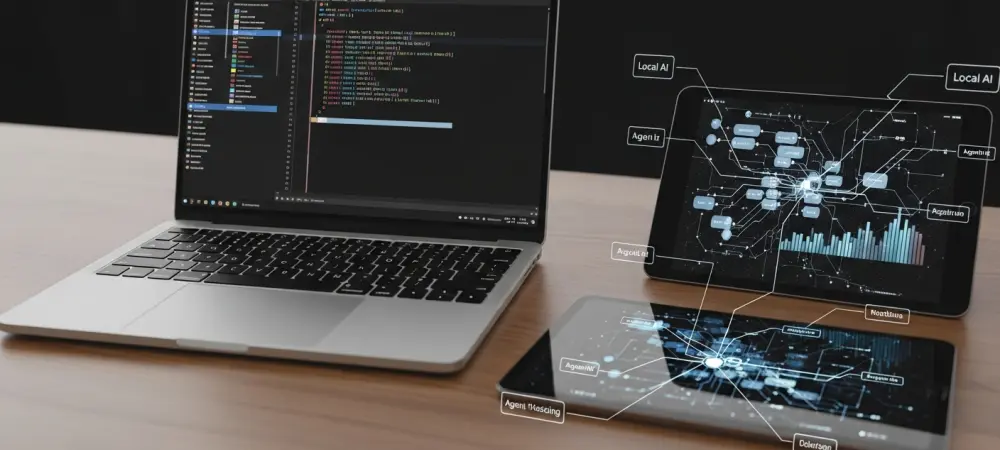
The transformation of code editors into cognitive partners reached a pivotal milestone with the release of the version 1.132 update for Visual Studio Code. This evolution signifies a departure from the traditional lightweight text editor, moving toward an AI-first integrated development environment that prioritizes automation. By centering on accessibility and native on-device machine learning, the update addresses the growing demand for low-latency, agent-based workflows.
Modern software engineering requires tools that act as proactive participants rather than passive repositories. This implementation thrives by integrating these capabilities into the core architecture, ensuring that AI is not merely an extension but a foundational element of the coding experience.
Introduction to the AI-Enhanced VS Code Ecosystem
The transition of this platform reflects a broader industry shift toward intelligent environments that anticipate developer needs. Version 1.132 emphasizes a seamless synergy between on-device models and cloud-based agents to maintain privacy without sacrificing power.
Accessibility remains a cornerstone of this progress, enabling more inclusive participation in software development. By leveraging local machine learning, the editor reduces the friction associated with network latency and external dependencies.
Landmark Features of the Version 1.132 Update
Multilingual Voice Integration and Shell-Aware Dictation
The inclusion of the Nemotron 3.5 model enables real-time, multilingual dictation that functions entirely on-device. This system automatically detects languages across editors and terminals, allowing for a fluid transition between coding and commenting. Unique to this update is the shell-aware cleanup functionality, which reformats natural speech into precise executable syntax. This feature minimizes common dictation errors, ensuring that terminal commands remain syntactically correct and ready for execution.
Non-Linear Workflows: Side Chats and Contextual Follow-Ups
Side chats introduce a specialized interaction model via the /bt command, allowing for queries that do not disrupt the primary workspace. Through shared context and prompt caching, the system optimizes response times and reduces redundant data processing.
Developers can now select specific segments of AI-generated text to initiate targeted follow-up questions. This granularity ensures that the conversation remains relevant to specific logic blocks rather than general project queries.
Advanced Web Annotation and Documentation Tools
The integrated browser now supports agent feedback for selecting and annotating specific web page elements. This bridge between the editor and the live UI simplifies the debugging process and accelerates interface adjustments during rapid prototyping phases.
Documentation management also saw improvements with the introduction of Markdown diff support. These refinements allow for better version control and readability, ensuring that project notes evolve alongside the codebase with professional clarity.
Emerging Trends in Agentic Software Engineering
A significant trend involves the emergence of agent host protocols that synchronize intelligence across multiple windows. This allows diverse models like Copilot and Claude to collaborate within a single environment, providing developers with unprecedented flexibility. The industry is also moving toward on-device AI to enhance security and reduce operational costs. This shift ensures that sensitive code remains local while still benefiting from the analytical power of large length models.
Real-World Use Cases: AI-Driven IDE Features
Accessibility-focused development has benefited greatly from these voice-to-code tools, empowering users with motor impairments. These features provide a robust alternative to traditional keyboard input, making professional programming more reachable.
In rapid prototyping, direct agent feedback on web elements has streamlined the transition from design to functional code. Developers use these tools to maintain cleaner version histories and more accurate project documentation through AI-driven summaries.
Technical Hurdles: Implementation Challenges
Despite these advancements, maintaining high accuracy for specialized shell syntax across diverse environments remains a challenge. The cleaning algorithms must account for a vast array of terminal configurations, which can lead to occasional formatting discrepancies. Hardware limitations also pose a risk, as on-device models like Nemotron 3.5 require significant local resources. Organizations must balance the desire for privacy with the computational demands placed on developer machines.
The Path Forward: Intelligent Code Editors
The future of editing will likely involve autonomous agents capable of managing complex, multi-file refactoring tasks. As voice interfaces achieve ultra-low latency, the focus of programming will shift further from syntax to high-level architectural design.
These breakthroughs suggest a landscape where entry barriers for new programmers are significantly lowered. Seamless multilingual support will further globalize the development community, fostering innovation across linguistic boundaries.
The Impact of AI: A New Developer Experience
The 1.132 update redefined the expectations for a modern development environment by successfully merging accessibility with advanced automation. It established the agent host protocol as a viable standard for cross-model synchronization and local privacy.
Developers who adopted these features discovered a more interactive discipline that rewarded strategic thinking over manual repetition. This evolution suggested that the future of software creation would be defined by a more responsive and intuitive relationship between human and machine.