

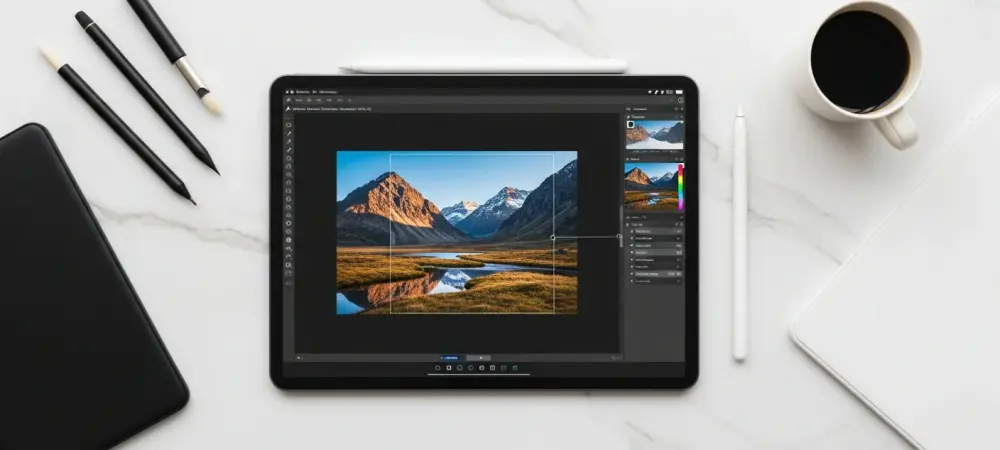
The current saturation of visual social media platforms has transformed high-quality photo editing from a niche skill into a fundamental requirement for anyone navigating the digital economy. This shift has forced millions of creators to choose between expensive, subscription-based software and free tools that aggressively harvest user data to fuel targeted advertising profiles. Vidmud enters this landscape as a corrective force, offering a sophisticated AI-driven ecosystem that prioritizes the user’s right to anonymity and technical excellence without demanding financial compensation or personal information. By stripping away the layers of account registration and the paywalls that define the current software-as-a-service model, this platform establishes a new benchmark for how creative utilities should function in a privacy-conscious world. It bridges the gap between professional-grade results and casual accessibility, ensuring that high-resolution visual storytelling remains a democratic right rather than a premium privilege reserved for those with substantial budgets or a willingness to compromise their digital footprints.
Prioritizing User Security and Financial Accessibility
Protecting Personal Information and Content
Privacy in the current technological environment is frequently treated as an optional feature rather than a fundamental right, yet Vidmud operates on the radical premise that personal data should never be the price of creative utility. The platform implements a strict no-signup policy, which fundamentally alters the user experience by removing the traditional friction of email verification, profile creation, and persistent tracking across the web. This design choice ensures that users can access powerful artificial intelligence tools without leaving a digital trail that could be exploited by third-party data brokers or used to construct intrusive marketing identities. By allowing for complete anonymity, the service caters to journalists, activists, and private individuals who require high-level editing capabilities but cannot afford to risk their digital security. This commitment to anonymity extends beyond the initial access point, creating a workspace where the focus remains entirely on the creative process rather than the collection of metadata or behavioral patterns.
The security architecture of the platform is further bolstered by a rigorous ephemeral processing model that ensures uploaded content does not remain on external servers once the editing session is terminated. Unlike conventional cloud-based editors that may retain images for machine learning training or backup purposes, this system is designed to purge all user data immediately after the final file is downloaded or the browser tab is closed. Such a proactive stance on data sovereignty addresses the growing anxiety regarding the unauthorized reuse of personal imagery in a landscape where generative AI models are often trained on public or semi-private datasets without clear consent. This “no-trace” environment is particularly beneficial for professionals handling sensitive documents or confidential branding materials that must be protected from potential server-side breaches. Consequently, the platform functions as a secure digital darkroom, providing the peace of mind necessary to experiment with visual ideas without fearing that those ideas will become permanent entries in a corporate database.
Economic Neutrality in Professional Design
The financial barriers traditionally associated with professional-grade software have long served as a gatekeeper in the creative industry, but the transition toward free, high-capacity tools is finally leveling the playing field for global users. Vidmud distinguishes itself by offering its complete range of AI-powered features without the common industry practice of locking high-resolution exports or advanced manipulation tools behind a subscription paywall. This model of economic neutrality is vital for students and emerging artists who require access to industry-standard results to build their portfolios but may lack the capital to invest in recurring monthly fees. By removing these financial obstacles, the platform encourages a broader range of voices to participate in the digital economy, fostering a more diverse and vibrant creative landscape. The absence of “freemium” limitations ensures that every user, regardless of their financial status, can produce images that are suitable for high-quality printing or professional digital marketing campaigns without compromise.
Beyond the immediate cost savings, the platform’s free-to-use model fosters a culture of experimentation and rapid prototyping that is often stifled by trial-period anxieties or tiered access models. Creators are free to explore various aesthetic directions and utilize complex object-removal or enhancement tools without worrying about credit limits or hidden transaction costs. This freedom leads to a more iterative and daring creative process, where the focus is placed on the quality of the final product rather than the cost of the operations used to create it. For small businesses operating on thin margins, having access to such a robust toolkit allows for the reallocation of limited resources toward other critical areas like product development or community engagement. The platform essentially acts as an equalizer, providing the same high-level technological advantages to a solo entrepreneur as those available to large corporations with dedicated creative departments. This shift toward open accessibility signifies a broader trend where value is derived from user empowerment and the quality of the service rather than the monetization of every individual feature.
Advanced AI Features and Seamless Accessibility
Streamlining the Creative Workflow with Automation
Artificial intelligence has matured into a sophisticated engine capable of handling the most tedious aspects of photo manipulation, and Vidmud harnesses these capabilities to provide a friction-free editing experience. The underlying neural networks are trained to perform complex segmentations, allowing the tool to distinguish between intricate subjects—such as individual strands of hair or translucent fabrics—and their backgrounds with a level of precision that used to require hours of manual masking. This level of automation is not merely a convenience; it represents a significant shift in productivity for small business owners and independent creators who must produce high volumes of content without the support of a full-time design staff. By automating the extraction of subjects and the optimization of lighting, the platform allows users to achieve a polished, professional aesthetic in seconds. Furthermore, the intelligent color correction algorithms adapt to the specific metadata of each image, ensuring that adjustments to contrast and saturation remain grounded in the original photo’s geometric reality.
The suite of automated tools extends to intelligent object removal, where the AI “inpaints” missing areas by analyzing the surrounding texture, lighting, and patterns to create a seamless reconstruction. This capability allows users to eliminate distracting elements from a frame—such as photobombers, power lines, or unwanted logos—without the blurry or repetitive artifacts often associated with traditional cloning tools. By shifting the technical burden from the user to the algorithm, the platform enables a more direct connection between a creative vision and its realization. Moreover, the contextual filters provided by the system are not static overlays but adaptive enhancements that respond to the unique lighting conditions of the source material. This ensures that a “cinematic” or “vintage” aesthetic looks natural across different environments, from bright outdoor landscapes to moody indoor portraits. The result is a workflow that prioritizes high-level decision-making over granular technical adjustments, allowing for a much faster turnaround in fast-paced digital marketing environments.
Cross-Platform Performance and Integration
Accessibility is further enhanced by the platform’s browser-based delivery system, which eliminates the need for expensive hardware or the installation of resource-heavy software suites. Because the heavy lifting of the AI processing occurs on high-performance remote servers, the tool maintains consistent speed and responsiveness across a wide variety of devices, including basic laptops and tablets. This democratization of high-end technology ensures that the quality of one’s creative output is no longer tethered to the processing power of their local hardware. The interface itself is meticulously designed to reduce cognitive load, moving away from the cluttered toolbars and deep menus that often intimidate newcomers to digital editing. This streamlined approach allows both novices and seasoned professionals to navigate the suite with intuition, focusing on the visual narrative rather than the technical intricacies of the software. By providing a stable and high-speed environment for creative work, the platform effectively lowers the barrier to entry for digital expression, making sophisticated photo editing a universal capability.
The emergence of Vidmud signaled a departure from the exploitative data practices that once dominated the digital landscape, offering instead a model of integrity and efficiency. The platform successfully proved that advanced artificial intelligence could be delivered in a secure and cost-effective manner, effectively dismantling the barriers that separated amateur enthusiasts from professional results. Moving forward, creators who prioritized privacy and economic flexibility turned toward these decentralized tools to safeguard their intellectual property and personal information. To maintain this competitive edge, users were encouraged to audit their existing software stacks for hidden data collection and to adopt ephemeral processing workflows whenever possible. Exploring these secure AI solutions allowed individuals to reclaim their digital sovereignty while continuing to produce compelling visual narratives. As the industry progressed from 2026 to 2028, the adoption of such transparent platforms became a standard practice for those seeking to balance high-level creative output with modern security requirements. This shift demonstrated that the future of digital artistry relied on tools that respected the user as an artist rather than a data point.