

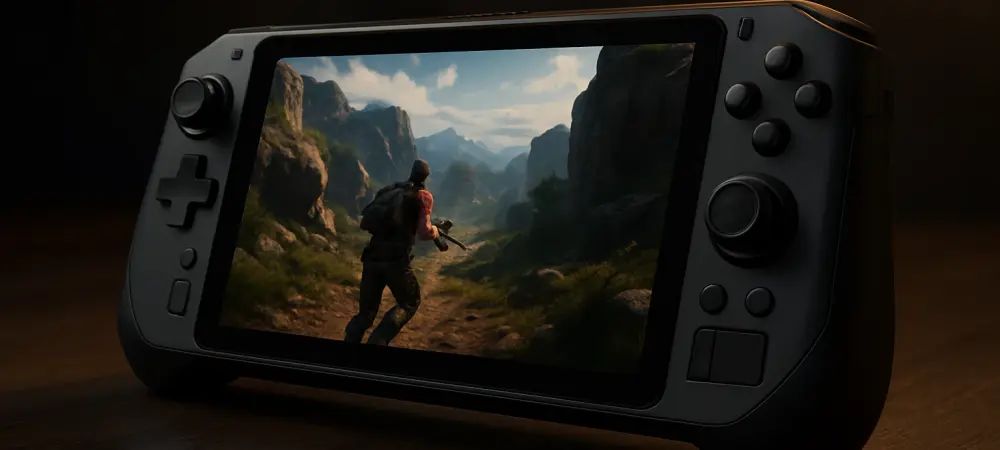
In the ever-evolving landscape of gaming technology, few companies have managed to consistently push boundaries quite like Valve. With an industry increasingly hungry for accessible yet powerful gaming solutions, Valve’s upcoming 2026 hardware releases stand poised to address a critical challenge: bridging the gap between high-performance gaming and diverse user environments. From living rooms to immersive virtual reality spaces, the promise of a unified ecosystem sparks curiosity about how these innovations might redefine player experiences. This review delves into the specifics of the Steam Machine, Steam Frame, Steam Controller 2, and VR motion controllers, evaluating their features, potential performance, and broader implications for the gaming world.
Exploring Valve’s Strategic Hardware Vision
Valve’s ambition for 2026 centers on expanding its hardware footprint beyond the success of the Steam Deck, targeting a seamless integration across multiple gaming platforms. The core strategy hinges on SteamOS, a Linux-based operating system, acting as the unifying thread that connects handheld, desktop, and VR devices. This approach aims to simplify transitions for users, ensuring a consistent interface whether gaming on a couch or in a virtual environment. The significance of this initiative lies in its response to growing demands for affordability and accessibility in gaming hardware. By focusing on cost-effective designs without sacrificing innovation, Valve seeks to democratize high-quality gaming experiences. This move aligns with broader industry trends toward ecosystem cohesion, positioning the company as a potential leader in reshaping how gamers interact with technology across varied settings.
Detailed Analysis of the 2026 Hardware Offerings
Steam Machine: Revamping Living Room Gaming
The Steam Machine emerges as a compact console-style PC, designed to integrate PC gaming into home entertainment systems with ease. Its cube-shaped design, measuring just over 150mm in each dimension and weighing a mere 2.6kg, ensures it fits neatly into any setup. Boasting an AMD RDNA 3 GPU with 28 Compute Units and a Zen 5 CPU clocked at 4.8GHz with 6 cores and 12 threads, it promises 4K gameplay at 60 frames per second—a bold claim for such a small device.
However, limitations surface with its 8GB VRAM, which may struggle to meet the demands of modern AAA titles at ultra settings. While equipped with robust connectivity options like HDMI 2.0, multiple USB ports, and Wi-Fi 6E, the hardware’s performance ceiling raises questions about its ability to fully deliver on high-end gaming expectations. Comparisons to mid-range GPUs suggest it might cater best to users prioritizing convenience over cutting-edge visuals.
This iteration learns from the missteps of earlier attempts by offering a reference product and leveraging SteamOS advancements for better software compatibility. Unique design touches, such as customizable front plates and RGB status LEDs, add flair, though some experimental features like an e-ink screen remain unconfirmed for public release. The Steam Machine thus represents a calculated step toward capturing the living room market with a balanced, user-friendly approach.
Steam Frame: Pioneering Standalone VR
Venturing into standalone virtual reality, the Steam Frame headset offers a compelling blend of independence and power, running on SteamOS without the constant need for a tethered PC. Powered by a Snapdragon 8 Gen 3 processor and 16GB of LPDDR5X RAM, it features high-resolution displays at 2,160 × 2,160 pixels per eye and a refresh rate up to 144Hz. Its lightweight build, at 440g with a rear-mounted battery, emphasizes portability for extended VR sessions.
Advanced tracking capabilities, enabled by four external cameras and internal eye-tracking for foveated rendering, aim to optimize performance by focusing graphical fidelity where users look. Yet, running on Arm64 architecture, its compatibility with x86 software via translation layers remains an untested frontier, potentially impacting performance with non-native applications. Storage options up to 1TB, expandable via microSD, add flexibility for game libraries. Valve’s exploration of Android XR compatibility and distribution of development kits signals an intent to broaden VR software support. This headset could lower barriers to immersive gaming, offering full Linux PC functionality in a standalone package. However, its success will hinge on real-world testing of translation efficiency and developer adoption for native content creation.
Steam Controller 2 and VR Motion Controllers: Redefining Input Precision
The Steam Controller 2 introduces a refined design, blending a traditional layout with innovative features like trackpads adapted from the Steam Deck. Magnetic TMR thumbsticks combat the common issue of stick-drift, while bottom-mounted capacitive sensors enhance gyro aiming precision. With a 35-hour battery life and the ability to remotely power on the Steam Machine, it offers console-like convenience for casual and dedicated gamers alike.
In parallel, the VR motion controllers, designed for the Steam Frame, bring versatility with a layout akin to modern VR standards but with added functionality. Equipped with capacitive finger tracking and haptic feedback, they can also function as split controllers for non-VR use. Each unit, powered by a single AA battery for up to 40 hours, ensures sustained usability across different gaming modes.
Both input devices underscore Valve’s commitment to enhancing user interaction across its hardware lineup. Their thoughtful ergonomics and cross-compatibility suggest a focus on reducing friction in gameplay, though their true impact will depend on user adaptation to the hybrid control schemes and integration with diverse game titles.
Software Ecosystem and Integration Dynamics
A pivotal element of Valve’s 2026 strategy lies in strengthening SteamOS as a cohesive platform across all devices. The introduction of a “Steam Machine Verified” designation for games ensures optimized performance on the new console, while developer encouragement for VR software support aims to enrich the Steam Frame’s library. This software focus seeks to create a frictionless experience for users navigating between platforms.
Trends in platform unification are evident, with efforts to improve compatibility for Windows titles through advanced translation layers. Affordability remains a guiding principle, reflected in hardware choices and software accessibility, aiming to attract a wide user base. These advancements indicate Valve’s broader goal of reducing technical barriers, fostering an environment where developers and players can engage effortlessly with the ecosystem.
Market Applications and Competitive Landscape
The 2026 lineup targets a spectrum of applications, from transforming living rooms into PC gaming hubs with the Steam Machine to making VR more approachable via the Steam Frame. Casual gamers seeking console simplicity, enthusiasts craving immersive experiences, and developers testing new frontiers all stand as key audiences. Use cases span home entertainment setups to portable VR gaming on the go.
Specific features, like the Steam Controller 2’s remote power-on capability, enhance user convenience, mirroring console functionalities. Meanwhile, the Steam Frame’s potential to deliver a full Linux PC experience in a headset could redefine productivity and gaming in immersive spaces. These implementations highlight Valve’s intent to cater to diverse needs within the gaming community.
Yet, challenges loom in a competitive market dominated by established consoles and VR systems like the Meta Quest. Pricing, still undisclosed, will play a critical role in adoption, alongside technical hurdles such as the Steam Machine’s GPU constraints for 4K gaming. Valve’s ongoing efforts with development kits and software compatibility aim to address these obstacles, but market reception remains a variable to watch.
Future Trajectory of Valve’s Gaming Innovations
Looking ahead, the potential for Valve’s hardware ecosystem appears promising, with room for performance optimizations in the Steam Machine’s graphical capabilities over the next couple of years. Broader software support, especially for VR, could further solidify the Steam Frame’s position as a leader in accessible immersive technology. These developments might pave the way for significant industry shifts. Anticipated advancements include deeper integration of standalone VR into mainstream gaming and increased adoption of living room PC solutions through SteamOS. Such progress could influence consumer preferences, prioritizing ecosystem flexibility over standalone power. Valve’s focus on developer engagement suggests a trajectory toward richer, more compatible content libraries.
The long-term impact may reshape how the gaming industry approaches hardware design and software distribution. A unified ecosystem could steer developer priorities toward cross-platform optimization, potentially altering market dynamics. As these technologies mature, their influence on user behavior and industry standards will become a key area of observation.
Reflecting on Valve’s Technological Ambitions
Looking back, the review of Valve’s 2026 hardware lineup revealed a bold attempt to unify gaming experiences across varied platforms, with the Steam Machine, Steam Frame, and advanced controllers showcasing innovative yet pragmatic designs. The integration of SteamOS stood out as a cornerstone, though performance concerns like GPU limitations lingered as points of caution. Moving forward, stakeholders should monitor real-world testing outcomes to gauge true capabilities, while developers are encouraged to leverage Valve’s provided kits for tailored software solutions. As the launch approaches, keeping an eye on pricing strategies and competitive responses will be crucial to understanding how these devices might carve their niche in a crowded market, potentially setting new benchmarks for accessibility and ecosystem synergy in gaming technology.