

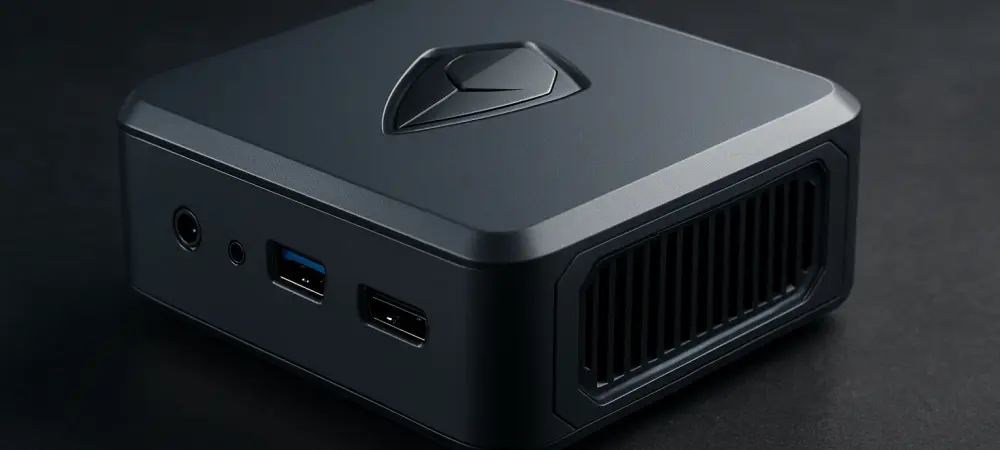
In a world where compact computing solutions are increasingly sought after for both gaming and professional applications, a new contender has emerged from China to shake up the mini PC market. Thunderobot, a brand known for pushing boundaries in gaming hardware, has unveiled the Mix G2, a device that promises to rival established heavyweights like the Asus ROG NUC. With a potent blend of high-end specifications, innovative design, and a focus on portability, this mini PC is generating buzz among enthusiasts and professionals alike. Positioned as a powerhouse in a petite frame, the Mix G2 aims to cater to demanding workloads while maintaining a sleek footprint on any desk. This raises a compelling question: can it truly stand toe-to-toe with the best in the industry, offering a seamless experience for gamers and creators who refuse to compromise on performance?
Unpacking the Powerhouse Specs
The Thunderobot Mix G2 enters the scene with hardware that demands attention, tailored for those who crave top-tier performance in a compact package. At its core, the device boasts Intel Core Ultra HX processors, with the flagship model featuring the Core Ultra 9 275HX, paired with an Nvidia RTX 5090 laptop GPU. This combination delivers a staggering 230W of total system power within a mere 3.2-liter chassis, offering a reported 17% boost in GPU performance compared to the most powerful Asus ROG NUC. Such specs make it a formidable tool not just for gaming, but also for intensive tasks like 3D rendering and content creation. The integration of advanced components into such a small form factor highlights Thunderobot’s commitment to redefining what mini PCs can achieve, setting a high bar for competitors in terms of raw power.
Beyond the headline specs, the Mix G2 is equipped with modern features to support a wide array of user needs. It includes two DDR5 SO-DIMM slots for memory, alongside one PCIe 5.0 and one PCIe 4.0 M.2 slot for storage, ensuring flexibility for upgrades. Connectivity is another strong suit, with options like Wi-Fi 6E, Bluetooth 5.3, Thunderbolt 5, HDMI 2.1, and a 10 Gbps USB-A port, making it a versatile hub for both gamers and professionals. These elements position the Mix G2 as comparable to high-end business laptops or mobile workstations, bridging the gap between portability and performance. The attention to detail in its internal architecture underscores a design philosophy that prioritizes both current demands and future-proofing for tech-savvy users.
Design and Cooling Innovations
A standout feature of the Mix G2 lies in its physical design, which balances compactness with aesthetic flair. Measuring 332 × 212 × 45 mm, it’s slightly larger than some competitors but remains small enough to fit comfortably in tight desktop or office setups. The chassis incorporates visually striking elements like a backlit logo, a blue light strip, and a distinctive Penrose-triangle style power button, elevating its appeal beyond mere functionality. This focus on style suggests Thunderobot’s intent to attract users who value both form and function, creating a device that looks as impressive as it performs. Such design choices could make the Mix G2 a centerpiece in any gaming or professional environment, blending seamlessly into modern workspaces.
Equally impressive is the thermal management system, dubbed “Night Owl,” which ensures the Mix G2 maintains peak performance during extended use. Featuring a large heatsink and dual fans, this cooling solution effectively dissipates heat generated by the high-powered components, preventing throttling even under heavy loads. This is particularly crucial for gamers engaged in marathon sessions or professionals running resource-intensive software, where sustained performance is non-negotiable. By addressing one of the common pain points of compact PCs—overheating—Thunderobot demonstrates an understanding of the challenges inherent in mini systems. The result is a machine that not only pushes hardware limits but also maintains reliability, setting it apart in a crowded field.
Pricing and Market Positioning
When it comes to pricing, the Mix G2 offers a range of configurations to suit different budgets, though it starts at a premium. The base model, equipped with a Core Ultra 7 255HX, RTX 5070 Ti, and 32 GB of RAM, is priced at approximately $2,110, while the top-tier version with the Core Ultra 9 275HX, RTX 5090, and 64 GB of RAM reaches up to $3,790. In contrast, the Asus ROG NUC begins at under $2,000, presenting a potential hurdle for Thunderobot in convincing buyers to opt for the higher cost. This price disparity introduces a critical consideration for consumers weighing raw performance against affordability, especially in a market where value often drives decisions. The Mix G2’s launch in China on November 20 marks the beginning of its journey to prove its worth on a global stage.
Despite the higher price tag, the Mix G2 positions itself as a leader in the growing trend of compact, high-performance PCs that cater to dual-purpose needs. Its superior hardware and design innovations challenge the dominance of established brands, reflecting a broader shift toward powerful yet portable computing solutions. For gamers and professionals willing to invest, the performance metrics and thermal efficiency could justify the cost, offering a glimpse into the future of mini PCs. As the market continues to evolve, Thunderobot’s bold entry with the Mix G2 signals an intent to disrupt and redefine expectations, pushing competitors to innovate further. This dynamic underscores the device’s role as a serious contender, even if its price point sparks debate among potential buyers.
Reflecting on a Bold Market Entry
Looking back, the unveiling of the Thunderobot Mix G2 marked a significant moment in the mini PC landscape, challenging norms with its blend of cutting-edge hardware and thoughtful design. It stood as a testament to the evolving demand for compact systems that refused to sacrifice performance, catering adeptly to both gaming enthusiasts and professionals. Moving forward, potential buyers were encouraged to weigh the device’s impressive specs and thermal prowess against its premium pricing, considering how it aligned with their specific needs. As the industry progressed, keeping an eye on how Thunderobot expanded availability beyond China and responded to consumer feedback became essential. The Mix G2’s journey suggested a future where mini PCs could increasingly blur the lines between desktop power and portability, urging competitors to step up. For those ready to embrace this shift, exploring such innovative devices offered a chance to stay ahead in a rapidly changing tech world.