

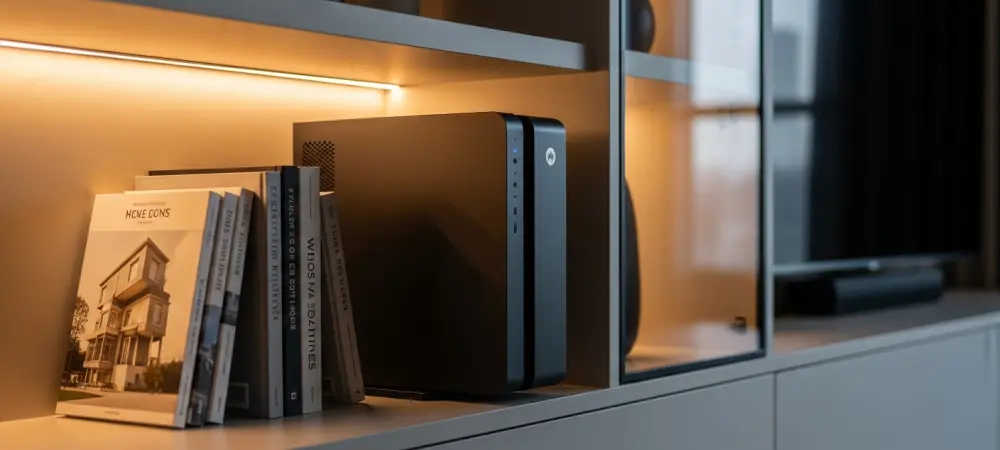
The intersection of high-end PC performance and console-like simplicity has long been the industry’s holy grail, but Valve’s recent official foray into the living room hardware market suggests that luxury design may be outpacing consumer value. Following the massive success of the Steam Deck, the release of a dedicated stationary unit represents a logical evolution in the push for Linux-based gaming dominance. This hardware ecosystem seeks to decouple high-fidelity experiences from the desktop, providing a compact, user-friendly alternative that challenges the long-standing reign of traditional consoles in common living areas.
Introduction to the Steam Machine Ecosystem
The emergence of this technology signals a strategic shift toward a more unified software-hardware stack. By utilizing the foundation laid by the Steam Deck, this new machine capitalizes on the maturity of the Proton compatibility layer, which translates Windows-based code for the Linux kernel. This approach effectively removes the traditional barriers to entry for non-Windows gaming, offering a robust library from day one while maintaining a footprint small enough to blend into any media center.
Moreover, the integration of high-end components into a console-like form factor represents a significant engineering hurdle. The design focuses on thermal management and quiet operation, ensuring that the device can handle demanding titles without the acoustic intrusion typically associated with gaming PCs. This focus on the living-room-friendly aesthetic is central to its identity, positioning it as a premium hub for the modern digital home.
Core Technical Specifications and Performance
SteamOS 3: The Software Experience
The software experience is driven by SteamOS 3, which functions as a bridge between the convenience of a console and the power of a desktop. The interface is optimized for navigation via a game controller, featuring large icons and a streamlined storefront that prioritizes ease of access. However, beneath this polished layer lies a full KDE Plasma desktop environment, allowing the system to double as a productive workstation for those who connect a keyboard and mouse.
This dual-nature software architecture is a defining feature that distinguishes the machine from its competitors. While traditional consoles are locked into proprietary ecosystems, SteamOS 3 allows for deep customization and the installation of third-party software. The performance in a desktop environment is surprisingly fluid, proving that the hardware is more than capable of handling multi-tasking and professional applications alongside gaming.
Hardware Architecture: GPU, Memory, and Storage
Under the hood, the internal components reflect a commitment to modern standards, even as they struggle against market pricing. The GPU is comparable to an RX 7600, providing enough horsepower for 1080p and upscaled 1440p gaming. This is paired with 16GB of DDR5 memory, which remains the baseline for contemporary systems. While these specs are capable, they are increasingly pressured by more demanding software that benefits from higher memory overhead.
The NVMe storage options are a technical highlight, offering fast load times across configurations ranging from 512GB to 2TB. These drives utilize the PCIe 4.0 standard, ensuring that data throughput does not become a bottleneck during intense gaming sessions. Nevertheless, the cost of these higher-capacity models is where the value proposition begins to fray, especially given the current state of the global hardware market.
Latest Developments: Market Influences
Recent shifts in the global manufacturing landscape have significantly impacted the trajectory of this hardware. A persistent crisis in the memory and storage sectors has driven up the cost of raw materials, forcing retail prices to remain high. A base model starting at $1,049 puts the system in direct competition with high-end pre-built PCs, many of which are beginning to offer 32GB of RAM as a standard feature to keep up with current software demands.
The market is currently seeing a trend where systems equipped with RTX 5060 or Intel Arc B580 graphics are available for under $1,000, often including 1TB of storage. This contrast highlights a significant gap in performance-to-price ratios. While Valve’s hardware is sleek and optimized for a specific ecosystem, the sheer technical value offered by traditional retail alternatives makes the Steam Machine a difficult sell for budget-conscious enthusiasts.
Real-World Applications: Use Cases
Despite the pricing concerns, the Steam Machine excels in specific real-world scenarios. As a high-end home entertainment hub, it provides a centralized platform for media consumption and localized multiplayer gaming. Its ability to run demanding titles locally rather than relying on the cloud gives it a distinct advantage over streaming boxes, providing a lag-free experience that is essential for competitive play.
In professional circles, the machine serves as a compact workstation for creative professionals who prefer a Linux environment. The combination of high-speed storage and capable graphics makes it a viable tool for video editing and software development. This utility as a multi-purpose device justifies some of the entry cost, as it negates the need for a separate office PC in smaller living spaces.
Critical Challenges: Competitive Obstacles
The most daunting challenge for this technology is justifying its premium price point against a backdrop of aggressive competition. DIY builders and retail giants like Newegg often provide superior hardware configurations for a fraction of the cost. The lack of an included controller in the base package further complicates the value narrative, as consumers must spend even more to achieve a true out-of-the-box experience.
Technical hurdles also persist regarding the compact form factor. While the machine is quiet, the limitations of its thermal envelope mean that future-proofing is restricted compared to a standard mid-tower PC. Upgradability is another concern, as the bespoke nature of the internal layout makes it difficult for users to swap out components like GPUs as they become obsolete.
Future Outlook: Technological Trajectory
The future of this technology likely hinges on the stabilization of component markets and potential hardware refreshes. As APU technology continues to advance, future iterations may achieve similar performance with even lower power consumption and heat output. This could lead to more affordable models that align better with the expectations of the general gaming public.
Furthermore, the long-term impact on the adoption of SteamOS could be profound. If Valve succeeds in proving the viability of this platform, more third-party manufacturers may adopt the operating system for their own hardware. This would create a diverse ecosystem of Steam-branded machines at various price points, potentially solving the current issue of poor price-to-performance ratios through healthy market competition.
Final Assessment: Summary
The review demonstrated that the Valve Steam Machine was a masterclass in industrial design but a victim of unfortunate economic timing. While the software integration and compact architecture were highly impressive, the high entry price prevented it from being a clear recommendation for the average gamer. The trade-off between a polished, ecosystem-driven experience and raw technical value remained the central conflict of the device’s market presence.
In the end, the system functioned as a luxury gateway into the world of Linux gaming rather than a disruptive force for the masses. Future considerations must focus on reducing manufacturing costs and increasing the base memory to meet the 32GB standard. These steps were deemed necessary to ensure that the next generation of hardware could compete effectively with the aggressive pricing of traditional pre-built systems.