

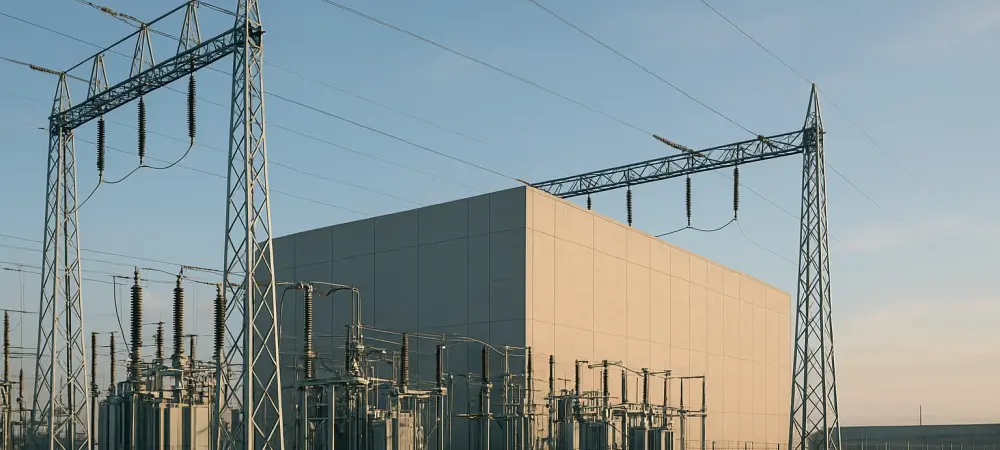
The hum of a single artificial intelligence facility now rivals the roar of a mid-sized industrial city, consuming enough electricity to light up tens of thousands of homes while demanding millions of gallons of water every single day. With over $68 billion in infrastructure projects blocked or delayed in just the first half of 2026, developers are discovering that the “data center gold rush” has finally met a hard wall of physical and legislative reality. This friction is not a temporary hiccup but a fundamental recalibration of how technology interacts with the environment and the communities that host it.
The End of the Invisible Infrastructure Era
For decades, data centers operated as the invisible ghosts of the internet, sequestered in windowless warehouses that most people never noticed. However, the rise of generative AI and high-density computing has transformed these facilities into massive resource magnets that can no longer hide their impact on the local landscape. The current scale of development has reached a point where a single campus can strain an entire regional power grid, forcing a shift in how both the public and private sectors view these massive industrial installations.
The transition from “benign storage warehouses” to “resource-intensive industrial plants” is now complete in the eyes of the public. This change in perception has stripped away the specialized tax breaks and expedited permit processes that once fueled the industry. In the current market, transparency is the new currency, and the expectation that infrastructure should be seen but not felt has been replaced by a demand for rigorous accountability and shared responsibility for the regional utilities they inhabit.
Why the Data Center Boom Is Facing a Regulatory Reckoning
The insatiable demand for AI processing power is crashing directly into the limits of an aging electrical grid that was never designed for this level of concentrated load. As operators attempt to pack more high-performance GPUs into smaller footprints, the thermal and electrical requirements have skyrocketed, leading to a direct competition for resources between tech giants and residential neighborhoods. This resource collision is most evident during peak summer months when the grid’s ability to provide cooling and power to homes is weighed against the non-stop needs of hyperscale facilities.
Public sentiment has shifted significantly as the reality of these facilities becomes more apparent to the average citizen. While data centers were once championed for bringing modern tech prestige to a region, communities are now performing a cold economic re-evaluation. They are increasingly questioning the trade-off between a facility that occupies hundreds of rolling acres and consumes vast amounts of water but provides relatively few long-term jobs compared to traditional manufacturing or commercial hubs. This skepticism is driving a wave of local activism that insists on more than just “connectivity” as a benefit for hosting these giants.
Navigating the New Legislative Landscape Across the U.S
California has moved to the forefront of this regulatory wave, with Governor Newsom signing a seven-bill package that fundamentally alters the requirements for new developments. These laws include “fair share” mandates, which require data center operators to fund the massive grid upgrades and water infrastructure improvements their facilities necessitate. By removing environmental exemptions and requiring proof of clean energy procurement, California is ensuring that the digital expansion does not come at the cost of the state’s aggressive climate goals or its fragile water security.
The resistance is not limited to the West Coast; it has evolved into a national movement with over 840 opposition groups successfully lobbying for change in their respective counties. Currently, 30 states are drafting or debating restrictive siting resolutions that would move data centers away from residential areas and toward pre-approved industrial zones. This movement is a direct response to the perceived “stealth” tactics of developers who previously used shell companies to buy land and secure power entitlements before the public could voice concerns.
Virginia and New York are leading the charge by implementing some of the most rigorous oversight frameworks in the country. Virginia, home to the world’s largest data center hub, has introduced a Data Center Accountability Framework that ties tax incentives directly to specific water usage efficiency and noise mitigation metrics. Meanwhile, in the Empire State, temporary moratoriums on hyperscale projects have been enacted to allow the state to assess the long-term impact on the regional power supply. These measures represent a broader shift toward mandatory disclosures regarding everything from backup fuel consumption to the total carbon footprint of the hardware inside.
Expert Perspectives on the “Invisible” Friction
Industry analysts highlight that the loudest complaints from local communities often revolve around the physical nuisance of industrial noise and the diversion of local water supplies. The persistent, high-frequency whine of thousands of cooling fans can carry for miles, disrupting the peace of rural areas that were once chosen for their low cost and seclusion. When combined with the fact that some facilities use enough water to support several large agricultural operations, the friction between the tech sector and local residents becomes an existential threat to new project approvals. Strategic success for developers now depends on radical transparency and early-stage social outreach. Experts insist that technical connectivity is no longer the primary hurdle; instead, the ability to build a genuine relationship with local planning committees and neighborhood associations determines whether a project lives or dies. Developers are being forced to pivot from a mindset of concealment to one of active partnership, offering community benefits such as public park funding or the construction of renewable energy projects that serve the entire local population.
For enterprise IT leaders, the tightening of capacity across the United States has turned power and floor space into high-level strategic risks. No longer can facilities be viewed as a simple line item in a budget; they are now the most significant bottleneck for digital transformation. Leaders are having to evaluate their long-term growth plans against the reality of a three-to-five-year wait for grid entitlements in the most desirable markets. This has led to a renewed focus on hybrid architectures that prioritize local resource availability just as much as low-latency connectivity.
Strategies for Operating in a Resource-Constrained Market
To survive in this new era, the industry is embracing radical optimization through advanced hardware efficiency. Enterprises are increasingly turning to specialized chips, such as on-chip accelerators found in modern Xeon processors or dedicated AI inference cards from firms like Furiosa AI, to handle massive workloads with significantly less power than traditional general-purpose GPUs. This shift allows for the “squeezing” of more compute power out of existing power envelopes, effectively allowing companies to grow their capabilities without needing to build new, massive facilities that would trigger regulatory scrutiny.
Advanced cooling technologies and circular energy economies are also becoming standard requirements for new builds. Two-phase cooling and direct-to-chip liquid cooling allow for much higher density while reducing the reliance on massive, water-intensive cooling towers. Some innovative projects are even implementing heat recapture systems that pipe waste energy from the servers back into local district heating networks, warming nearby homes and greenhouses. This turns a problematic byproduct into a community asset, creating a tangible benefit that can help sway skeptical local regulators during the permit process.
Rigorous due diligence has become the final piece of the survival puzzle for IT organizations. Before committing to a new provider or site, leaders now audit the actual permit status and grid entitlements of a facility to ensure that a project is not just a “paper park” prone to legislative delays. By focusing on footprint consolidation and migrating older, inefficient workloads onto modern, power-sipping platforms, companies managed to maintain their competitive edge. They prioritized verified roadmaps and invested in thermal recapture programs that aligned their business goals with the environmental expectations of the community. These strategic moves ensured that digital infrastructure remained a sustainable part of the American landscape rather than a drain on its vital resources.