

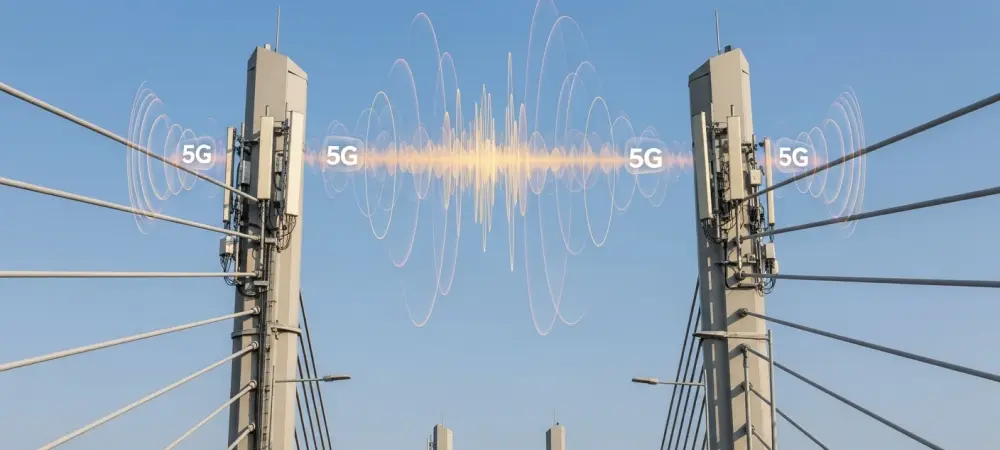
Beneath the surface of everyday digital interactions lies a silent, high-stakes competition for the radio frequencies that will soon power the most advanced wireless infrastructure ever conceived by modern engineers. While the current global population continues to adapt to the efficiencies of 5G, the focus among technological superpowers has shifted decisively toward a battle over invisible airwaves. This competition will define the next decade of connectivity. The United States is navigating a complex technical and legislative “land grab” for radio frequency spectrum, a finite resource that serves as the essential lifeblood of the 6G era.
Securing massive blocks of these frequencies now is a prerequisite for a future where near-instantaneous data speeds and hyper-connected urban environments are a domestic reality. Without a cohesive strategy to claim these bands, the potential for autonomous systems and immersive digital twins could remain a theoretical ambition confined to white papers. The urgency stems from the reality that spectrum is not an infinite commodity; it must be reclaimed, repurposed, and protected from interference to be useful for commercial expansion.
The High-Stakes Race for the Invisible Real Estate of the Future
The move toward 6G represents a departure from incremental speed improvements and a step toward a total reconfiguration of digital space. This next generation of wireless technology relies on identifying vast, unencumbered swaths of the electromagnetic spectrum that can handle unprecedented data loads. National regulators are currently tasked with finding room in a crowded sky, where every kilohertz is already claimed by legacy systems. The success of this endeavor determines which nations will host the primary hubs for the next wave of global tech innovation and which will be forced to lease technology from foreign competitors.
For the American economy, the pursuit of 6G is less about consumer mobile phones and more about the industrial and civil applications that require ultra-reliable low-latency communication. From remote robotic surgery to synchronized autonomous transit fleets, the requirements for bandwidth are expanding exponentially. Consequently, the Federal Government has prioritized the identification of “mid-band” spectrum, which offers the rare combination of signals that travel far enough to cover cities while carrying enough data to satisfy intensive industrial demands.
Why Spectrum Policy Dictates the Next Global Tech Superpower
The transition to 6G introduces a fundamental shift in societal function known as Integrated Sensing and Communication. In this paradigm, networks no longer just transmit data; they act as radar-like sensors capable of detecting physical objects and environmental changes in real time. For the United States, securing the spectrum necessary for these dual-purpose networks is a matter of national security and economic sovereignty. The ability of a network to “see” and “talk” simultaneously provides a strategic advantage in managing everything from airspace safety to port logistics.
As international competitors aggressively allocate vast swaths of bandwidth for their own trials, the U.S. faces the daunting task of clearing “congested” airwaves. Much of the most desirable spectrum is currently held by the military, aviation authorities, and weather services. Reconciling the needs of national defense with the hunger of the commercial sector requires a delicate balancing act. Ensuring that American companies lead the next wave of innovation means finding ways to share or relocate these incumbent users without compromising the safety and readiness of the nation’s critical infrastructure.
Breaking Down the US National Spectrum Strategy
Under current federal mandates, the National Telecommunications and Information Administration is identifying and studying at least 600MHz of spectrum between 1.3GHz and 10GHz for exclusive licensed use. This effort centers on the 7GHz range, specifically the 7125MHz to 7400MHz band. This particular range is viewed as the “golden band” because it balances wide-area coverage with the high capacity required for 6G applications. The primary technical hurdle involves the demand for “fat” channels; while 5G utilized 100MHz channels, 6G demands unbroken blocks of up to 400MHz to function at its peak.
Reallocating this spectrum involves moving existing users, such as the Department of Defense and the FAA, to new frequencies. This high-wire act must be performed without disrupting national safety or defense capabilities. To manage this transition, the government launched a public-facing dashboard at Spectrum.gov to track the progress of the 6G pipeline. This transparency is intended to prepare the domestic industry for international negotiations at the 2027 World Radiocommunication Conference, where global standards for these frequencies will be codified.
Expert Perspectives on the Global Competitive Landscape
Industry analysts suggest that while the current U.S. pipeline is sufficient for the immediate future, the window of opportunity for global dominance is closing rapidly. Major carriers like T-Mobile, along with equipment giants Ericsson and Nokia, have already begun field tests in the 7GHz band. These trials reported encouraging results for mobile applications, proving that these higher frequencies can indeed support robust consumer connections. However, a significant strategic divide exists between the U.S. and its rivals regarding the 6GHz range. While the U.S. prioritized unlicensed Wi-Fi in the 6GHz band to bolster home and business networking, international competitors like China allocated that entire range for cellular use. This “cellular-first” approach by rivals puts immense pressure on U.S. regulators to finalize the “golden band” studies by the end of the current cycle. The divergence in strategy means the U.S. must be more efficient in its relocation efforts to ensure that American 6G infrastructure does not fall behind the scale and capacity being built elsewhere.
A Strategic Framework for Securing 6G Dominance
The path forward required Congress to act within specific windows to authorize the Spectrum Relocation Fund, which allowed agencies like NOAA and the FAA to begin the process of vacating critical bands. This funding facilitated the movement of weather and navigation systems to higher, less crowded frequencies. Furthermore, the NTIA continued its rigorous review of nine distinct sharing and relocation plans for the 4.4GHz band, a range heavily utilized by various military branches. These technical evaluations proved essential in determining how commercial and federal interests could coexist.
Optimizing propagation testing in the 7GHz and 8GHz ranges remained a top priority for industry leaders, as they sought to prove that seamless, wide-area coverage was possible at higher frequencies. These findings were vital for ensuring that the results from NTIA studies aligned with the upcoming FCC auction timelines. By synchronizing the availability of the upper C-band with the needs of commercial carriers, the framework established a clear trajectory for domestic 6G deployment. This coordinated effort between legislative funding, agency cooperation, and private sector innovation provided the necessary foundation for the next generation of American wireless leadership.