

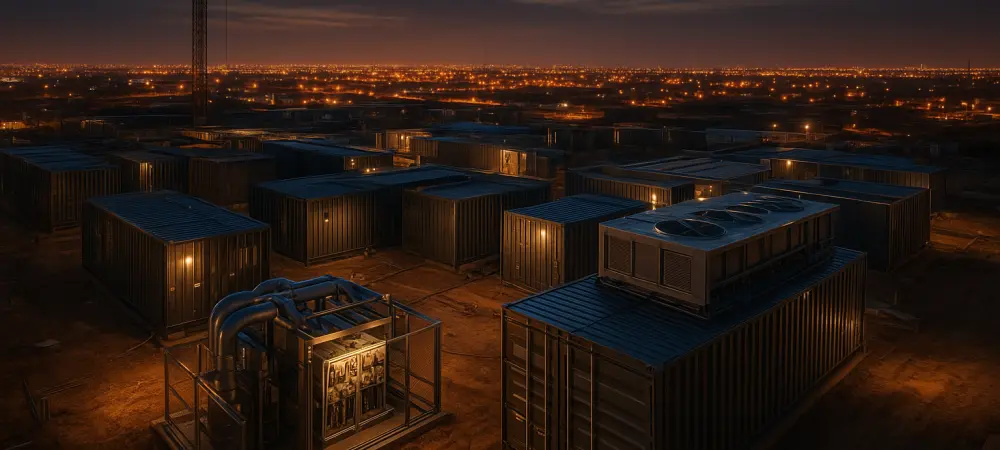
The massive humming clusters of high-density server racks that define the current American AI landscape are deceptively fragile, relying on a physical infrastructure that remains deeply entangled with foreign manufacturing lines. While the United States maintains an enviable lead in the intellectual architecture of artificial intelligence, designing the most sophisticated chips and neural networks, the actual facilities that house these innovations are built upon a foundation of hardware that is increasingly difficult to source domestically. A multi-billion-dollar data center, despite being filled with elite semiconductors, essentially remains an inert collection of steel and silicon without the heavy-duty electrical components required to energize and cool it. This discrepancy highlights a critical vulnerability in the national strategy for technological supremacy. As the demand for generative modeling and large-scale data processing accelerates, the industry has hit a physical wall. The transition from designing software to maintaining the physical “power stack” has exposed a strategic bottleneck where the manufacturing pipelines for essential electrical hardware are rooted in Chinese industrial hubs. Without a significant shift in how these digital cathedrals are constructed and powered, the momentum of American AI could be stalled by the very components that were once considered mere commodities.
The Power Paradox: Why the World’s Fastest Chips Are Currently Tethered to Chinese Transformers
The global race for AI dominance has created an unusual paradox where the world’s most advanced virtual capabilities are limited by the availability of archaic physical equipment. While engineers in Silicon Valley push the boundaries of what is possible with code, the implementation of these systems depends on massive, high-voltage transformers and specialized switchgear. Currently, the American manufacturing sector lacks the immediate capacity to produce these heavy-duty components at the scale required by the rapid proliferation of hyperscale facilities. This has forced developers to look toward international markets, where Chinese firms have spent decades refining their industrial capacity to dominate the power equipment sector.
Furthermore, the high-density nature of modern server arrays demands a level of energy management that was unnecessary just a few years ago. Each rack in a state-of-the-art facility now consumes as much power as a small residential block, necessitating a complex array of power distribution units and cooling systems. Because the domestic supply chain was hollowed out over decades of outsourcing, the U.S. now finds itself in a position where its digital future is physically connected to the manufacturing health of its primary geopolitical rival. This dependency is not merely a matter of cost but of fundamental operational continuity for the entire AI ecosystem.
From Silicon to Steel: Redefining the AI Security Frontier
The national security conversation regarding technology has undergone a profound transformation, moving away from a narrow focus on “compute” to a broader understanding of the “power stack.” In the past, the primary concern for policymakers was the export of advanced GPUs and the protection of proprietary algorithms. However, experts now recognize that the electrical infrastructure distributing energy to these chips is just as vital to national sovereignty. If the power grid equipment that feeds a sensitive data center contains components that can be remotely manipulated or if the supply is suddenly cut off, the sophisticated chips inside become irrelevant.
This shift in focus is largely informed by previous experiences with telecommunications infrastructure, specifically the global rollout of 5G networks. The hard-learned lessons from the ban on foreign networking equipment emphasized the difficulty and extreme expense of removing embedded technology once it has become part of a country’s critical infrastructure. Consequently, the push to secure the AI frontier now includes the steel casings of transformers and the circuit breakers in switchgear. National security analysts are pivoting toward a strategy that views every physical link in the energy chain as a potential vulnerability that must be hardened against foreign influence.
Identifying Critical Choke Points in the Hardware Supply Chain
The specific technical areas where reliance on Chinese hardware is most concentrated represent significant choke points for the American economy. Chinese manufacturers currently account for nearly 30% of certain transformer categories, which are the essential components for stepping down high-voltage grid electricity for server use. Without these units, it is impossible to connect a new data center to the utility provider, creating lead times that have stretched into several years for many developers. Similarly, the energy storage sector is heavily skewed, with China supplying over 40% of the battery arrays used for backup power and grid stabilization in massive server farms.
Beyond the electrical components, the optical transceivers that manage data movement between servers have become another critical dependency. These devices use light to transmit information at high speeds, and Chinese firms currently control approximately two-thirds of the global supply. This dominance extends even further back into the supply chain to the raw materials and refined components like electrical steel and battery cathodes. Because these upstream materials are the building blocks of the entire power stack, the U.S. faces a complex challenge that involves more than just building new factories; it requires the recreation of an entire industrial ecosystem from the ground up.
Regulatory Countermeasures and the Push for De-Risking
In response to these vulnerabilities, the U.S. government has initiated a series of aggressive policy interventions aimed at protecting the national energy grid. Executive mandates have empowered federal agencies to restrict or prohibit transactions involving power grid equipment from adversarial nations, framing the issue as a national emergency. These regulations are designed to prevent the installation of a potential “Trojan horse” within the American utility system. By labeling certain power inverters and energy management devices as security risks, the government is effectively purging foreign hardware from sensitive installations to ensure the long-term integrity of the AI infrastructure.
This process of “de-risking” is essential for national security, even though it introduces immediate friction into the supply chain. Analysts argue that while the cost of domestic or allied sourcing is higher, the price of potential interference is far greater. Ongoing discussions regarding bans on certain optical transceivers reflect a growing desire to insulate the American AI ecosystem from external leverage. While these regulatory hurdles may slow the pace of construction in the short term, they are intended to build a more resilient and independent technological foundation that cannot be compromised by geopolitical tensions or sudden trade disruptions.
Strategies for Decoupling and Rebuilding Domestic Capacity
Achieving true hardware independence requires a commitment to a multi-year reshoring effort that incentivizes global industrial leaders to move their production to American soil. Significant progress is already being made through a combination of targeted tariffs, tax credits, and regulatory streamlining. Major players such as Hitachi Energy and Siemens have committed billions of dollars to expand their domestic manufacturing footprints, specifically targeting the production of high-voltage transformers and grid infrastructure. These investments are crucial because the industry currently faces projected shortages of up to 15% for power transformers in 2026, a gap that must be filled by reliable local sources.
To bridge the capacity gap in more specialized areas like optical technology, domestic firms are receiving substantial investments to scale their cleanroom facilities and automate their packaging processes. Replacing the sheer volume of Chinese production is a daunting task, but the focus is shifting toward “upstream” material sourcing to ensure that American factories are not reliant on imported raw materials. Companies are being encouraged to diversify their supplier bases and invest in recycling technologies for battery components. This phased transition framework aims to ensure that as the U.S. moves away from foreign dependency, the domestic industrial base grows strong enough to support the next era of technological expansion without interruption.
The necessity for a secure and sovereign power infrastructure became the primary focus for industry leaders and federal regulators. Stakeholders prioritized the expansion of domestic cleanroom capacity and the revitalization of electrical steel production through localized tax incentives. Private hyperscalers successfully shifted their procurement strategies to prioritize North American-made transformers, even as the market balanced the pressures of immediate demand. The federal government also streamlined the permitting process for new manufacturing facilities to accelerate the reshoring of optical transceiver assembly. By implementing these structural changes, the United States established a more resilient foundation for its artificial intelligence infrastructure that operated independently of foreign supply chains.