

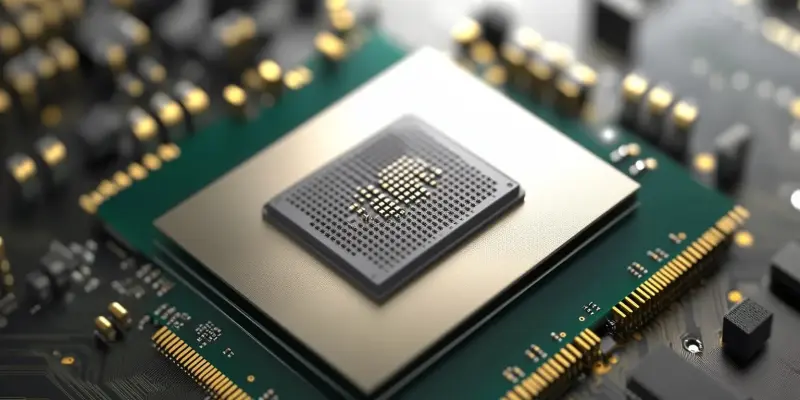
As we delve into 2025, the quest to find the fastest CPU remains at the forefront for those building a new desktop or selecting a laptop. Selecting the optimal CPU not only ensures maximal performance but also involves carefully balancing speed, power consumption, and compatibility with other components. The competitive landscape features prominent brands like AMD, Intel, and Apple, each offering robust processors tailored for various use cases. This article provides an extensive overview of the fastest CPUs in different categories, helping you make an informed decision that considers performance, cost, and efficiency.
Fastest CPU for Servers: AMD EPYC 9965 ‘Turin’
Unparalleled Performance and Architecture
The AMD EPYC 9965 ‘Turin’ processor leads as the fastest CPU for servers, showcasing unparalleled performance with its 192-core architecture based on AMD’s Zen 5c. Launched in October 2024, this server-grade CPU boasts a base clock speed of 2.25GHz and a maximum boost clock of up to 3.7GHz across all cores. Priced just below $15,000, it’s positioned as the most complex microprocessor ever designed, significantly outpacing the fifth-generation Intel Xeon Scalable CPU, the 64-core Platinum 8592+.
What sets the EPYC 9965 apart is its high efficiency in processing concurrent and intensive workloads. Designed primarily for data centers and specialized applications, such as AI workloads, hardcore data simulation, and Computational Fluid Dynamics (CFD), this processor handles operations that few other CPUs can match. Its robust architecture ensures that even the most demanding tasks are completed swiftly and accurately, cementing its position as a leading choice for high-performance computing environments.
Specialized Applications and Market Position
The power and price of the EPYC 9965, however, make it unsuitable for home-based or office-based setups. Besides its remarkable performance, another notable mention is the AMD EPYC 9755, launched at the same time. The EPYC 9755 comes very close in performance yet is priced roughly $2,000 lower. Despite falling slightly behind the EPYC 9965, the ‘Bergamo’ chip benefits from substantial micro-architectural improvements, offering double the L3 cache. This makes it an attractive alternative for those who need outstanding performance without the steeper price tag.
Fastest CPU for Laptops: Intel Core Ultra 9 275HX
Leading the Laptop Market
Moving on to laptops, the Intel Core Ultra 9 275HX reigns supreme as the fastest CPU in early 2025. Set to hit the market in February 2025, this second-generation AI-ready CPU marginally outperforms the previous champion, the AMD Ryzen 9 7945HX3D, and Apple’s formidable M4 Max processor. Featuring 24 cores (with an 8 performance and 16 efficiency configuration), 24 threads, and a maximum clock speed of 5.4GHz, this Arrow Lake chip marks a significant step forward.
The Core Ultra 9 275HX embodies a sophisticated integration of power and efficiency, catering especially to high-end gaming machines and demanding laptop applications. Its enhanced core configuration ensures optimal resource allocation, allowing each core to handle distinct tasks with precision.
Availability and Future Contenders
However, the availability of this chip is limited to high-end gaming machines, such as the Asus ROG Strix G16 and the Acer Predator Helios Neo 16 AI. Despite Intel’s current lead, industry experts largely anticipate that the imminent AMD Ryzen 9 9955HX3D, due for release later this year, will reclaim the title. Consumers and industry watchers eagerly await the next wave of processors, ready to redefine the standards of laptop CPU performance.
Fastest Apple Silicon: Apple M2 Ultra
The Powerhouse of Apple’s Lineup
For Apple hardware, the Apple M2 Ultra, although two generations old, remains the fastest CPU for Macs in 2025. This workstation-grade processor, composed of two M2 Max chips combined, features 24 CPU cores and 76 GPU cores, with a base clock speed just over 3.6GHz. Constructed with a focus on delivering top-tier performance, the M2 Ultra supports an array of demanding applications.
Efficiency and Capabilities
Available in systems like the Apple Mac Studio, the M2 Ultra offers 800GB/s of unified memory bandwidth and supports up to 192GB of unified memory. The integrated neural engine achieves up to 31.6 trillion operations per second, making it a highly efficient CPU for intensive tasks.
Fastest CPU for Desktops: AMD Ryzen Threadripper PRO 7995WX
Dominating Desktop Performance
In the realm of desktop processors, the AMD Ryzen Threadripper PRO 7995WX stands out as the fastest CPU available. This potent chip, launched in October 2023, continues to be highly relevant with its impressive 96 cores and 192 threads. Operating at a base clock speed of 2.5GHz and turbo boosting up to 5.1GHz, it excels in scientific computing, 3D rendering, and CPU-intensive tasks.
Benchmarking and Future Prospects
Priced at $10,000, the Threadripper PRO 7995WX dominates aggregate benchmarking, maintaining a significant lead over competitors. Its performance in real-world applications and synthetic benchmarks confirms its status at the pinnacle of desktop CPU technology.
Fastest CPU for Gaming: AMD Ryzen 7 9800X3D
Unmatched Gaming Performance
For gaming enthusiasts, the AMD Ryzen 7 9800X3D is the best gaming processor available if you can manage to find it in stock. Despite its scarcity, this 8-core, 16-thread processor has earned acclaim by outperforming competitors, including the AMD Ryzen 9 7900X3D, in gaming benchmarks. Its gaming prowess is attributed to a large cache, which significantly enhances gaming performance.
While the 9800X3D excels in gaming, it does exhibit minor weaknesses in non-gaming tasks, and its price may be a limiting factor for some.
Conclusion
As we move into 2025, the quest to identify the fastest CPU continues to be a primary concern for those building a new desktop or choosing a laptop. The market is highly competitive, featuring key players like AMD, Intel, and Apple, each offering powerful processors designed for different needs. Whether you’re a gamer, a professional seeking productivity boosts, or just looking for the best value, this guide aims to assist you in making an informed decision by considering performance, cost, and efficiency. Understanding the strengths and weaknesses of each option can help you achieve the desired performance tailored to your specific needs, ensuring that your choice not only meets but exceeds expectations in 2025.