

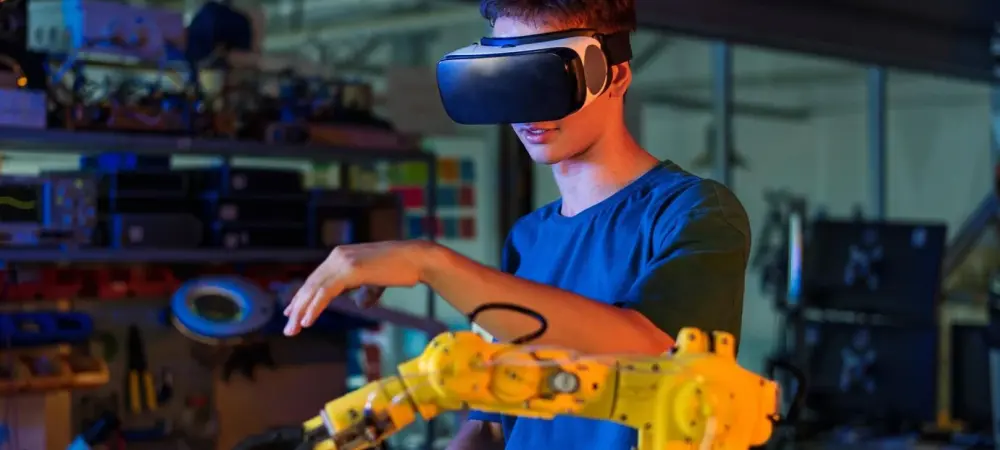
In today’s rapidly evolving manufacturing landscape, the integration of robotic technology has become a key driver of efficiency and innovation. Universal Robots, a global leader in collaborative robotics, has introduced UR Studio, a groundbreaking online tool designed to revolutionize how robotic applications are designed, simulated, and tested. This tool promises to transform industrial operations by providing manufacturers a virtual environment to optimize robotic setups before deployment, facilitating both cost savings and improved productivity.
Industry Overview
The robotics industry is experiencing unprecedented growth and evolution, underscored by increasing demand for automation solutions across various sectors. Driven by advancements in artificial intelligence, sensor technology, and machine learning, the industry is seeing a surge in the adoption of collaborative robots, known as cobots. Cobots are renowned for their ability to work alongside humans, fostering a more adaptable and responsive manufacturing environment. Key players such as Universal Robots are at the forefront, driving innovation in automation tools and technologies. Simultaneously, regulatory frameworks focused on safety and operational standards significantly shape industry practices, ensuring safer human-robot interactions.
Key Trends and Market Dynamics
Influential Industry Trends
Several key trends are reshaping the robotics landscape. There is an increasing shift toward integrating artificial intelligence and machine learning in robotic systems, enhancing their decision-making capabilities and efficiency. The demand for flexible and adaptable solutions is rising, as manufacturers seek cobots that can quickly pivot to meet changing production requirements. Moreover, consumer preference toward personalized and quickly delivered products is leading to the extensive use of cobots in high-mix, low-volume manufacturing settings. These trends present opportunities for companies to innovate and offer more advanced and user-friendly automation solutions.
Market Data and Growth Projections
The robotics industry is poised for significant growth, with projections indicating a robust upward trajectory over the next few years. Market data suggests substantial increases in the deployment of cobots, driven by sectors such as automotive, electronics, and consumer goods. Analysts forecast a compound annual growth rate in the double digits, owing to the increasing versatility and cost-effectiveness of collaborative robotic systems. This growth mirrors the increasing awareness and demand for streamlined manufacturing processes, where efficient and automated solutions play a central role.
Challenges and Solutions
The robotics sector faces several challenges, including technological complexities, high initial costs, and the need for skilled personnel to operate advanced systems. Innovations like UR Studio address these challenges by offering user-friendly, cost-effective simulation tools that lower the entry barrier for using cobots. By virtualizing the design and testing processes, manufacturers can foresee and rectify potential issues, such as operational bottlenecks or inefficiencies, prior to physical implementation. This proactive approach helps in optimizing resources and minimizing downtime, thereby significantly reducing operational costs and expanding the potential application areas for cobots.
Regulatory Environment
Navigating the regulatory environment is crucial for companies operating in the robotics industry. Rigorous compliance standards related to safety, interoperability, and performance are in place to ensure secure human-robot collaboration. Regulatory bodies frequently update these standards to keep pace with technological advancements, requiring companies to continually adapt and comply. Universal Robots, with its innovative solutions, often collaborates with regulators to develop systems that not only adhere to the current standards but also set benchmarks for future compliance. The emphasis on security and efficiency is a driving force behind the continuous evolution of regulatory frameworks.
Future Outlook
The future of the robotics industry is bright, with emerging technologies set to redefine the possibilities and applications of cobots. Innovations in human-robot interaction, enhanced sensory capabilities, and greater integration with digital platforms are expected to drive the next wave of growth. Consumer expectations for personalized products and faster services will further fuel demand for adaptable and intelligent robotic systems. The industry is likely to witness a transformation characterized by increased interoperability among technologies, greater global reach, and advancements that offer more precise and efficient automation solutions.
Conclusion and Recommendations
The launch of UR Studio reflects Universal Robots’ commitment to advancing the robotics industry’s future by enabling manufacturers to efficiently design, test, and deploy cobots. The innovative tool significantly reduces the complexities and costs associated with traditional robotic system implementation. Going forward, it is essential for industry players to focus on enhancing their technological capabilities, embracing regulatory standards, and exploring new markets. By doing so, companies can leverage the growing demand for automation solutions and drive significant growth in the global robotics landscape. Businesses should consider investing in pioneering tools like UR Studio to stay competitive in this rapidly progressing industry.