

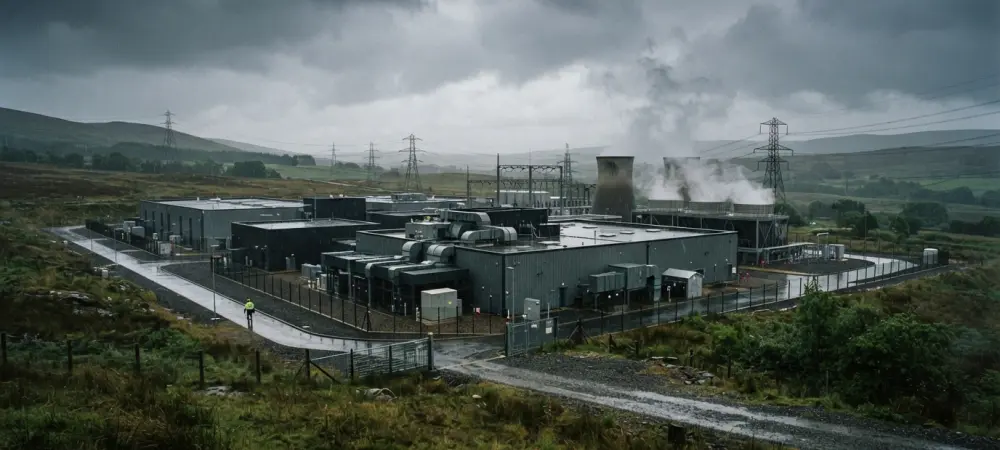
The humming of specialized graphics processors housed within high-density racks across the British landscape now draws more collective power than the country’s entire legacy manufacturing sector combined. This transition from coal-fired industrialism to silicon-based intelligence is not merely a metaphor for progress but a measurable reality that is currently reshaping the power grid. While the overall demand for electricity across Great Britain remains largely flat, the appetite of the digital infrastructure sector has surged, creating a striking divergence between the power needs of the physical past and the virtual future.
This energy shift matters because it represents a fundamental pivot in how the United Kingdom utilizes its natural and generated resources. As the nation navigates the complexities of a mid-decade economy in 2026, the pressure to maintain a world-leading digital service sector while meeting strict decarbonization targets has reached a critical juncture. The rapid expansion of artificial intelligence is no longer a niche technological trend; it is the primary engine driving national energy policy and infrastructure investment.
Digital Infrastructure Outpaces Traditional Industrial Power Needs
The British industrial landscape is undergoing a silent but profound transformation: while traditional factory chimneys stop smoking, server racks are heating up. In 2024, United Kingdom data centers consumed a record 4.46 terawatt-hours of electricity, marking a 41% increase in just four years. This surge occurs at a time when the nation’s overall electricity demand remains stagnant, signaling a structural shift where bits and bytes have replaced steel and coal as the primary drivers of the power grid’s workload.
This evolution is reflected in the declining energy profile of classic manufacturing. As data center demand reached new heights in the middle of this decade, industrial electricity consumption fell to its lowest level since 1983. The energy that once powered massive manufacturing plants is now being diverted to hyperscale campuses, illustrating a shift from a physical goods economy to one centered on data processing and digital services. This transition represents a wholesale movement toward a service-oriented, high-tech economic model.
Furthermore, the scale of this consumption is beginning to rival entire sectors of the traditional economy. The 4.46 TWh figure is not just a statistical milestone; it signifies that the digital backbone of the country is now a heavy-load industrial player in its own right. As we move from 2026 to 2030, the gap between digital and traditional industrial consumption is expected to widen even further as automation and cloud services penetrate deeper into every facet of British life.
Understanding the Growing Strain on the British Grid
The importance of this energy pivot cannot be overstated, as data centers now account for nearly 2% of the entire grid’s electricity consumption. To put this in perspective, these facilities consume roughly one-fifth of all the energy generated by every solar panel across Great Britain. As the UK strives for a net-zero future, the rapid appetite of the digital sector creates a unique challenge: balancing the cooling and processing needs of a high-tech economy against a finite supply of renewable energy.
The strain is particularly evident when analyzing the intermittency of renewable sources. While 2025 saw a record share of renewable generation at over 52%, the constant, non-negotiable power draw of a data center requires a level of grid stability that wind and solar alone struggle to provide without massive storage investment. This creates tension between the green goals of the government and the “always-on” requirements of the hyperscale operators who manage the nation’s data.
Moreover, the concentration of these power sinks creates localized bottlenecks that affect the reliability of the broader network. Unlike traditional factories that could often be sited near power plants, data centers are frequently located based on fiber optic proximity. This mismatch between where energy is generated and where it is consumed by the digital sector has forced the National Grid to rethink its long-term transmission strategy to ensure that the surge in AI demand does not lead to regional brownouts or excessive costs for residential consumers.
Analyzing the Drivers of Increased Energy Consumption
The most significant factor in the power surge is the “AI signature.” While the number of physical data center sites grew by a modest 8%, energy consumption skyrocketed by over 40%. This discrepancy reveals that individual facilities are becoming significantly denser. Modern AI training and inference require specialized hardware that generates immense heat, necessitating advanced cooling systems and drawing far more power per square foot than legacy enterprise servers.
Geography plays a critical role in the current energy crisis. The vast majority of power demand is concentrated within a narrow “Slough-Hillingdon Axis.” In Slough alone, data centers now consume over 65% of the entire borough’s electricity. This extreme geographic clustering creates local “gridlock,” where the demand for new AI-driven facilities far exceeds the physical capacity of the local transmission network, leading to multi-year delays for new connections in the Southeast.
The rise in power demand is not a simple matter of more buildings, but rather a fundamental change in what happens inside them. As organizations migrate from basic storage to complex generative models, the computational load per rack has increased fivefold. This density shift means that even without a massive construction boom, the existing digital footprint is pulling more electricity than ever before, effectively turning relatively small real estate footprints into massive industrial power sinks.
Insights into Data Center Density and Market Trends
Industry experts and official data from the Department for Energy Security and Net Zero (DESNZ) point toward a “density over quantity” model that is reshaping the sector. Official records identify 239 operational sites, but manual verifications suggest many of these are clustered into massive campuses. These campuses act as single, enormous power sinks rather than distributed smaller loads. This concentration makes the current consumption figures a floor estimate, as they likely exclude smaller enterprise sites.
With London and the M4 corridor reaching a breaking point, the industry is eyeing a “regional build-out” to secure future growth. Expert projections indicate a pipeline of 14 gigawatts of planned capacity between 2026 and 2032, with developers increasingly looking toward Scotland and the Northeast. These regions offer a crucial advantage: direct access to renewable energy landing points and less congested high-voltage grid connections that allow for faster deployment of new capacity.
This shift toward regional centers also reflects a change in the types of data being processed. While low-latency applications still require proximity to London’s financial and media hubs, the massive training runs required for the latest AI models can be performed anywhere with a stable power connection. By moving these compute-heavy workloads to areas with surplus renewable energy, the industry is attempting to bypass the infrastructure limitations that have hampered growth in the Southeast.
Strategies for Managing Future Power Requirements
To sustain AI expansion without destabilizing the national energy infrastructure, stakeholders prioritized a transition toward a decentralized infrastructure model. Operators recognized that the reliance on the Southeast was unsustainable and began directing future growth toward areas with surplus grid capacity. This shift allowed compute-heavy AI workloads to move to regions like the North of England or Scotland, where local green energy sources were utilized more effectively while relieving pressure on the London metro area.
Technological innovation also played a vital role in balancing digital growth with decarbonization goals. Facilities integrated advanced liquid cooling systems and on-site energy storage to manage the heat and power fluctuations inherent in modern AI hardware. These improvements ensured that the surge in demand supported, rather than hindered, the broader commitment to a low-carbon power grid. By utilizing the record levels of renewable energy generated in the UK, the sector moved closer to a self-sustaining cycle of green digital growth.
Ultimately, the industry adopted a strategy of closer integration with the national energy transition. Developers worked alongside grid operators to build facilities closer to offshore wind landing points, reducing the need for expensive long-distance transmission upgrades. This collaborative approach mitigated the risks of regional gridlock and provided a roadmap for how a high-tech economy could thrive within the constraints of a modern power network. These collective actions allowed the UK to maintain its status as a global data hub while ensuring long-term energy security for all citizens.