

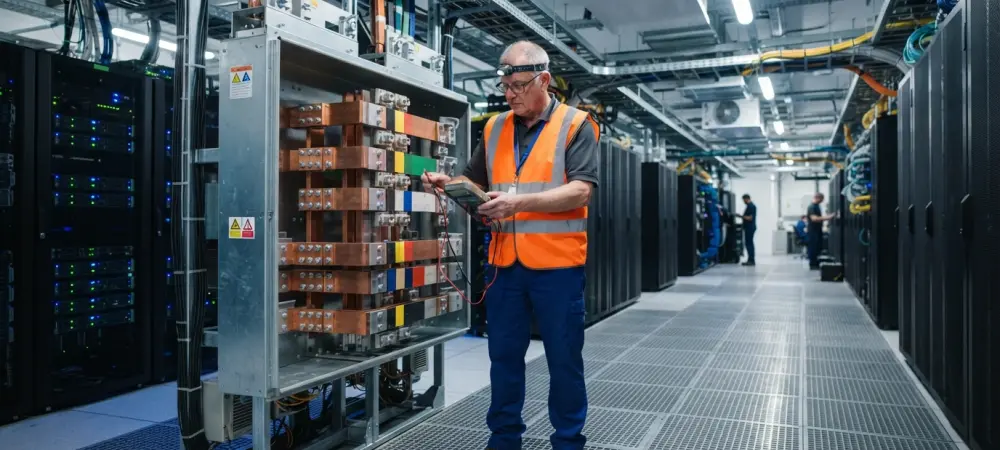
The relentless appetite of artificial intelligence for computational horsepower has effectively outstripped the electrical capacity of conventional power grids, forcing a historic pivot in how we engineer the modern data center. As we navigate the complexities of 2026, the transition from traditional workloads to massive AI training clusters has fundamentally altered the physical requirements of digital infrastructure. The industry is no longer just building rooms full of servers; it is constructing high-density energy processors that must manage electricity with surgical precision. This shift is characterized by a move away from the alternating current models that have dominated the power landscape for over a century toward direct current architectures that are better suited for the high-voltage demands of modern silicon.
The Scaling Crisis: Meeting Monumental Capacity Demands
Projected Growth and Capacity Demands
The scale of the current expansion is difficult to overstate, with industry analysts forecasting the deployment of 100GW in new AI data center capacity between 2026 and 2030. This surge is driven by the requirements of large language models and generative media tools that demand continuous, high-performance compute cycles. As these facilities come online, the sheer volume of power they consume is reshaping utility planning and regional energy strategies. The challenge lies not just in finding enough electricity, but in delivering it to the chip in a way that does not destabilize the local grid or result in excessive transmission waste. In previous technological cycles, data center growth was measured in terms of square footage and rack counts, but in the current landscape, power availability has replaced physical space as the primary constraint for hyperscale expansion. A facility can have acres of available floor space, yet it is effectively useless if the utility cannot provide the necessary megawatt-scale connections. This has led to a paradigm shift where site selection is dictated almost entirely by proximity to high-capacity energy sources and the ability of the local infrastructure to support unconventional, high-density power distribution models. Furthermore, the internal composition of these data centers is undergoing a radical transformation as rack power requirements move from the traditional 10kW toward 1MW configurations. This hundredfold increase in density means that the thermal and electrical management strategies of the past are no longer viable. When a single rack consumes as much power as a small neighborhood, the losses associated with voltage conversion and heat dissipation become massive operational liabilities. Consequently, the focus has shifted from simple capacity to extreme efficiency, where every watt saved in the distribution chain translates directly into additional compute headroom.
Transitioning to 800VDC Architecture Standards
To address these density challenges, a powerful industry coalition led by NVIDIA and other prominent chipmakers is pushing for the adoption of 800VDC systems as the new standard for AI infrastructure. The physics behind this move is compelling; by distributing power at 800V direct current rather than lower AC voltages, operators can significantly reduce resistive heat losses in the cabling. This allows for the delivery of immense amounts of power using much thinner copper conductors, which simplifies the physical installation and reduces the overall weight and cost of the data center’s internal wiring.
In contrast to the sleek efficiency of DC-native systems, legacy AC setups are increasingly viewed as inefficient relics due to the energy “conversion tax” inherent in their design. Every time power is converted from AC to DC or stepped down in voltage, a portion of that energy is lost as heat, with cumulative losses often ranging from 10% to 30%. In a megawatt-scale environment, these losses represent millions of dollars in wasted electricity and require additional cooling capacity to manage the resulting thermal load. By eliminating these unnecessary conversion steps, DC-native architectures maximize the utility of every kilowatt delivered to the site.
The adoption of 800VDC also aligns perfectly with the native requirements of the hardware itself, as GPUs and other high-performance processors operate on low-voltage direct current. By bringing a high-voltage DC busbar closer to the point of load, the industry is streamlining the entire energy delivery chain. This technological alignment is not merely a preference for modern engineering; it is a necessary evolution to support the next generation of AI silicon, which requires stable, high-current power delivery that traditional AC power strips and distribution units simply cannot provide at the necessary scale.
Expert Insights: The Technological Evolution of Power
Mapping the Evolutionary Path: Stages 0 to 4
The transition to a fully optimized energy environment is currently following a defined evolutionary path, moving from Stage 0 legacy AC systems to Stage 4 fully integrated DC architectures. In the early stages, facilities relied on traditional AC distribution, treating DC as a local requirement for the server power supply. However, as 2026 progresses, many hyperscalers are already implementing Stage 2 and Stage 3 solutions, which involve integrating DC at the battery storage and intermediate distribution levels to capture immediate efficiency gains and improve system reliability during utility fluctuations. Reaching Stage 4 represents the pinnacle of this evolution, where the data center operates as a cohesive, DC-native ecosystem from the utility handoff to the processor. In this advanced configuration, the traditional facility-level transformers and centralized uninterruptible power supplies are replaced by distributed, high-efficiency power electronics. This model allows for near-perfect alignment between energy supply and demand, enabling the data center to respond dynamically to the requirements of the AI workload while maintaining an efficiency profile that was previously thought to be impossible in high-density environments.
The Role of Silicon Carbide and Solid-State Transformers
At the heart of this technical evolution is the widespread adoption of Silicon Carbide (SiC) semiconductors, which enable much more efficient power switching than traditional silicon components. SiC allows for power conversion hardware that is smaller, lighter, and capable of operating at much higher temperatures and voltages. This material science breakthrough has been the primary enabler for the development of Solid-State Transformers (SSTs), which are now beginning to replace the bulky, site-specific legacy hardware that has characterized data center design for decades.
The impact of SSTs cannot be overstated, as they provide a modular and intelligent alternative to the passive copper-and-iron transformers of the past. These digital transformers can convert medium-voltage AC from the grid directly into high-voltage DC in a single, controlled step. Moreover, they offer bidirectional power flow capabilities, allowing the data center to interact more intelligently with the grid. This modularity also means that capacity can be added incrementally, reducing the massive upfront capital expenditures that were once required to build out the energy infrastructure for a new hyperscale site.
Evaluating the Double Penalty: Inefficiency and Cooling
The shift toward DC power is also a direct response to what experts call the “double penalty” of energy inefficiency. When electricity is lost during conversion, it doesn’t just disappear; it turns into heat that must be removed by the facility’s cooling systems. This creates a feedback loop where the electricity wasted by inefficient power delivery actually increases the amount of electricity needed for cooling. By moving to DC-native architectures, data centers effectively cut both sides of this equation, reducing the primary energy loss and the secondary cooling demand simultaneously.
Managing the heat generated by megawatt-scale racks has become one of the most significant engineering challenges of the current era. Even with advanced liquid cooling techniques, the thermal density of AI clusters is so high that any unnecessary heat load can overwhelm the system. Consequently, the efficiency gains provided by DC power are valued not just for the reduction in the utility bill, but for the increased thermal headroom they provide. This allows operators to push their hardware to higher performance levels without exceeding the physical cooling limits of the rack or the facility.
The Future: Redefining Energy Infrastructure
Projecting Commercial Availability and Grid Interaction
Looking at the current trajectory, the commercial availability of SSTs and fully integrated DC-native systems is expected to accelerate throughout 2026 and 2027. This timeline is critical for meeting the 100GW capacity target, as the speed of deployment for traditional power infrastructure is often too slow to keep pace with the rapid cycle of AI hardware releases. Modular DC components can be manufactured in factories and shipped to sites ready for installation, significantly compressing the construction timelines for new megawatt-scale facilities and allowing for more agile scaling. Moreover, these modern data centers are evolving into “grid-friendly” entities that can act as buffers for utility demand fluctuations. By utilizing their large DC-linked battery arrays and intelligent power electronics, AI hubs can store energy during periods of low demand and provide support back to the grid during peak times. This symbiotic relationship helps to mitigate the impact of the massive loads that AI clusters place on regional utilities. Instead of being a drain on the community, the DC-powered data center of the future serves as a critical component of a more resilient and flexible national energy infrastructure.
Navigating Transition Challenges and Skill Gaps
Despite the clear technological advantages, the transition to DC-native architecture is not without its hurdles. One of the most significant challenges is the technical skills gap, as the majority of the current electrical workforce is trained and certified primarily in AC systems. Designing, installing, and maintaining 800VDC infrastructure requires a different set of safety protocols and a deep understanding of power electronics. Addressing this gap will require a concerted effort from educational institutions and industry leaders to develop new training programs and safety certifications tailored to the high-voltage DC environment.
In addition to the human element, the industry must also navigate a complex landscape of legacy regulations and building codes that were written for a world where DC was only found in small electronics. Updating these regulations to reflect the safety and efficiency of modern DC-native designs is essential for widespread adoption. While some jurisdictions have been quick to adapt, others remain a bottleneck for the deployment of the most advanced energy systems. Overcoming these administrative and educational barriers will be just as important as the technological innovations themselves in determining the speed of the DC power revolution.
Summary: The Power Revolution in Retrospect
The industry eventually recognized that the scaling of artificial intelligence was fundamentally an energy challenge that could not be solved with twentieth-century tools. Designers shifted their focus away from traditional AC distribution because the conversion losses had become an unacceptable barrier to fiscal and environmental sustainability. By adopting 800VDC standards and integrating Solid-State Transformers, operators successfully eliminated the critical bottlenecks that had previously limited rack densities. This transition ensured that the massive investments in AI silicon were not undermined by an antiquated power delivery chain, allowing for the deployment of gigawatt-scale capacity across global markets.
The move toward DC architecture was not merely a technical upgrade; it transformed data centers into highly integrated energy hubs that functioned in harmony with the utility grid. Architects and engineers prioritized the reduction of the double penalty of heat and waste, which facilitated the development of more compact and efficient facilities. As the workforce adapted to these new systems, the industry established robust safety standards that supported the next generation of high-voltage infrastructure. Ultimately, the pivot to DC-native systems became a mandatory requirement for any organization seeking to maintain a competitive advantage in the increasingly power-constrained world of hyperscale AI.