

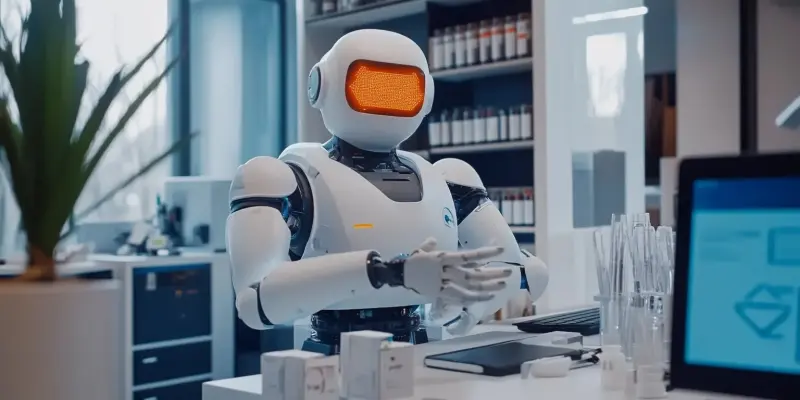
In the rapidly evolving landscape of technology, advancements in Robotic Process Automation (RPA) have become crucial for enhancing operational efficiency and human productivity in businesses. UiPath, a leading player in this field, is taking significant strides with its innovative approaches. Central to their latest developments is the concept of hyperautomation, an integration of machine learning (ML), artificial intelligence (AI), and RPA designed to automate entire workflows. From data collection to decision-making, this new frontier was previously beyond reach but is now becoming a reality.
The Power of AI-Driven Insights
Transition from Reactive to Proactive Decision-Making
UiPath distinguishes itself with its strong emphasis on AI-driven insights, providing a competitive edge in the automation market. This capability allows businesses to analyze extensive datasets, predict trends, and identify anomalies, which marks a significant shift from reactive problem-solving to proactive decision-making. Intelligent automation, where bots can learn and improve over time, is a game-changer. Unlike traditional RPA, which relies on predefined scripts, intelligent bots adapt based on data trends and patterns, making the automation process more dynamic and efficient.
Furthermore, this shift to proactive decision-making dramatically reduces the response time for issues that may arise in a business process. Instead of waiting for a problem to occur and then addressing it, businesses can preemptively tackle challenges before they impact operations. This not only enhances efficiency but also minimizes downtime and operational risks. With the ability to predict market fluctuations, customer behavior changes, and other critical factors, companies can remain agile and competitive.
Enhancing Business Value with Predictive Analysis
Predictive analysis powered by AI integration in UiPath’s platform proves fundamental in advancing business value. By understanding and anticipating future events, companies can strategize better and allocate resources more efficiently. This foresight means that businesses can develop more accurate marketing campaigns, optimize inventory levels, and reduce waste, leading to substantial cost savings and higher profitability. The use of AI-driven insights transforms how companies approach their day-to-day operations and long-term planning.
Moreover, the analytical capabilities provide a significant boost in customer satisfaction by predicting and addressing potential service issues before they arise. This proactive approach ensures that customer experiences remain smooth and uninterrupted, building trust and loyalty over time. As a result, companies can expect increased customer retention rates and a stronger brand reputation. The integration of AI within UiPath’s RPA not only improves internal processes but also advances the overall business ecosystem.
Democratizing Automation
Making Automation Accessible and User-Friendly
UiPath’s vision for the future includes making automation more accessible and user-friendly, ensuring that a wider range of sectors can benefit from it. Envisioning a scenario where creating automation scripts becomes as straightforward as conversing with an AI assistant, UiPath aims to democratize the technology. This user-centric approach is designed to eliminate barriers, allowing even non-technical users to develop and deploy automation solutions seamlessly. By simplifying the process, UiPath encourages more widespread adoption of automation.
This democratization of automation opens doors for various industries, including healthcare, finance, and retail, among others, to harness the technology. For instance, in healthcare, automation can streamline administrative tasks, allowing healthcare professionals to focus more on patient care. In finance, automation can enhance accuracy in transactions, compliance, and reporting, ultimately reducing the risk of human error. UiPath’s commitment to making automation user-friendly promotes inclusivity and ensures that the benefits extend across diverse sectors.
Shaping the Future with Hyperautomation
Hyperautomation represents a significant shift towards more efficient business models, and UiPath is at the forefront of this transformative trend. By integrating multiple technologies, hyperautomation not only automates repetitive tasks but also manages complex processes that require judgment and decision-making. This holistic approach results in smarter and more efficient workflows. As businesses increasingly adopt hyperautomation, the dependency on manual labor decreases, leading to optimized productivity and better resource management.
Consequently, the integration of hyperautomation fosters innovation within organizations, driving them to explore new avenues for growth and improvement. With reliable automation handling routine tasks, human workers can focus on strategic and creative aspects of the business. This shift not only enhances job satisfaction but also cultivates a workforce that’s more engaged and motivated. UiPath’s leadership in promoting hyperautomation sets a precedent for others in the industry to follow, steering the business world towards a future where automation is a fundamental component of operations.
Addressing Challenges and Ethical Implications
Balancing Automation with Ethical Considerations
Despite the promising advancements made by UiPath, the company faces notable challenges, particularly in addressing the ethical implications of AI and potential job displacement. As automation technologies evolve, there’s an ongoing concern about the impact on employment. UiPath acknowledges these concerns and promotes a future where humans and robots work collaboratively. The goal is to enhance human capabilities rather than replace them, ensuring that the automation revolution benefits society as a whole.
UiPath’s approach includes developing automation solutions that augment human work, enabling employees to take on roles that require creativity, empathy, and complex decision-making. This not only preserves existing jobs but also creates new opportunities in areas such as AI training and automation management. By focusing on collaborative solutions, UiPath aims to foster a balanced relationship between technology and the workforce. Additionally, ongoing training and upskilling programs are crucial for preparing the workforce to adapt to an increasingly automated environment.
Ensuring Robust Security in Automated Processes
In the ever-changing world of technology, advancements in Robotic Process Automation (RPA) have become essential for boosting both operational efficiency and human productivity in businesses. UiPath, a key player in this industry, is making notable progress through its cutting-edge strategies. At the core of their newest innovations lies the concept of hyperautomation, which is a blend of machine learning (ML), artificial intelligence (AI), and RPA aimed at automating entire workflows. This spectrum of automation spans from data collection to complex decision-making processes. While these tasks were once considered unattainable for automation, they are now turning into a reality. Hyperautomation not only increases efficiency but also enables businesses to operate faster and smarter, by reducing the time and resources required for mundane tasks and freeing human workers to focus on more strategic goals. This shift is revolutionizing the business landscape, setting the stage for a future where automation plays a pivotal role in advancing productivity and operational effectiveness.