

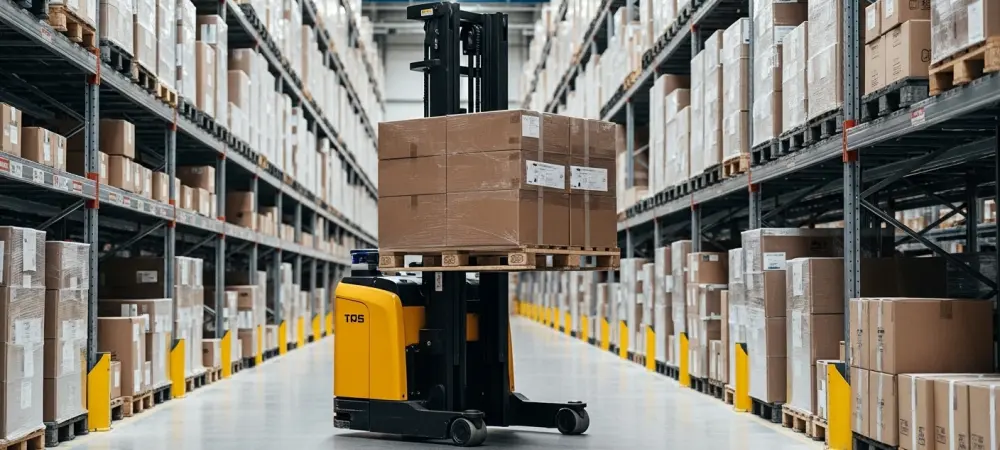
The once-quiet, sprawling aisles of warehouses are now resonating with the hum and whir of a technological revolution, rapidly transforming these static storage spaces into dynamic, high-tech hubs powered by robotics and artificial intelligence. This shift is not a matter of choice but a strategic necessity. In the face of surging e-commerce demands that test the limits of logistics, persistent labor shortages in key hubs, and a relentless need for greater supply chain efficiency, warehouse automation has become a critical imperative for survival and growth. This analysis will explore the staggering market growth fueling this change, examine the real-world implementations by industry leaders, delve into the complex and varied impact on the human workforce, and look toward the future projections for this ongoing technological transformation.
The Automation Boom: Market Growth and Real-World Application
A Multi-Billion Dollar Transformation
The commitment to overhauling warehouse operations is evident in the massive capital flowing into automation technologies. The global warehouse automation market is on a trajectory to exceed $51 billion by 2030, a clear indicator of a massive, industry-wide investment in a smarter, more resilient future. This explosive growth is propelled by a confluence of powerful drivers, including the persistent scarcity of labor in major logistics hubs, the physically demanding nature of traditional warehouse jobs, and the strategic need for operational resilience in an unpredictable global market.
Nowhere is this trend more visible than in the actions of global logistics leaders. DHL Group, for instance, has dramatically scaled its automation efforts, expanding from just 240 distinct automation projects a few years ago to an astounding 10,000 today. This ambitious expansion now impacts an estimated 95% of its global warehouses, demonstrating that automation has moved from a series of isolated experiments to a core component of its operational strategy. This shift underscores a fundamental belief that technology is the key to unlocking the next level of logistical performance.
Industry Giants Leading the Charge
DHL Group has leveraged this investment to great effect, deploying autonomous mobile robots (AMRs) and sophisticated item-picking robots to boost productivity and reduce physical strain on its workforce. The results are tangible and impressive, with a documented 30% increase in the number of units picked per hour by robotic systems. Moreover, the introduction of autonomous forklifts has contributed a 20% gain in overall efficiency, automating the movement of goods and freeing human workers from repetitive, strenuous tasks.
Similarly, United Parcel Service (UPS) is pursuing an aggressive strategy to overhaul its network. The company aims to process 68% of its entire U.S. volume through automated facilities, a goal that is part of a larger, ambitious network consolidation plan. This initiative involves systematically closing older, more labor-intensive buildings and shifting operations to modern, highly automated hubs designed for maximum throughput and efficiency. This represents a fundamental restructuring of its physical footprint to align with a technology-first operational model.
FedEx is also deeply invested in this technological arms race through its “Network 2.0” initiative. This program leverages cutting-edge technology, including robotic arms and strategic partnerships with leading AI firms like Dexterity and Berkshire Grey, to fully automate the package handling pipeline. From the initial sorting of small parcels to the final loading of boxes into shipping containers, FedEx is methodically integrating robotic solutions to create a more streamlined and efficient system, solidifying its competitive edge in a rapidly evolving industry.
Navigating the Workforce Transition
The Collaborative Model of Augmentation
As automation becomes more prevalent, its impact on the human workforce is a subject of intense focus and debate, with different companies adopting starkly different philosophies. DHL has championed a collaborative model, framing its technological investments as a way to complement its “great human fleet of workers,” not to replace them. The company’s actions support this narrative; during a period where it deployed 8,000 collaborative robots, it simultaneously hired 40,000 new employees.
This approach is designed to create what the company calls “flexible stability.” The robotic fleet is deployed to manage the grueling, repetitive tasks and absorb the dramatic fluctuations in demand, particularly during peak seasons. This allows human workers to be redirected toward more complex, value-added tasks that require dexterity, critical thinking, and problem-solving skills that current technology cannot replicate. The goal is a symbiotic relationship where technology enhances human capabilities, leading to a more resilient and efficient operation overall.
The Efficiency Model of Consolidation
In stark contrast to DHL’s augmentation model, UPS’s automation strategy has been directly linked to significant workforce reductions. The company’s drive for efficiency has led to over 75,000 layoffs and the planned closure of nearly 100 legacy facilities. This approach reflects a model where automation is a tool for consolidation and optimization, leading to a leaner, less labor-dependent operation.
An executive from the company has described this as a “cascading effect,” where the shift from conventional, labor-heavy sites to consolidated, automated hubs is a central part of a multiyear turnaround plan. While the stated goal remains to make jobs easier by automating repetitive tasks, the large-scale job cuts suggest a more direct substitution of human labor with machines, prioritizing operational efficiency and cost reduction as primary outcomes.
The Union’s Stand on Technological Progress
Caught in the middle of this transition are the workers and the unions that represent them. The Teamsters union, a major voice in the logistics industry, acknowledges that the advance of technology is inevitable. However, the union staunchly insists that these new systems must be implemented in a way that supports workers, not harms them.
The union’s role has become one of advocacy, working to ensure that employees have a seat at the table during the implementation of new technologies. The focus is on guaranteeing that the invaluable contributions of the human workforce are recognized and that the integration of automation considers the well-being and job security of the people who have long been the backbone of the industry.
The Road Ahead: Future Projections and Evolving Skill Sets
From Manual Labor to Technical Expertise
Looking ahead, industry experts caution against visions of fully autonomous, human-free warehouses materializing in the immediate future. Analysts from Accenture argue that such a future is not imminent and that, for the foreseeable future, “humans are still in the lead.” The primary impact of automation on the job market is not expected to be a simple mass replacement of labor but rather a fundamental shift in the types of skills required.
Companies are increasingly hiring for more technical roles—positions for individuals who can manage, maintain, and optimize the complex automated systems being deployed. The greatest return on investment, experts note, comes not from a simple one-to-one replacement of a human worker with a machine but from a holistic optimization of entire supply chain processes, a task that still requires human oversight and strategic input.
Automation as a Solution to Labor Gaps
Beyond efficiency gains, automation also serves a critical function in addressing a growing void in the labor market. The logistics industry continues to face a significant shortage of skilled workers and intense competition for talent, making it difficult to fill all open positions with human labor.
In this context, automation is less a threat and more a necessary tool that augments the existing workforce. It enables companies to maintain and even expand their operations effectively, even when they are unable to fully staff their facilities. This makes automation a key component of operational continuity, allowing businesses to bridge the gap between labor supply and market demand in an increasingly challenging hiring environment.
The New Warehouse Paradigm
The wave of automation sweeping through the logistics industry has proven to be an irreversible and strategic imperative. Driven by powerful market pressures, this technological revolution was pioneered by industry leaders like DHL, UPS, and FedEx, who have demonstrated both the potential and the complexities of integrating robotics and AI at scale. Their divergent paths have highlighted the dual impact on the workforce, with some companies pursuing a collaborative human-robot model focused on augmentation, while others have used automation to drive an efficiency-based consolidation that resulted in significant workforce reductions. The future of logistics was forged in this transitional period, creating a hybrid environment where human oversight, technical skill, and strategic decision-making became essential for managing a sophisticated, automated ecosystem.