

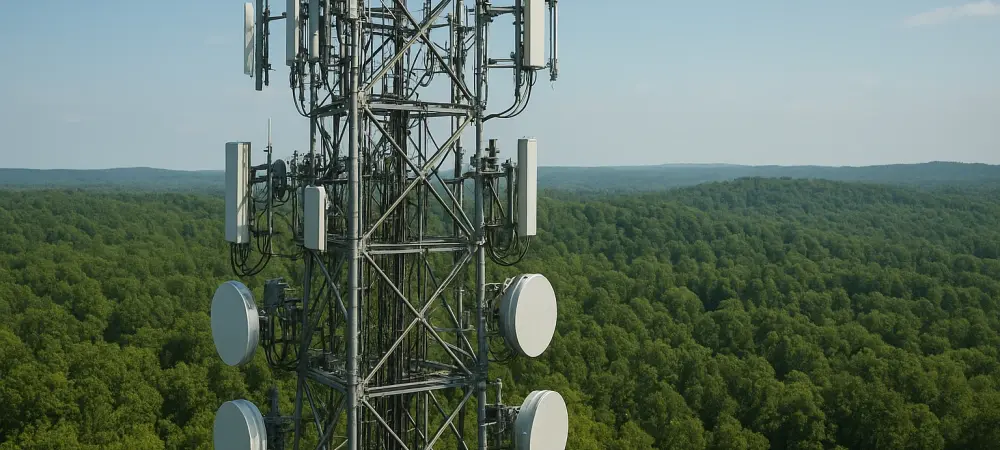
The global digital nervous system is currently entering a transformative phase where the sheer volume of data exchange is forcing a total rethink of how physical towers and fiber networks operate within modern urban landscapes. As of 2026, the telecommunications sector is no longer just about coverage; it is about creating a high-density foundation capable of supporting an economy driven by machine intelligence. This shift represents a departure from traditional mobile network expansion, moving instead toward a specialized infrastructure model that prioritizes asset utility over mere geographical reach. The evolution of this physical layer is critical, as it dictates the speed at which emerging technologies can be integrated into the daily lives of billions.
Strategic Market Dynamics and Adoption Trends
Industry Projections and Growth Benchmarks
The current year marks a distinctive baseline for the telecommunications industry, specifically within the tower real estate market. Analysis from major industry leaders identifies 2026 as a pivotal transition point where organic growth is projected at a modest 3.6 percent, reflecting a temporary cooling after the initial 5G deployment surges. This period is best described as a back-end loaded recovery phase, where the first half of the year focuses on internal efficiency before a significant acceleration begins in 2027. Despite the deceleration in carrier activity compared to previous peaks, the market remains fundamentally stable due to the structural nature of the industry. The predictability of this growth is largely anchored by long-term customer contracts that offer high visibility into future revenue streams. These agreements ensure that even during a cyclical lull, infrastructure providers maintain a steady flow of income that supports ongoing maintenance and minor upgrades. This stability allows the industry to absorb the impact of Sprint-related attrition while preparing for the next wave of investment. Moreover, the current market environment has encouraged a move toward disciplined capital allocation, ensuring that providers are not overextending themselves before the demand for next-generation density truly takes hold.
Real-World Drivers of Physical Tower Activity
Physical expansion is being catalyzed by strategic spectrum acquisitions, such as the major purchase of 600 MHz frequencies by national carriers. Because low-band spectrum requires larger and heavier hardware, the physical load on existing towers is increasing, driving a need for structural reinforcement and more intensive labor. This trend is not limited to a single carrier; instead, it represents a broader industry movement toward maximizing the potential of acquired airwaves. Furthermore, the Federal Communications Commission is preparing to auction up to 800 MHz of additional spectrum from 2026 to 2029, creating a steady long-term pipeline for hardware installation activity.
However, there is a recognized lag period between spectrum acquisition and the actual commencement of construction. Carriers are currently in a sophisticated planning phase, re-evaluating their network architectures to ensure that new frequencies are integrated with maximum efficiency. This temporary pause in activity is a necessary precursor to a more robust deployment cycle. As these optimization strategies are finalized, the industry expects a surge in tower climbing and equipment mounting, particularly in suburban areas where coverage gaps still exist. This pipeline of hardware upgrades ensures that the infrastructure remains a relevant and growing asset class.
Industry Perspectives and Expert Insights
Thought leaders within the infrastructure space argue that the current deceleration in spending is a strategic necessity rather than a sign of industry decline. Chief Commercial Officers emphasize that the market is undergoing a correction to find a sustainable equilibrium after the frantic pace of early 5G rollouts. The focus has shifted from simply adding more towers to enhancing the sophistication of existing sites. Experts suggest that the current lull provides an opportunity for providers to streamline their operations and improve the technological readiness of their portfolios, ensuring they remain the primary real estate anchors for future digital innovation.
Moreover, the industry is seeing a shift in how value is perceived, with a greater emphasis on the adaptability of physical assets. Instead of viewing towers as static structures, they are being reimagined as dynamic hubs that can support a variety of different technological configurations. This disciplined approach to capital allows infrastructure companies to stay focused on their core strengths while remaining flexible enough to accommodate new tenants. By maintaining this focus, the industry is positioning itself to be the primary beneficiary of the second wind of digital growth, which will likely be characterized by much higher traffic density and a more complex array of connected devices.
The Future of Connectivity: AI and Edge Computing
The rise of Artificial Intelligence is poised to become the most significant driver of infrastructure demand in the coming years. While AI is not yet the primary contributor to current financial figures, its long-term impact on network utilization is undeniable. Future mobile networks will have to solve the uplink challenge, as AI applications require constant data feedback loops that could demand three times the current capacity. This shift will necessitate a much more robust footprint of macro towers and small cells, as the existing infrastructure was primarily built for high-speed downloads rather than the symmetrical data flows required by machine learning. Simultaneously, the emergence of the neocloud represents a significant shift in how data is processed and stored. By leveraging the power and fiber connectivity already present at existing tower sites, infrastructure providers can host decentralized edge computing nodes. This allows for ultra-low-latency processing without the massive capital expenditure of traditional data centers. As AI-driven computing moves closer to the device level, these localized cloud modules will become essential for supporting real-time applications in autonomous systems. Tower providers are uniquely positioned to capture this market, as their portfolios are heavily weighted toward the urban environments where low-latency demand is highest.
Summary of Evolutionary Trends
The evolution of telecommunications infrastructure reached a critical milestone as stakeholders recognized that the path forward required a departure from traditional leasing models. It was determined that the most effective way to handle the upcoming data surge involved a hybrid approach that combined macro-tower reliability with localized edge computing capacity. Strategic planners moved toward a model that prioritized the densification of urban small cells to relieve pressure on the primary network grid. This shift allowed providers to successfully navigate the transition from a coverage-centric era to a capacity-centric one, ensuring that the infrastructure was prepared for the demands of a fully automated economy. Ultimately, the industry pivoted to view physical assets not just as steel structures, but as the essential hardware layer for a decentralized cloud ecosystem.