

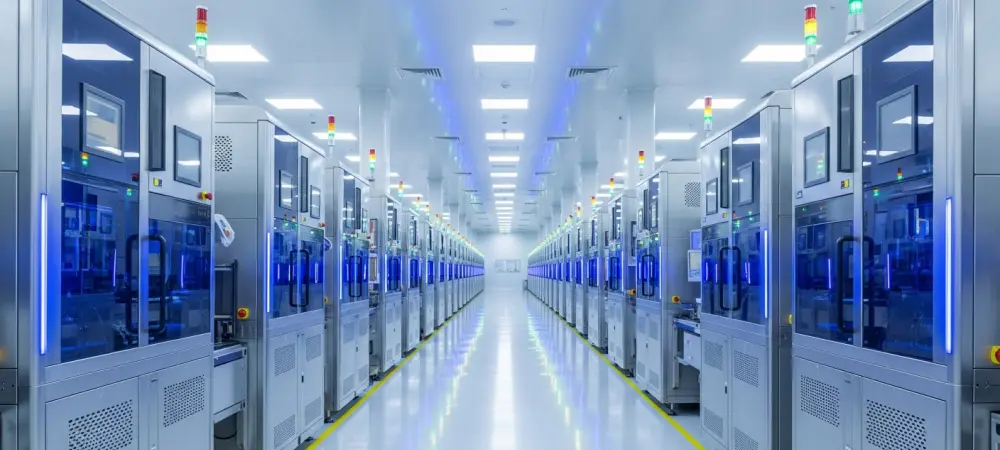
The silicon bedrock underlying the modern digital economy has undergone a profound metamorphosis, evolving from a standardized commodity into the very pulse of global artificial intelligence. This shift is not merely a change in production volume but a total redefinition of how value is extracted from hardware. For decades, memory was treated as the humble storage bin of the computing world, yet in the current landscape, it has emerged as the primary bottleneck for the world’s most sophisticated tech ecosystems. As the demand for generative models and real-time data processing scales, the ability to manufacture high-performance memory has become a matter of geopolitical survival and corporate dominance.
This transition marks a departure from the consumer-centric electronics era, where abundance and affordability were the primary metrics of success. Today, the focus has shifted toward the dense, high-speed architectures required by massive data centers. This exploration into production scaling, the geopolitical “Apple factor,” and technical barriers reveals a market that is no longer serving the individual consumer as its primary master, but rather the insatiable hunger of global intelligence networks.
The Global Pivot Toward AI-Centric Production
Analyzing the Explosive Shift in Memory Demand and Cost
The industry has witnessed a staggering redirection of resources, with major manufacturers pivoting toward an “AI-first” production strategy. This transition is most evident in the fact that approximately 93 percent of global production capacity is now dedicated to chips optimized specifically for artificial intelligence workloads. This hyper-focus on specialized components has left the traditional consumer market in a state of severe deficit. The economic fallout of this shift is unmistakable, as the cost of memory has climbed from a modest $2.80 per gigabyte to a staggering $12 within a very short timeframe.
In response to this unprecedented demand, Samsung Electronics has committed to a 15 percent increase in DRAM production through the end of 2026. Central to this expansion is the development of specialized facilities such as the Hwaseong Campus Complex 1. By centralizing manufacturing logistics within such massive hubs, the company aims to minimize the lag time between wafer production and final packaging. This internal streamlining is essential for maintaining the razor-thin margins and high reliability required by the next generation of data-center clients who cannot afford even a millisecond of latency in their hardware supply.
Strategic Infrastructure: From Manufacturing Logistics to Global Supply Chains
Beyond the data center, the strategic allocation of memory supply plays a pivotal role in the stability of global consumer electronics. The intricate relationship between Samsung and Apple serves as a primary example of this dynamic. By ensuring a consistent supply of LPDDR memory for the iPhone ecosystem, Samsung maintains a position of indispensable leverage. This relationship is particularly vital as Apple seeks to diversify its supply chain to include Chinese firms like CXMT. Samsung’s aggressive capacity expansion acts as a defensive buffer, providing the volume and performance necessary to keep major clients from defecting to emerging competitors. High-Bandwidth Memory (HBM) has become the golden standard for AI infrastructure, acting as the bridge between massive datasets and powerful processing units. The competition among the “Big Three”—Samsung, SK Hynix, and Micron—is no longer about who can produce the most memory, but who can produce the fastest and most efficient HBM stacks. As the global supply chain tightens, the ability to provide these specialized components has transformed memory manufacturers from simple parts suppliers into essential infrastructure partners for the AI era.
Industry Expert Perspectives on Market Volatility and Geopolitics
Despite the clear demand for AI-optimized hardware, a curious paradox of “AI fatigue” has begun to permeate the financial markets. Investors remain skeptical of the long-term sustainability of current growth rates, even as HBM capacity remains sold out for months in advance. This disconnect suggests that while the industrial necessity of memory expansion is undeniable, the economic realization of these investments is subject to intense scrutiny. Experts point to the extreme concentration of the market as a primary source of this anxiety, with South Korean firms controlling roughly 80 percent of the global HBM supply.
The geographical centralization of such a critical technology has not escaped the attention of international policymakers. Pressure from Washington continues to mount, urging a decentralization of production to mitigate risks associated with regional instability or trade friction. This geopolitical tension adds a layer of complexity to manufacturing decisions, as companies must balance the efficiency of centralized production against the political necessity of a diversified global footprint. The result is a landscape where engineering breakthroughs are often secondary to diplomatic negotiations and trade agreements.
From a technical perspective, the transition to more advanced memory architectures is fraught with manufacturing hurdles. Industry specialists highlight the extreme difficulty of implementing hybrid bonding, a process that requires a level of precision previously unseen in mass production. While this technology promises to revolutionize the density and speed of memory stacks, the realistic timeline for its commercial viability suggests that it will remain a specialized endeavor for the next few years. The gap between theoretical innovation and practical, high-yield manufacturing remains one of the most significant risks to the industry’s growth.
The Roadmap for Future Innovation and Economic Impacts
Looking ahead, the transition toward direct copper-to-copper hybrid bonding represents the next major frontier in semiconductor packaging. This technology is expected to unlock unprecedented performance levels, aligning perfectly with the projected release of next-generation GPU architectures, such as Nvidia’s “Feynman” platform, toward the end of the decade. By removing traditional barriers to data transfer, hybrid bonding will allow memory to keep pace with the exponential growth of processing power. However, the path to 2029 and 2030 is paved with significant capital investment and the need for new clean-room standards. The long-term economic consequence of this AI pivot is a permanent shift in the market value of memory components. As data-center efficiency takes priority, the era of cheap, abundant memory for consumer devices is likely a thing of the past. Laptops and smartphones may face permanent price hikes as manufacturers prioritize high-margin AI contracts over the low-margin consumer electronics sector. This realignment suggests a future where high-performance computing is no longer a luxury but a baseline requirement for participation in the global economy.
Furthermore, the risk of market saturation looms on the horizon, as the aggressive build-out of capacity could eventually outpace the actual implementation of AI services. If the anticipated AI dividends fail to materialize for end-users, the massive investments in memory infrastructure could lead to a significant market correction. Balancing the current gold-rush mentality with the realities of long-term utility remains the greatest challenge for executives navigating this volatile landscape. International trade friction only exacerbates these risks, making the path forward as much about strategy as it is about silicon.
Conclusion: Navigating the New Memory Paradigm
The strategic redirection of memory production toward the demands of artificial intelligence fundamentally altered the global semiconductor landscape. Manufacturers successfully transitioned from their historical roles as component vendors to become the foundational architects of the digital age. This evolution required a departure from traditional commodity cycles in favor of deep, long-term partnerships with the world’s leading technology developers. As the industry moved away from the abundance of the past, the focus shifted toward precision, efficiency, and the geopolitical security of the supply chain.
Stakeholders recognized that navigating this new paradigm demanded more than just manufacturing prowess; it required a proactive adaptation to a data-driven economy. By prioritizing the development of HBM and hybrid bonding, the industry prepared itself for a future where memory was no longer a secondary concern but the primary engine of innovation. The end of cheap consumer memory served as a signal for a broader economic transition, where strategic infrastructure became the ultimate currency of the tech world. Moving forward, the industry needed to ensure that this expansion remained sustainable and resilient against the shifting tides of international trade.