

The long-standing boundary between digital intelligence and physical form has dissolved as machines evolve from simple automation into truly autonomous entities capable of reasoning within the physical world. This transition marks a fundamental departure from the era of static algorithms that lived exclusively behind screens or within the sterile confines of data centers. Today, the focus has shifted toward creating systems that not only process information but also understand and manipulate their surroundings with a level of dexterity that was previously relegated to the realm of speculative fiction. The emergence of these thinking machines represents the next great leap in the industrial era, moving beyond the limitations of pre-programmed logic toward a future defined by situational awareness and real-time adaptability.
The modern paradigm shift is driven by the necessity of moving artificial intelligence from isolated environments into the “messy” reality of human existence. In previous iterations of industrial progress, automation was synonymous with repetition; a robot was only as good as the rigid code that dictated its every movement. However, the current evolution demands that AI interact with unpredictable variables, from the fluctuating inventory levels of a busy warehouse to the subtle physiological cues of a patient in a surgical suite. This integration is critical because the next stage of global productivity depends on the ability of machines to take over complex, non-repetitive physical tasks that require a blend of cognitive depth and mechanical precision.
Mapping the robotic frontier requires a comprehensive understanding of the nuances between physical and embodied AI, as these terms are often used interchangeably despite their distinct technical implications. This analysis explores the current market trajectory, supported by growth statistics that reflect a surge in adoption across diverse sectors. By examining real-world applications in logistics, manufacturing, and healthcare, a clearer picture of the operational benefits emerges. Furthermore, expert insights highlight the technical hurdles and ethical considerations that accompany this transition, providing a strategic path forward for organizations looking to leverage these technologies to maintain a competitive edge.
Defining the Physical and Embodied AI Landscape
Market Trajectory and Growth Statistics
The current landscape of 2026 shows a remarkable surge in the adoption of AI-driven robotics, particularly in sectors that traditionally relied on manual labor or fixed automation. Market data suggests that the transition from “blind” robotics—machines that follow a fixed path regardless of environmental changes—to “perceptive” physical AI is accelerating at an unprecedented rate. Investment in autonomous systems has increased significantly, with a particular focus on edge computing and spatial awareness technologies. This shift is reflected in the rising demand for hardware capable of processing massive amounts of sensor data locally, reducing the latency that once hindered real-time robotic responses.
Current financial reports indicate that the market for embodied AI is expected to see a compound annual growth rate that far exceeds the broader technology sector from 2026 to 2030. This growth is fueled by the falling cost of high-fidelity sensors and the increasing accessibility of powerful on-device processing units. In contrast to the early 2020s, when AI was largely a centralized resource, the current trend emphasizes decentralized intelligence where every mechanical unit possesses enough computational power to make independent decisions. This shift has enabled a new class of “smart” industrial tools that can self-optimize and repair, significantly reducing the total cost of ownership for early adopters.
Real-World Applications: From Warehouses to Operating Rooms
In the sector of logistics and warehousing, the evolution of autonomous mobile robots (AMRs) has completely transformed dynamic pathing and inventory management. Organizations like Amazon have moved beyond simple conveyor belts, deploying fleets of robots that can navigate crowded floors, avoid obstacles in real time, and adjust their routes based on live order priorities. These systems use a combination of physical AI for data processing and embodied AI for mechanical execution, allowing them to handle delicate items and heavy pallets with equal proficiency. This level of autonomy ensures that warehouses remain operational even during peak demand periods without the bottlenecks associated with human-operated machinery.
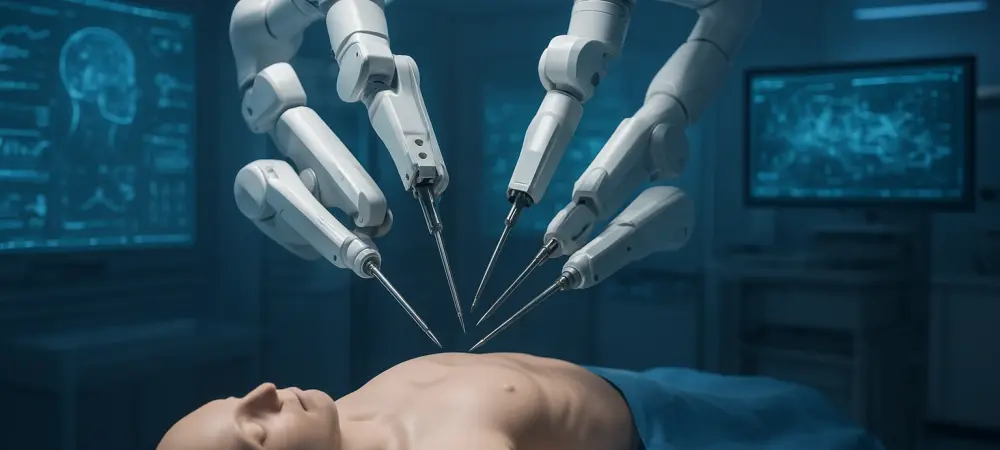
Precision manufacturing has also seen a revolution through the deployment of specialized units that utilize real-time computer vision for quality control and self-calibration. Unlike traditional assembly lines, these modern systems can detect microscopic defects and adjust their grip or pressure instantaneously to compensate for material variations. In the healthcare sector, surgical robots and intelligent prosthetics have reached a point of maturity where they can adapt to the unique movements and physiology of individual patients. Surgical units now provide haptic feedback to doctors while simultaneously compensating for involuntary tremors, while smart prosthetics use neural interfaces to provide amputees with a range of motion that mimics natural limb movement.
The role of autonomous transport continues to expand as LiDAR and predictive analytics become standard components of self-driving vehicles and delivery drones. These machines are no longer restricted to predetermined routes; they can now interpret complex traffic signals, recognize the unpredictable behavior of pedestrians, and navigate through adverse weather conditions. The ability to process spatial data at the edge allows these vehicles to make split-second safety decisions that would be impossible if the system had to rely on a distant cloud server. This progress is not limited to consumer vehicles, as industrial drones are now used for autonomous infrastructure inspection, flying through intricate steel structures to identify structural weaknesses before they become critical failures.
Expert Perspectives on the Physical-Digital Convergence
The Challenge: Bridging the Simulation Gap
One of the most significant hurdles identified by industry experts is the “simulation gap,” which refers to the difficulty of training AI in virtual environments and then expecting it to perform flawlessly in the real world. Virtual simulations are inherently cleaner and more predictable than reality, leading to models that might excel in a digital twin scenario but fail when confronted with dust, uneven lighting, or unexpected physical resistance. Overcoming this gap requires more than just better software; it demands a shift toward training methodologies that incorporate real-world feedback loops. Experts emphasize that the messy nature of the physical world is the ultimate testing ground, and machines must be designed to learn from their mistakes in real time.
The Complexity: Sensor-to-Actuator Orchestration
Professional opinions often converge on the necessity of a seamless integration stack that manages the flow of information from sensors to actuators. This orchestration is incredibly complex, as it requires the synchronization of vision systems, tactile sensors, and mechanical joints across robust wireless networks. Any delay in this communication chain can lead to mechanical failure or safety hazards. Consequently, there is a growing consensus that the hardware and software must be developed in tandem rather than as separate layers. This holistic approach ensures that the physical body of the robot is optimized for the specific AI models it will run, creating a more efficient and responsive system overall.
The Evolution: Human-Centric Systems
Industry consensus suggests that robots should not be viewed as “drop-in” replacements for human workers but rather as partners that require a new class of skilled management. The narrative of total displacement is being replaced by one of augmentation, where the focus is on how humans and machines can coexist in the same workspace. This shift requires a workforce that is trained in the maintenance, supervision, and ethical oversight of autonomous systems. Management experts argue that the most successful organizations will be those that prioritize human upskilling, ensuring that their employees have the technical literacy needed to collaborate with increasingly intelligent mechanical colleagues.
The Future Horizon: Risks, Benefits, and Broader Implications
From Narrow Tasks to Foundation Models
The industry is currently witnessing a shift from single-purpose robots designed for narrow tasks toward flexible, “foundation-model” embodied AIs capable of varied reasoning. Much like large language models revolutionized text processing, these robotic foundation models allow a single mechanical entity to perform a wide array of functions, from sorting laundry to assisting in a laboratory. This versatility reduces the need for companies to purchase different robots for every task, leading to a more modular and adaptable approach to automation. These systems can generalize their learning, meaning that a skill learned in one context can be applied to another, significantly accelerating the deployment of new capabilities.
Safety and Ethical Imperatives
The physical nature of embodied AI introduces a host of safety and ethical imperatives that do not exist in purely digital systems. When an AI makes an error in a data center, the result is typically a corrupted file or a wrong prediction; when an embodied AI makes an error, the result can be physical damage or injury. Addressing edge cases—rare scenarios that the AI was not specifically trained for—is the most critical safety challenge of the current era. Developers are focused on implementing robust emergency measures and redundant safety protocols that can override the AI if it behaves unpredictably. Ethical considerations also extend to the transparency of these systems, as the public demands to know how decisions are made in high-stakes environments.
Economic and Labor Impact
The long-term benefits of increased productivity through physical AI are undeniable, yet they come with significant challenges regarding labor reallocation and capital investment. While the automation of dangerous and repetitive tasks improves worker safety and operational efficiency, it also creates a demand for human labor that is more focused on high-level strategy and technical support. The economic impact is felt most acutely in the shifting requirements for capital; companies must now invest heavily in digital infrastructure, including high-speed networking and local computing clusters, to support their robotic fleets. This transition favors organizations with the financial flexibility to absorb high upfront costs in exchange for long-term gains in throughput and quality.
The Emergence of Humanoids
A notable trend in the current market is the rise of service-oriented humanoid robots designed for hospitality, education, and domestic assistance. These machines are engineered to navigate human-centric environments, such as hotels or homes, where they can interact with people in a natural and intuitive manner. The humanoid form factor is particularly useful because our world is built for humans; a robot with a similar shape can use the same tools, open the same doors, and occupy the same spaces as its creators. As these robots become more affordable and capable, they are expected to play a larger role in everyday life, providing support for aging populations and performing domestic chores that have long been the domain of manual labor.
Strategic Roadmap and Actionable Conclusions
The strategic shift toward embodied AI required a fundamental rethink of corporate infrastructure, moving away from centralized control toward decentralized intelligence at the edge. The investigation revealed that the most successful organizations were those that treated the integration of physical AI as a holistic endeavor, rather than a series of isolated hardware upgrades. Leaders recognized that the distinction between physical AI’s broad data analysis and embodied AI’s mechanical execution was crucial for setting realistic operational goals. It became clear that the path to full autonomy was paved with incremental improvements in sensor fusion and real-time reasoning capabilities.
In assessing the deployment of these technologies, a phased adoption strategy emerged as the most effective method for minimizing risk while maximizing return on investment. The process began with a rigorous preparation phase where existing workflows were analyzed to identify the most suitable tasks for automation. This was followed by limited test deployments in controlled environments, allowing for the refinement of models before they were scaled across the entire enterprise. Companies that prioritized safety and human-centric design from the outset found that their workforce was more receptive to the transition, leading to a more collaborative and productive environment.
The final stage of this evolution focused on continuous optimization and the monetization of the data generated by physical AI systems. Business leaders identified that the insights gathered by autonomous robots on the factory floor could be used to optimize supply chains and predict market trends with unprecedented accuracy. By treating robots as both physical workers and data collection nodes, organizations unlocked new streams of value that went far beyond mere labor savings. The success of these initiatives ultimately depended on a balanced approach that combined technical innovation with a deep commitment to ethical standards and human expertise.
Moving forward, the primary focus for any organization should be a comprehensive assessment of its current digital and physical infrastructure. It is essential to ensure that network bandwidth and edge computing capabilities are sufficient to handle the data-intensive nature of embodied systems. Furthermore, investment in human capital must keep pace with technological advancement; training programs should be established to equip employees with the skills necessary to manage and maintain autonomous fleets. By taking these proactive steps, business leaders can position their organizations to thrive in an era where the lines between the digital and physical worlds are increasingly blurred, ensuring a transition that is both profitable and sustainable.