

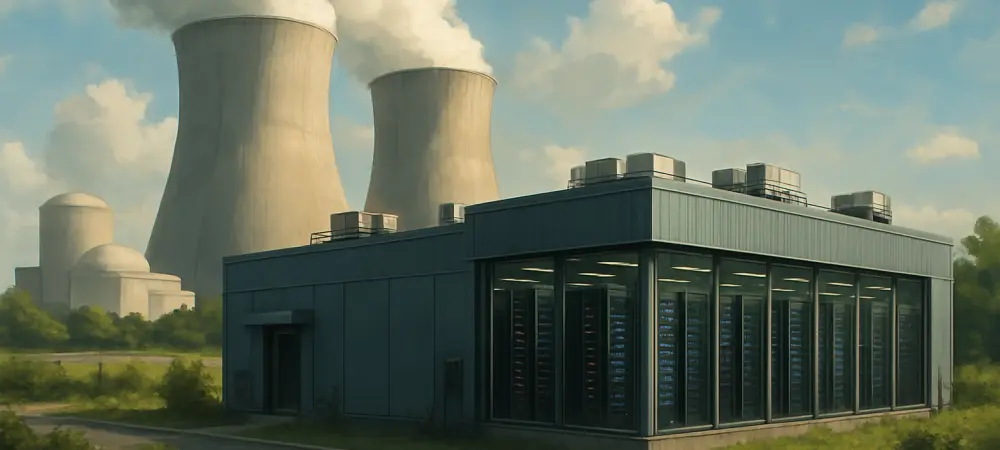
Imagine a world where the insatiable energy hunger of artificial intelligence meets a clean, boundless power source that could redefine sustainability in technology. As AI and high-performance computing (HPC) push the boundaries of innovation, their escalating energy demands are clashing with global calls for greener solutions. Nuclear-powered data centers emerge as a daring yet promising answer to this pressing challenge. This trend, blending advanced nuclear energy with digital infrastructure, signals a potential paradigm shift in how tech giants and governments approach sustainable computing. The discussion ahead dives into current developments, real-world proposals, expert insights, and the transformative future of this intersection.
The Rise of Nuclear-Powered Data Centers
Surging Energy Needs and Emerging Trends
The energy appetite of AI and HPC workloads is growing at an alarming rate. Industry reports suggest that data centers supporting AI training models consume power equivalent to small cities, with projections estimating a doubling of demand over the next five years. This exponential rise is driven by complex algorithms and vast datasets fueling everything from generative AI to scientific simulations. The pressure to keep up is undeniable, as traditional energy grids struggle to match pace while facing scrutiny over carbon emissions.
In response, clean energy solutions are gaining traction across the tech sector. While solar and wind have been popular, their intermittent nature often falls short for the 24/7 demands of hyperscale operations. Nuclear power, particularly through small modular reactors (SMRs), is stepping into the spotlight as a reliable, low-carbon alternative. Recent studies indicate a notable uptick in interest, with several major tech firms exploring nuclear options to secure stable, sustainable power for their infrastructure.
Pioneering Projects and Proposals
A standout example of this trend is Deep Atomic’s ambitious plan to build a nuclear-powered AI data center at Idaho National Laboratory (INL) in Idaho Falls. This groundbreaking proposal, submitted to the US Department of Energy, centers on the MK60 SMR, a light water reactor tailored for AI and HPC needs. With a dual-output capacity of 60 MW of electricity, 60 MW of cooling, and 200 MW of thermal output, the design promises unmatched efficiency for compute-heavy environments.
Backed by a consortium including Parker Tide LLC, Clayco, and others, the project unfolds in phases. Initially, operations will leverage a mix of grid, geothermal, and solar power within a short 24-36 month window, setting the stage for the MK60 deployment. This staged approach not only mitigates risk but also positions the INL campus as a national showcase for scalable nuclear-AI integration, potentially inspiring similar setups across federal and private sectors.
What sets this initiative apart is its bespoke engineering. Unlike retrofitted power plants, the MK60 is built from scratch to support diverse applications, from cloud services to cryptocurrency mining. Its modular architecture allows for future expansion, ensuring adaptability as digital demands grow. This forward-thinking model could redefine how data centers are conceptualized in energy-constrained times.
Expert Perspectives on Nuclear-AI Synergy
Voices from the industry underscore the significance of this emerging trend. William Theron, CEO of Deep Atomic, views the INL project as a global template for nuclear-powered AI campuses. His vision emphasizes not just meeting current needs but creating a replicable framework that other nations and corporations can adopt, blending technological progress with environmental stewardship.
Similarly, Shane Todd from Parker Tide highlights the strategic necessity of such innovations for national interests. He argues that the United States’ ambition to lead in AI hinges on firm, scalable power sources like nuclear energy. Without this backbone, the country risks falling behind in the global tech race. These insights collectively paint nuclear integration as more than a niche experiment—it’s a critical step toward securing a competitive edge in a data-driven era.
Future Outlook for Nuclear-Powered AI Infrastructure
Looking ahead, projects like Deep Atomic’s could chart a new course for sustainable data center design worldwide. If successful, the INL campus might inspire a wave of similar facilities, offering a blueprint for balancing high energy needs with low carbon footprints. The potential benefits are substantial, including enhanced energy efficiency and resilience against grid failures, which are increasingly vital in an era of climate challenges.
However, hurdles remain on this path. Regulatory frameworks for nuclear projects are notoriously complex, often slowing deployment despite technological readiness. Public perception also poses a barrier, as lingering concerns about nuclear safety could dampen support. Addressing these issues will require transparent communication and robust safety measures to build trust among stakeholders and communities.
Moreover, the implications stretch beyond tech hubs. Industries like cloud computing, blockchain operations, and even government tech initiatives could tap into nuclear-powered infrastructure for their energy-intensive needs. While this scalability offers exciting possibilities, it also demands careful risk assessment to prevent over-reliance on a single energy model. Balancing innovation with caution will be key to realizing this vision on a broader scale.
Closing Thoughts: Shaping a Sustainable Digital Future
Reflecting on this trend, the journey of nuclear-powered AI data centers marked a bold response to the energy crises of modern computing. The Deep Atomic proposal, alongside validations from industry leaders, underscored a pivotal moment where clean nuclear energy began to fuse with digital infrastructure. This synergy tackled immediate power demands while laying groundwork for long-term sustainability.
As this field evolved, actionable steps emerged as critical. Policymakers and tech leaders needed to streamline regulatory processes to accelerate safe nuclear deployments. Collaboration between public and private entities also proved essential to fund and refine these ambitious projects. Ultimately, fostering dialogue around public safety concerns became a cornerstone for wider acceptance, ensuring that this transformative solution could scale responsibly across global landscapes.