

The architecture of modern digital networks is undergoing a profound structural transformation as the demand for near-instantaneous data processing pushes computational power away from distant rural clouds toward the urban periphery. This shift marks the end of the experimental phase for small-scale edge pods, replaced by a robust push toward multi-megawatt facilities that handle the massive throughput required by generative artificial intelligence and autonomous systems. By prioritizing proximity, infrastructure providers are no longer just offering storage; they are delivering the essential speed that dictates the success of real-time digital interactions in a hyper-connected society. This analysis explores the strategic shift toward larger-scale edge infrastructure, real-world deployments, and the evolving regulatory landscape.
The Evolution of Edge Infrastructure: From Kilowatts to Megawatts
Data-Driven Shift and Market Growth Trends
The industry is moving rapidly beyond the 100kW “micro-edge” concept toward standardized 1MW to 4MW facilities to meet the hunger for sub-10ms latency. Statistical trends indicate that bandwidth-heavy processing now requires more than just a small cabinet at the base of a tower. Consequently, “construction-ready” initiatives have emerged as a vital strategy to reduce market entry timelines, allowing providers to deploy capacity in months rather than years. This speed is essential for companies looking to capture a first-mover advantage in high-density markets where data demand is surging.
Real-World Deployment: American Tower’s Strategic Pivot
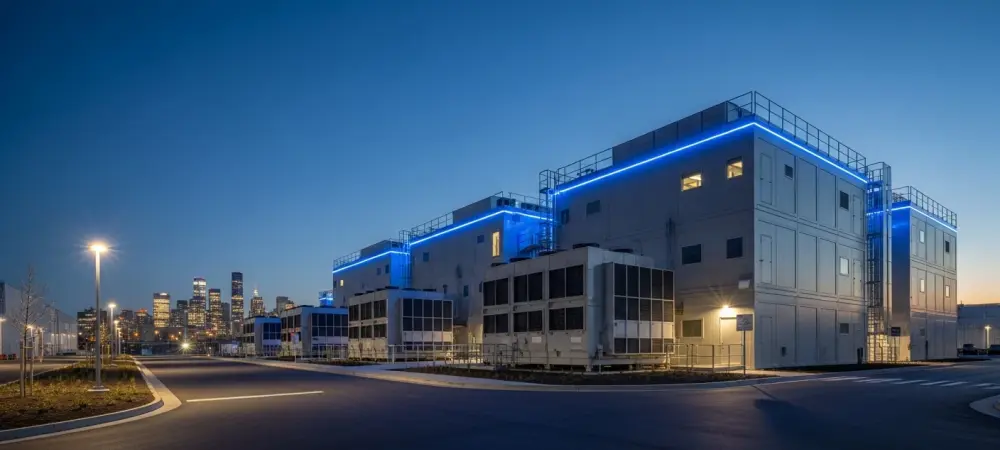
Developments in Oklahoma City and Tampa Bay serve as primary examples of this scale-up, with American Tower repurposing its land assets to host 4MW facilities. These sites utilize modular, prefabricated designs that are specifically engineered to support advanced liquid cooling and high-density power requirements. By leveraging existing fiber-rich locations with pre-secured utility access, the company effectively bridges the gap between traditional cell towers and regional data hubs. This approach ensures that the infrastructure is ready for high-performance workloads immediately upon completion, bypassing the typical delays of greenfield construction.
Industry Perspectives and Expert Insights
Real estate giants are increasingly viewing their land banks through the lens of digital infrastructure rather than just physical tower space. Experts suggest that the “Tower-to-Data-Center” model is the most efficient path toward a distributed network because it utilizes pre-zoned plots to bypass traditional development bottlenecks. However, the technical demands of these compact environments necessitate specialized engineering, such as hot aisle containment, to manage the intense heat generated by modern GPU clusters. This transition emphasizes the importance of identifying sites that already possess robust utility connections.
Future Implications: Scalability, Challenges, and Industry Impact
The roadmap for the coming years includes the identification of over 1,000 potential sites in cities like Sacramento, Philadelphia, and Detroit to create a nationwide mesh of high-capacity edge nodes. Despite this ambition, navigating the regulatory maze remains a significant hurdle, as seen by recent zoning moratoriums in Indianapolis that slowed local expansion. This tension highlights the ongoing struggle to balance rapid technological deployment with the increasing pressure on municipal power grids and environmental resources. Furthermore, the success of autonomous systems will depend on how quickly these municipal hurdles are cleared to allow for localized data processing.
The move toward scalable, high-performance edge facilities established a new benchmark for how distributed computing supported global connectivity. Stakeholders prioritized utility-ready land and modular designs to maintain a competitive edge in a maturing market. Ultimately, these multi-megawatt centers functioned as the foundational backbone for the next generation of localized intelligence, proving that physical proximity and power capacity remained the most valuable commodities in the digital economy. Future developments likely focused on integrating these sites with renewable energy sources to mitigate the environmental impact of such high-density power consumption.