

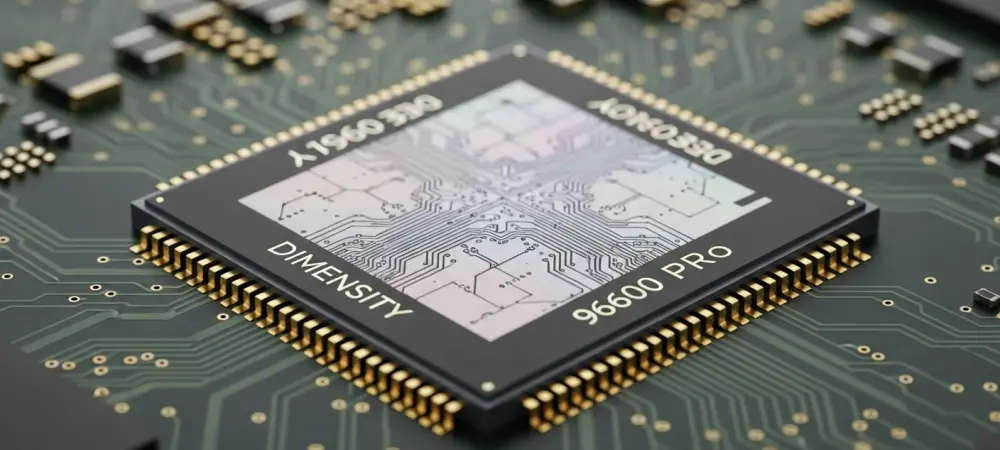
The once-unshakeable dominance of established silicon giants is facing an unprecedented challenge as the boundaries of mobile processing power are being redrawn by aggressive engineering breakthroughs. MediaTek is no longer merely a budget alternative; it is positioning itself as the premier choice for the luxury device segment. The Dimensity 9600 Pro represents a seismic shift toward integrated artificial intelligence and ultra-high frequency processing. This analysis explores how this hardware influences benchmark expectations and the broader smartphone ecosystem through innovative architecture, benchmark data, and expert sentiment.
Analyzing the Performance Leap and Market Trajectory
Benchmark Breakthroughs and Competitive Statistics
Reported benchmark data reveals a startling leap in raw processing power. Early testing of the Dimensity 9600 Pro on Geekbench 6 suggests single-core scores ranging between 4,200 and 4,300 points. Multi-core performance is even more impressive, hitting estimates as high as 12,500. When compared to the predecessor Dimensity 9500, which averaged 4,000 and 11,000 respectively, this growth trend signals a genuine generational breakthrough.
The significance of these figures is highlighted when compared to current rivals like the Snapdragon 8 Elite Gen 5. While the competition remains fierce, MediaTek’s rumored 5GHz peak clock speed is a milestone that moves mobile hardware closer to desktop-class performance. Such high-frequency output provides a significant advantage in demanding tasks like real-time video rendering and complex multitasking.
Implementation in Next-Generation Flagships
Luxury manufacturers are already preparing to integrate this technology into their upcoming releases. The rumored Oppo Find X9 Pro is expected to be among the first devices to showcase the capabilities of the Dimensity 9600 Pro. This transition is supported by the adoption of TSMC’s N2P node, which provides the thermal efficiency required for a 2+3+3 “Canyon” and “Gelas” core configuration. This setup is rapidly becoming the new standard for premium mobile hardware.
Beyond raw speed, the real-world utility of SME2 instruction support cannot be overstated. This feature is designed to enhance on-device machine learning, allowing for more responsive AI tasks without relying on cloud processing. This shift toward localized intelligence improves privacy and reduces latency, making the smartphone a more capable assistant for daily professional and creative work.
Expert Perspectives on Technical Innovation
Industry analysts view MediaTek’s recent strategy as a deliberate and successful move to narrow the performance gap with Qualcomm. Reaching the 5GHz threshold challenges traditional assumptions about thermal limits and energy consumption in a mobile chassis. Experts suggest that such high frequencies require more than just brute force; they demand sophisticated software optimization and a robust developer ecosystem to truly shine. The specialized AI architecture within the Dimensity 9600 Pro is particularly noted for its potential to change how software is developed. By providing a more efficient platform for machine learning, MediaTek is encouraging developers to create more complex, AI-driven applications. This innovation forces a complete re-evaluation of how performance is measured, shifting the focus from simple clock speeds to integrated system intelligence.
The Future of High-End Mobile Computing
The broader implications of N2P manufacturing extend far beyond just benchmark scores. This process improves battery life and allows for sustained performance during intense mobile gaming sessions. However, the industry must also address the potential challenge of thermal throttling in slim consumer-grade chassis. As devices become thinner, the necessity for advanced cooling solutions like vapor chambers will become a mandatory design requirement for flagship devices.
Increased competition in the silicon market is a net positive for the end-user. It accelerates innovation cycles and leads to more capable hardware being available at various price points. As MediaTek and Qualcomm continue to leapfrog each other, the mobile computing landscape will likely see even more dramatic shifts in capability, making the smartphone the central hub for all personal and professional computing needs.
Closing Thoughts on MediaTek’s Strategic Pivot
MediaTek established a new paradigm for what a flagship processor could achieve through the Dimensity 9600 Pro. The decision to prioritize high-frequency output and specialized AI instructions proved to be a catalyst for the next era of mobile computing. Manufacturers were forced to reconsider their hardware designs to accommodate such intensive performance levels. This strategic pivot redefined industry expectations and ensured that mobile devices remained the primary platform for digital innovation. The focus shifted toward sustainable power and integrated intelligence, setting a trajectory that future silicon developments followed to meet the needs of a more demanding global market.